

ArmInfo. The Likud party, headed by incumbent Israeli Prime Minister Benjamin Netanyahu, is leading in the country’s parliamentary elections held on October 27 after 76.8% of the votes were counted, The Times of Israel reported, citing preliminary data from the Central Election Commission.
According to Forbes, based on these data, Netanyahu’s party is winning 27 seats in the 120-seat parliament, while his main opposition rival Gadi Eisenkot, with the Yashar party, is in second place with 20 seats.
At the same time, the bloc of parties supporting Netanyahu, headed by Likud, is preliminarily winning 54 seats in parliament. The bloc headed by Eisenkot is winning 47.
According to preliminary data, Arab parties are winning 19 seats in parliament.
Before the election, Netanyahu’s bloc of parties controlled 55 seats in parliament, while the opposition held 49. Forming a ruling majority requires a coalition controlling 61 seats in the Knesset.
Democrats party leader Yair Golan is calling on the parties in Eisenkot’s bloc to enter into a partnership with Arab parties, secure a majority of seats in the Knesset, and form a government. “Netanyahu has lost. I know how to count to 120,” he wrote on the social media platform X.
Israel’s Central Election Commission will announce the vote-counting results on October 29. The final election results must be published no later than November 4. After receiving these results, President of Israel Isaac Herzog will begin consultations with representatives of the parties that entered the Knesset, following which he will task one of the party leaders with forming a new governing coalition.
As a rule, the candidate for prime minister is the leader of the party that won the largest number of seats in the Knesset. However, the president of Israel may task the leader of one of the parties with creating a coalition that will control 61 seats. If a coalition controlling 61 parliamentary seats is not formed within six weeks, new elections will be called after 90 days.










 Expert: Economic pressure on Armenia may be virtually painless for other EAEU members, but not for Armenia itself
 Expert on protests in France: Civilizations fade when society loses a vision of the future
 Turkologist: Azerbaijan is not all-powerful—its vulnerabilities should become part of Armenia’s security strategy
 Opinion: The development of the Amulsar mine near the resort town of Jermuk is the beginning of an environmental disaster in Armenia
 Expert: The arrest of opposition figures in Armenia for social media posts is a systematic attempt to intimidate the public and suppress dissent.
 Zakharova commented on the scandalous epithets of the governor of Armenia`s Shirak region about "Ivanov"
 Nikolai Bordyuzha proposed excluding Armenia from the CSTO.
 The participation of Artsakh ensembles in an international festival in Vienna was cancelled following the intervention of several foreign embassies
 Expert: It`s time for Armenia to move away from uncertainty and choose between West and East
 The Armenian Foreign Minister commented on the country`s return to work within the CSTO.
 The Artsakh Public Council expressed outrage at the UN Secretary-General`s behavior
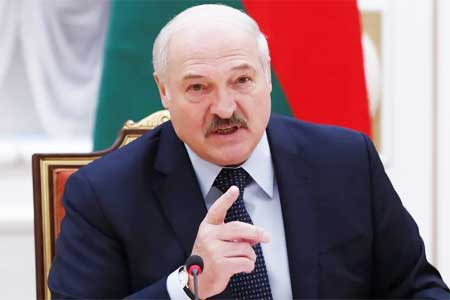 Lukashenko called for Armenia to assume the CIS presidency in 2029
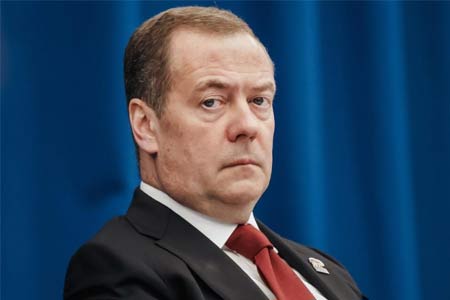 Dmitry Medvedev predicted a Ukrainian-like fate for Armenia amid the country`s shift in foreign policy
 Russian Security Council: In Armenia, they want to force Russian asset owners to dispose of their assets
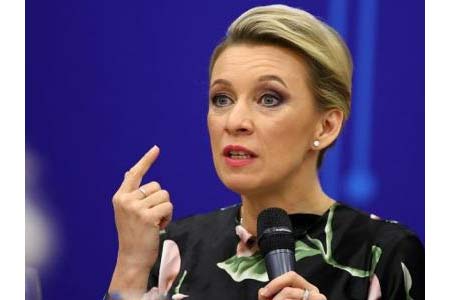 Zakharova: Russia ready to discuss with Armenia the prospects for expanding military cooperation as part of a review of bilateral ties
 Tevanyan: Armenia, like Ukraine and Moldova, is being drawn into the EU’s global war
 Yerevan City Hall is considering introducing a valet parking system in the city
 Expert: The circus surrounding the “Albanization” of Armenian culture in the presence of foreign ambassadors in occupied Artsakh is genocide
 Political scientist: If Russian-Armenian relations are destroyed, Turkey will take Russia`s place