
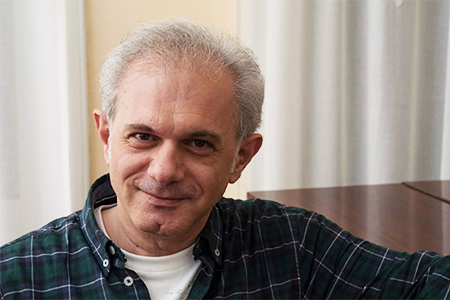
ArmInfo.The Honorary Cultural Ambassador was sent "honorably" and "culturally."
The Russian Ministry of Internal Affairs, admitting to a technical error, officially lifted the entry restriction on Armenian writer, journalist, actor, and director Ruben Pashinyan. However, on October 23, he was denied entry at Sheremetyevo Airport.
As a result, the trip, which included a literary award, the presentation of an honorary diploma, and a film premiere, ended with a ten-hour wait and a return to Armenia. Pashinyan published the story of how two government agencies managed to overlook each other's decisions on his Facebook page.
This story has everything necessary for a good drama: a false accusation, an official correction of the error, a journey with a noble purpose, and a finale in which the hero discovers that state logic sometimes develops according to the laws of the theater of the absurd.
He bought the ticket to this performance with his own money.
Ruben Pashinyan is a well-known figure in Armenian cultural circles, but his activities have long since extended beyond the national audience. A writer, journalist, actor, and director, he has been organizing book presentations, film screenings, creative meetings, and cultural events in Armenia, Georgia, and Russia for many years. These aren't just meetings within the Armenian diaspora: his projects also provide a platform for communication between representatives of different cultures.
Today, such activities are commonly referred to as intercultural dialogue. The term sounds impressive, although it often conceals a rather simple concept: people meet, talk, watch films, read books, and discover that they have much more in common than is commonly believed.
Pashinyan has been doing this for years. And, as it turns out, even purely charitable cultural activities don't guarantee that one day their organizer won't be faced with a bureaucratic plot in which common sense turns out to be a secondary character.
An award that had to be received in absentia
Ruben Pashinyan's relationship with the Russian literary community developed long before this current story. In 2018, he became the first Armenian citizen to receive the gold prize of the international literary competition "Golden Pen of Rus'." He received the award together with renowned writer Bella Erivan.
Later, his creative biography included the medal "Printing Pioneer Ivan Fedorov" for the collection "Postfactum," the Ivan Bunin literary medal, the award from the public organization "Labor Valor of Russia" for the collection "Raznoboy," the "Shark of the Pen" diploma, as well as the Lazarev House Medal, awarded by the Cultural Center of the Embassy of Armenia in Russia, etc.
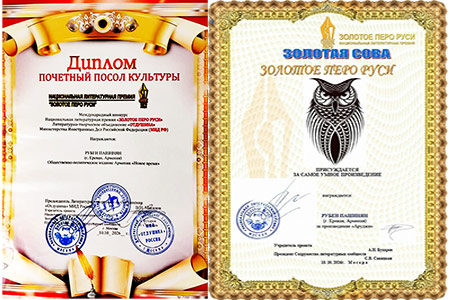
This year, Pashinyan was again among those recognized in the "Golden Pen of Rus'" competition. His play "Aruji" received the "Golden Owl" award for the most intelligent work. In addition, the writer was slated to be awarded the honorary diploma "Ambassador of Culture." For many years of cultural and social activity.
"Aruji" is based on a story that is not widely known, even to those interested in Armenian history. In 1899, Russian lawyer Nikolai Platonovich Karabchevsky, who came from a Turkish family, defended an Armenian, Kirkor Gulgulyan. Gulgulyan took revenge on Hasan, whom he considered guilty of the extermination of his family and the massacre of Armenians in the Bayburt region. Gulgulyan was acquitted.
This trial took place long before the case of Soghomon Tehlirian, which became one of the most famous symbols of the struggle for justice after the Armenian Genocide. Pashinyan turned to a little-known chapter of history, transforming it into a literary work that attracted the attention of a Russian competition.
This autumn, it was planned to celebrate this work and award the author an honorary diploma. Simultaneously, the premiere of Pashinyan's film "Interview Uncut" was scheduled for October 25 at the Cultural Center of the Embassy of the Republic of Armenia in Russia. Creative meetings were also scheduled in Moscow.
All events were planned in Pashinyan's usual format: free for spectators, with the support of friends, associates, and patrons. One helped with tickets, another provided accommodation, and a third organized or designed the poster. So, for years, independent cultural activity has existed, without large budgets, but with people who truly need it.
But this time, it didn't reach the audience.
 Ninety Days That Never Were
As Pashinyan says, he learned about the restrictions on entry into Russia imposed on him by chance— When filling out the RuID electronic system, which is designed for pre-entry notification of foreign citizens.
According to his information, the reason for the restriction was an alleged excess of the permitted stay in Russia—90 days within the established period.
Pashinyan claims that he has never stayed in Russia for more than two weeks on a single trip, and his actual length of stay could not have constituted the violation described. He believes the restriction was the result of a technical error.
Attempts to clarify the circumstances of the incident turned into a separate ordeal. According to the writer, Russian government websites often failed to open from Armenia, and he was unable to reach the relevant services by phone. For several days, he tried to find a working communication channel to obtain an explanation and have the decision reviewed.
Finally, he managed to submit an appeal through the online reception service of the Russian Ministry of Internal Affairs. Attached to the letter were documents confirming the entry and exit dates.
The response was encouraging: the Ministry of Internal Affairs acknowledged the error and notified Pashinyan that the restrictions were being lifted. The corresponding letter was dated October 14. According to the information contained therein, the information should have been updated in the databases within seven days.
It would seem the story had a happy ending. The error was discovered, the decision was reversed, and the state machine, albeit slowly, corrected its own oversight.
All that remained was to buy a ticket and head to Moscow.
The state that failed to inform itself
Pashinyan purchased a ticket, hoping to attend the awards ceremony, and arrived at Sheremetyevo Airport. It was here that it became clear that the official lifting of the restrictions did not automatically mean the end of all the associated problems. According to Pashinyan, the Russian FSB border service had no information about the entry restrictions being lifted. Despite the documents and explanations he presented, he was denied entry. Thus, the decision of one agency, which was supposed to remove the obstacle, did not help in a situation where another agency continued to act based on previous information.
In his address, Pashinyan describes what happened as interdepartmental confusion, the consequences of which he himself had to pay for—literally and figuratively.
“The Ministry of Internal Affairs officially announced the lifting of restrictions on my entry into Russia. I received a corresponding letter. I arrived at the airport, tried to explain the situation, build bridges, and presented documents. But all in vain,” he writes.
After several hours of waiting, he says, he was told that they would purchase a return ticket independently. However, when it turned out that he already had a return ticket, the original departure plan was changed. Ultimately, Pashinyan was forced to use his own ticket. He spent about eight hours at the airport, after which he was sent back to Armenia.
The writer also draws attention to the waiting conditions. He claims he warned the staff about his heart and vascular problems, but was forced to spend the night with virtually no opportunity for proper rest. He was equally outraged by his seat on the plane – 35A, which he describes as extremely uncomfortable and cramped.
However, if the first part of the story resembles an administrative drama, the second takes on the characteristics of a satirical play. The man was officially informed that there were no longer any obstacles to entry. He trusted the document, bought a ticket, and flew. And then found himself in a situation where the document he presented failed to convince the system that the system itself had changed its mind. It could be said that the state didn't have time to tell itself its own news. A man holding a document lifting entry restrictions, posing like "some kind of hybrid of a chess knight and a grasshopper" (quote Pashinyan), is sent packing!
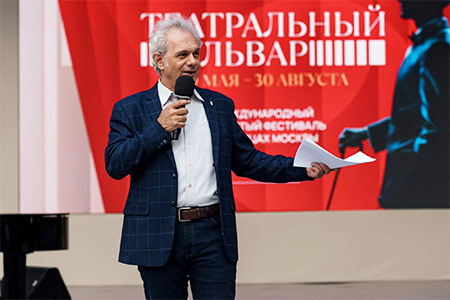 The Cultural Ambassador Sent to the Wrong Place
"The Cultural Ambassador was sent. But not to the place he was planning to go," — Pashinyan notes with bitter irony in his post.
This phrase could be the title of the entire story. It contains absurdity, human resentment, and that special irony that arises when reality begins to parody itself.
Behind the dry phrase "denial of entry" lies a disrupted ceremony, a literary award, an honorary diploma, a film premiere, and planned meetings. Also left behind are the spectators who planned to attend the events and the people who helped organize the trip.
For an independent author, the cancellation of such a program is more than just a change in the calendar. These are months of preparation, agreements, and work that can't be postponed with the click of a button.
It's especially sad that the trip wasn't connected to a commercial project or private entertainment, but to cultural events open to the public. Pashinyan emphasizes that such meetings have been organized for years on a voluntary basis, thanks to the support of friends and philanthropists.
"I want to apologize to everyone who planned to come to the premiere and meet with me. I am very sorry that circumstances beyond my control disrupted your plans," he writes.
At the same time, the writer doesn't claim that government agencies shouldn't control the entry of foreigners. His complaint is different: if the agency has officially lifted the restriction, why can't someone with the appropriate document cross the border? And why should the cost of a mistake fall solely on someone who didn't commit it? And who will compensate for the material and moral damages?
Between Law and Common Sense
At the end of his publication, Pashinyan states that he doesn't plan to travel to Russia in the coming years. According to him, the issue is no longer so much the formal restriction, which was previously in effect until 2028, as the loss of trust in the procedure itself.
"It's impossible to plan work, meetings, and events when even an official decision from a government agency doesn't guarantee you'll be allowed into the country," he says. he notes.
This is perhaps the most serious part of the story. The mistake can be corrected. The document can be reissued, the database updated, the ticket repurchased. It is much more difficult to restore the trust of someone who followed all the instructions, contacted the authorities, received a positive response, and still found themselves on the wrong side of the door.
Pashinyan's second publication is no longer so much about the refusal itself as about the circumstances of the return. Here, the irony becomes sharper: the author describes a forced flight, an uncomfortable seat, and an attitude that, in his opinion, did not take into account either his state of health or the nature of the incident.
One can argue with certain emotional assessments, but the main question remains quite concrete. If one government agency officially lifts a restriction, while another continues to enforce its consequences, who is responsible for the failure to implement the decision in a timely manner? Who should compensate the individual for expenses and disrupted plans? And is there a mechanism to promptly resolve such a situation directly at the border?
The answers to these questions are not yet available in the published materials. Separate explanations from Russian agencies regarding the circumstances of the entry denials have also not been provided. Therefore, the reasons for the inconsistent actions of the agencies and the possible legal consequences of this incident require further clarification.
But the story itself has already happened. And it contains a detail that is hard to miss: the man who received the award for the most intelligent work was unable to attend the awards ceremony due to an error that the state system, according to him, first made and then failed to correct in time.
Literature loves paradoxes. Bureaucracy, it turns out, is the same. The only difference is that a writer usually invents them for the reader, while the bureaucratic machine sometimes asks people to personally pay for their participation in its own plot.
Ruben Pashinyan concluded his publication by saying that he would like to use one pithy and blunt word, but probably won't. He invites readers to figure it out for themselves. Perhaps this is the only solution in this situation that doesn't require either an electronic reception center or interdepartmental approval.
This brings to mind the saying: "Without a piece of paper, you're a bug, but with a piece of paper, you're a human being." But it turns out that's not true—even the presence of a piece of paper doesn't always guarantee humane treatment for its owner. How can one not recall Gorinov's character: "Popular rumor is never wrong... Popular rumor would never have come up with such idiocy!"




















 Expert: Economic pressure on Armenia may be virtually painless for other EAEU members, but not for Armenia itself
 Expert on protests in France: Civilizations fade when society loses a vision of the future
 Turkologist: Azerbaijan is not all-powerful—its vulnerabilities should become part of Armenia’s security strategy
 Opinion: The development of the Amulsar mine near the resort town of Jermuk is the beginning of an environmental disaster in Armenia
 Expert: The arrest of opposition figures in Armenia for social media posts is a systematic attempt to intimidate the public and suppress dissent.
 The participation of Artsakh ensembles in an international festival in Vienna was cancelled following the intervention of several foreign embassies
 Expert: It`s time for Armenia to move away from uncertainty and choose between West and East
 The Armenian Foreign Minister commented on the country`s return to work within the CSTO.
 The Artsakh Public Council expressed outrage at the UN Secretary-General`s behavior
 Lukashenko called for Armenia to assume the CIS presidency in 2029
 Dmitry Medvedev predicted a Ukrainian-like fate for Armenia amid the country`s shift in foreign policy
 Russian Security Council: In Armenia, they want to force Russian asset owners to dispose of their assets
 Zakharova: Russia ready to discuss with Armenia the prospects for expanding military cooperation as part of a review of bilateral ties
 Tevanyan: Armenia, like Ukraine and Moldova, is being drawn into the EU’s global war
 Yerevan City Hall is considering introducing a valet parking system in the city
 Expert: The circus surrounding the “Albanization” of Armenian culture in the presence of foreign ambassadors in occupied Artsakh is genocide
 Political scientist: If Russian-Armenian relations are destroyed, Turkey will take Russia`s place
 Political scientist: The Armenian public is simply obliged to significantly change the entire content of public discourse and struggle
 Cross tattoos are being removed from the skin of Christian prisoners in Azerbaijan by fire, according to a human rights activist.