
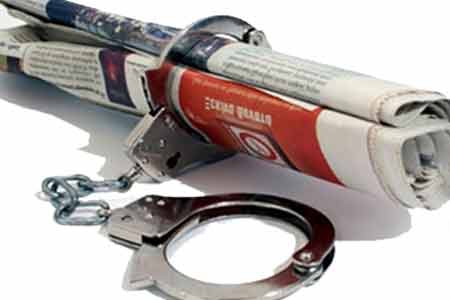
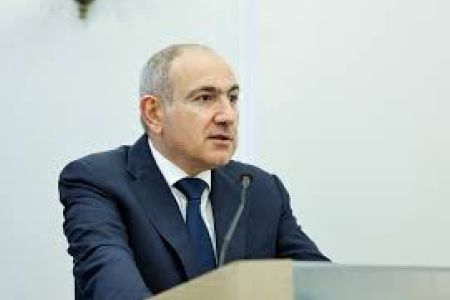
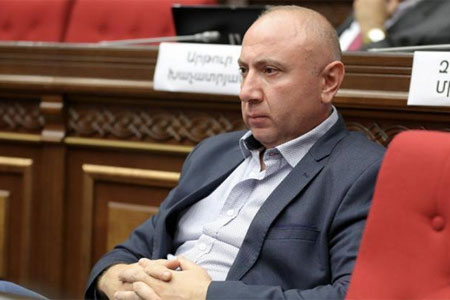
ArmInfo. In Armenia, the total number of lawsuits filed against journalists and media outlets in the first nine months of 2026 amounted to 44. This was stated by Ashot Melikyan, Chairman of the Committee to Protect Freedom of Speech (CPFS), at a press conference in Yerevan on October 23, dedicated to the state of freedom of speech in Armenia and violations of the rights of journalists and media outlets in the third quarter of 2026.
He noted that no cases of physical violence against journalists or media outlets were recorded during the previous quarter. He assessed this as a positive trend in this direction. "There has been a decrease in the number of such violations this year. We would like to see this positive trend continue." Regarding other types of violations, 12 cases of violations of the right to receive and disseminate information were recorded during the third quarter, as well as two cases of pressure or disrespectful treatment of journalists," Melikyan noted.
Comparing the overall situation over the three quarters, the head of the CPSU noted that one case of physical violence was recorded in the first and second quarters. He explained that the absence of such cases in the third quarter is, in part, due to the absence of escalating socio-political tensions, including in parliament. "Despite some tension since the beginning of the 9th parliament, it was mostly not related to journalists. Overall, conflict situations have decreased. "The number of cases of violations of the right to receive and disseminate information has decreased by 2.5 times, indicating a positive trend: for example, in 2025, a total of 23 such violations were recorded, while in the first nine months of 2026, the figure was 12. Moreover, in five of the 12 recorded cases, official media requests were ignored; in another five cases, a response was given, but the provision of substantive information was denied without justification; and in two cases, the responses were incomplete," Melikyan said.
As the Chairman of the Committee for the Protection of Social Rights explained, this refers to situations where, in response to four or five media questions, a one-sentence response is given merely for show. Thus, according to him, the concern is that government agencies can still ignore media requests, unreasonably refuse to provide information, or provide perfunctory responses. He also touched on the decision adopted in the lead-up to the 9th convocation of parliament, "On Approving the Procedure for Accreditation of Journalists and the Rules for Being in the Building of the National Assembly of the Republic of Armenia." "There is a tradition of updating regulations, but it seems that in this case, they took previously adopted regulations that had been in effect for a long time, slightly updated them, and re-signed them. As a result, the regulations adopted five years ago in the lead-up to the 8th convocation of parliament, which had raised concerns due to the previously absent restrictions, were re-signed, this time by a different parliament speaker. "At the same time, according to journalists accredited in parliament, these restrictions are de facto ineffective, and journalists are working as before," the head of the CPFS said.
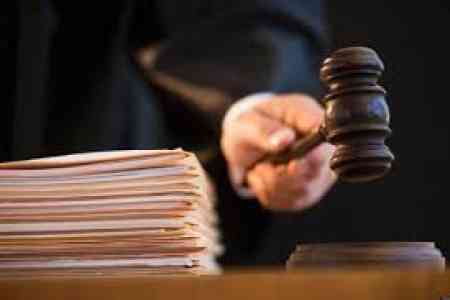
Melikyan called this a positive development, but emphasized that the risks of their application remain and called for the de facto approaches to be enshrined de jure. Melikyan also cited the continued number of lawsuits as a concern, noting that this year's figure could reach last year's record high. "During the third quarter, significantly more lawsuits were filed against journalists and media outlets than in the second or first quarters. The total number of lawsuits for the first nine months of 2026 was 44. For the same period last year, their number was 45, meaning it remained roughly the same. The quarterly distribution is as follows: 14 lawsuits were filed in the first quarter, 12 in the second, and 18 in the third. Moreover, the year is not over yet, and if the current trend continues, the situation could repeat last year's pattern: 61 cases of insult and slander and 2 cases on other grounds," Melikyan recalled.
Of the 18 lawsuits filed in the third quarter, 13, according to him, were initiated by government agencies and organizations, as well as their representatives, 1 lawsuit by a former official, 2 by entrepreneurs, and 2 by citizens. Thus, as Melikyan noted, the majority of lawsuits are filed by officials. The head of the CPFS noted that it is interesting that during these three months, 15 previously accepted lawsuits were upheld, while 8 were rejected. That is, as Melikyan noted, a negative trend is being observed here. "The main reason for the large number of lawsuits is the strong polarization of the information field, the close ties of some media outlets to political forces and their pursuit of political interests.
On the other hand, there is the intolerance of political forces and high-ranking officials, who often perceive journalists as part of the political system representing the interests of the opposing camp," explained the Chairman of the CPSU. Melikyan described journalists' active involvement in filing lawsuits against those who have insulted them as a new phenomenon. Currently, according to him, 10 lawsuits filed by journalists in various years against officials and eight lawsuits against individuals are being reviewed. Melikyan also noted that, as part of its efforts to counter media polarization, the government approved a bill allowing citizens to allocate deductions from their income taxes to media outlets. However, he noted the lack of guarantees that this mechanism will not be used for political purposes. According to him, political forces may push their voters to direct these funds to media outlets that serve their interests. "However, first we need to wait to see what conditions and criteria the bill will provide to ensure the transparency of all processes," the head of the CPFS concluded.






 Expert: Economic pressure on Armenia may be virtually painless for other EAEU members, but not for Armenia itself
 Expert on protests in France: Civilizations fade when society loses a vision of the future
 Turkologist: Azerbaijan is not all-powerful—its vulnerabilities should become part of Armenia’s security strategy
 Opinion: The development of the Amulsar mine near the resort town of Jermuk is the beginning of an environmental disaster in Armenia
 Expert: The arrest of opposition figures in Armenia for social media posts is a systematic attempt to intimidate the public and suppress dissent.
 The Artsakh Public Council expressed outrage at the UN Secretary-General`s behavior
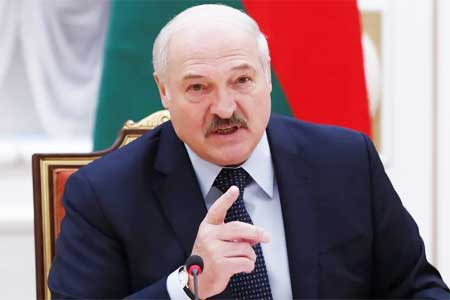 Lukashenko called for Armenia to assume the CIS presidency in 2029
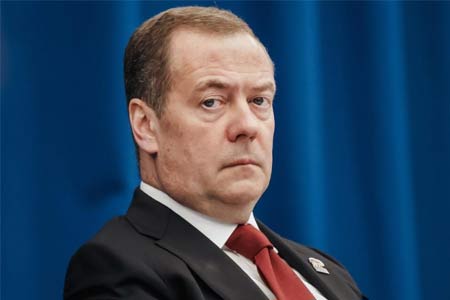 Dmitry Medvedev predicted a Ukrainian-like fate for Armenia amid the country`s shift in foreign policy
 Russian Security Council: In Armenia, they want to force Russian asset owners to dispose of their assets
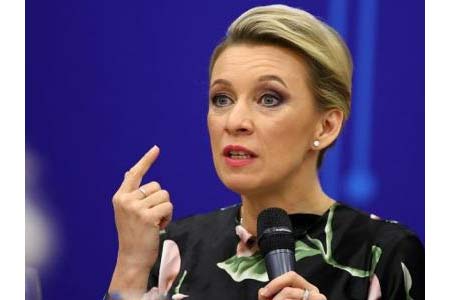 Zakharova: Russia ready to discuss with Armenia the prospects for expanding military cooperation as part of a review of bilateral ties
 Tevanyan: Armenia, like Ukraine and Moldova, is being drawn into the EU’s global war
 Yerevan City Hall is considering introducing a valet parking system in the city
 Expert: The circus surrounding the “Albanization” of Armenian culture in the presence of foreign ambassadors in occupied Artsakh is genocide
 Political scientist: If Russian-Armenian relations are destroyed, Turkey will take Russia`s place
 Political scientist: The Armenian public is simply obliged to significantly change the entire content of public discourse and struggle
 Cross tattoos are being removed from the skin of Christian prisoners in Azerbaijan by fire, according to a human rights activist.
 Zakharova: Armenia`s likely introduction of visas with Russia will be a step against Yerevan itself
 Putin: Armenia`s recognition of Karabakh as part of Azerbaijan in Prague has given Russia`s position on this issue an ambivalent character
 Putin: Armenia`s adoption of the law on EU accession means an announcement of its withdrawal from the Eurasian Economic Union