
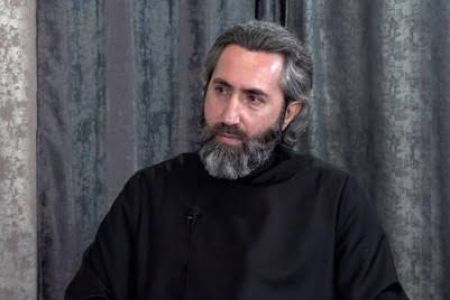
ArmInfo. Father Asoghik Karapetyan, a member of the National Commission for UNESCO in Armenia, criticized the Armenian authorities for ignoring the interests of the Armenian Apostolic Church in their interactions with UNESCO.
"We learned from the news that a visit to Zvartnots Cathedral was organized for the UNESCO Director-General, who is in Armenia. If there was an opportunity to visit Zvartnots, why not visit the Holy See of Etchmiadzin? Why not present, with the approval of UNESCO itself, the wonderfully restored and luxuriously decorated See? The See was the one that was submitted for inclusion on the UNESCO World Heritage List, and Zvartnots Cathedral was only part of that application.
This is regrettable and reprehensible; such a decision and action are an absolute indicator of the lack of statehood and a higher state consciousness." "The Armenian Church, with its See, exalts and is the owner of its entire world heritage," Father Asoghik wrote on his Facebook page.
It is worth noting that on October 17, it was announced that UNESCO Director-General Khaled El-Enany, who is in Armenia to participate in the 17th Conference of the Parties (COP17) to the Convention on Biological Diversity, visited the Zvartnots Cathedral, which is included on the UNESCO World Heritage List.
Zvartnots is a cathedral dedicated to St. Gregory the Illuminator, a monument of 7th-century Armenian architecture, located near Yerevan and Vagharshapat. In 2000, the ruins of the cathedral and the surrounding archaeological site were included on the UNESCO World Heritage List. According to one version, the name, translated from ancient Armenian, means "temple of the watchful angels," from the Armenian zvartun, meaning angel. According to the Armenian historian Sebeos, it was built during the reign of Catholicos Nerses III the Builder in 640-650, who planned to move his residence from Dvin to Vagharshapat. In the 10th century, the temple collapsed during an earthquake due to the weakness of the second-tier support joints. The ruins of Zvartnots were discovered during excavations in 1901-1907. By now, the first tier has been almost entirely reconstructed.






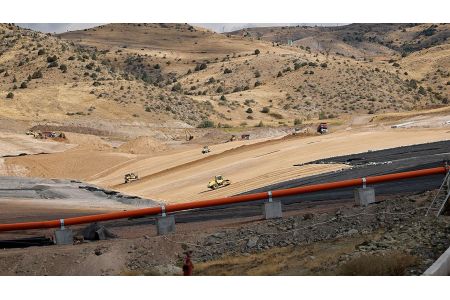


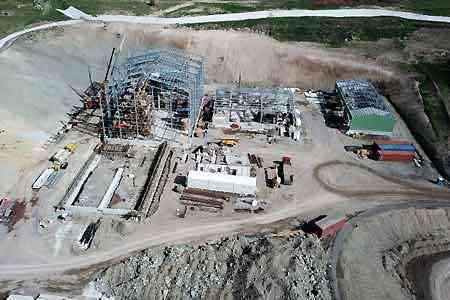



 Opinion: The development of the Amulsar mine near the resort town of Jermuk is the beginning of an environmental disaster in Armenia
 Expert: The arrest of opposition figures in Armenia for social media posts is a systematic attempt to intimidate the public and suppress dissent.
 The Artsakh Public Council expressed outrage at the UN Secretary-General`s behavior
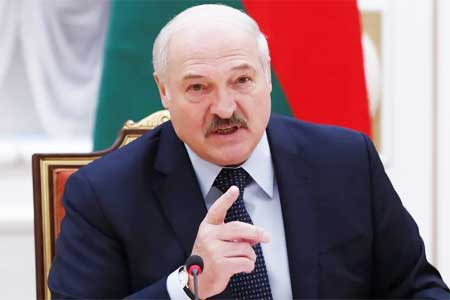 Lukashenko called for Armenia to assume the CIS presidency in 2029
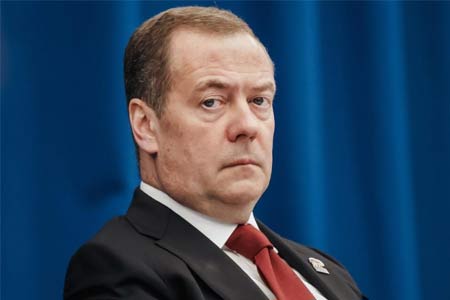 Dmitry Medvedev predicted a Ukrainian-like fate for Armenia amid the country`s shift in foreign policy
 Russian Security Council: In Armenia, they want to force Russian asset owners to dispose of their assets
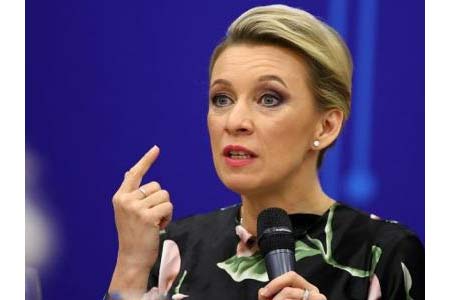 Zakharova: Russia ready to discuss with Armenia the prospects for expanding military cooperation as part of a review of bilateral ties
 Tevanyan: Armenia, like Ukraine and Moldova, is being drawn into the EU’s global war
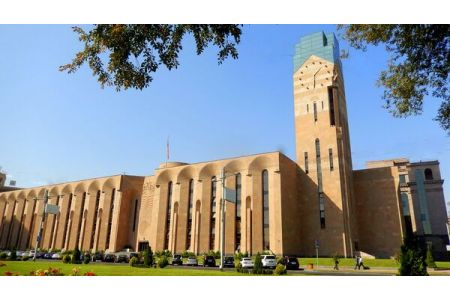 Yerevan City Hall is considering introducing a valet parking system in the city
 Expert: The circus surrounding the “Albanization” of Armenian culture in the presence of foreign ambassadors in occupied Artsakh is genocide
 Political scientist: If Russian-Armenian relations are destroyed, Turkey will take Russia`s place
 Political scientist: The Armenian public is simply obliged to significantly change the entire content of public discourse and struggle
 Cross tattoos are being removed from the skin of Christian prisoners in Azerbaijan by fire, according to a human rights activist.
 Zakharova: Armenia`s likely introduction of visas with Russia will be a step against Yerevan itself
 Putin: Armenia`s recognition of Karabakh as part of Azerbaijan in Prague has given Russia`s position on this issue an ambivalent character
 Putin: Armenia`s adoption of the law on EU accession means an announcement of its withdrawal from the Eurasian Economic Union