


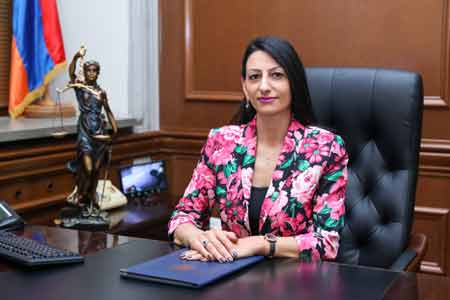
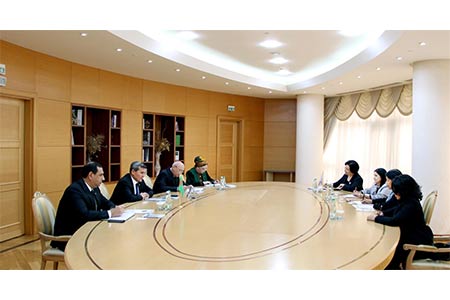
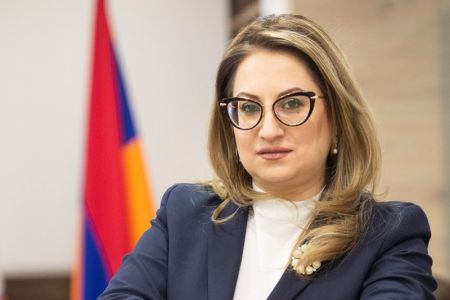
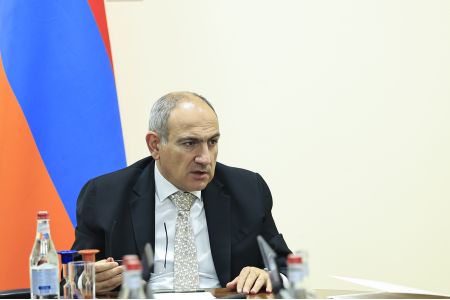
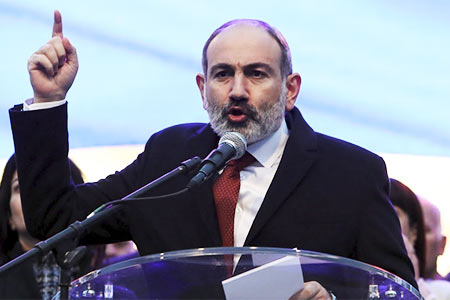
ArmInfo. In recent years, Armenia has become a host country with an influx of people, making migration management a key area of state policy. This was stated by Armenian Minister of Internal Affairs Arpine Sargsyan, speaking at a government meeting dedicated to the main directions of transforming the migration management system, chaired by the country’s Prime Minister Nikol Pashinyan.
Sargsyan recalled that at the beginning of the year, the citizenship component was discussed with the prime minister in a similar format as part of a rethinking of this institution, linking it to “Real Armenia,” a genuine life connection with Armenia, and positioning the Republic of Armenia as a center of interests. As part of this concept, a draft of amendments to the law “On Citizenship of the Republic of Armenia” was developed and is currently nearing completion.
She noted that “the need to clearly define migration management at the strategic level is обусловлена by two important circumstances. First, the more we tighten the conditions for obtaining citizenship, the more foreigners will be directed toward the residence permit institution, especially since the main way of tightening the rules is to establish residency and permanent residence requirements. Second, migration trends in our country have themselves changed significantly, forming a new picture: having been a destination of outmigration for decades, over the past decade Armenia has become a destination for entry and transit, which has become even more pronounced since 2022. At the same time, in 2025 we recorded a positive balance of border crossings by citizens of the Republic of Armenia for the first time, and this continued in the first half of the current year,” the Interior Minister noted. She added that these circumstances had created new challenges for the effective management of immigration. The number of transactions and applications has increased across all migration processes—from border crossings to seeking asylum, including residence applications and trends toward legalizing residence.
In the minister’s opinion, in this context there is a need, in particular, to combat illegal and unregulated migration more effectively by integrating preventive measures, building capacity, and strengthening institutions and mechanisms. Accordingly, modern digital tools are proposed for effective migration management, in particular through the permanent and stable interaction of the Electronic Border Management System, the State Population Register, and other digital migration platforms (citizenship, residence, asylum, etc.).
In this context, according to the minister, reviewing the border management model and tools at the strategic level complements the migration strategy.
The meeting presented legal and institutional steps aimed at unified strategic leadership of migration flows and mobility management, as well as at ensuring the transparency necessary for the state. Details were also presented on actions aimed at resolving a number of problems in the existing migration system, which will ensure a comprehensive review of migration flow and mobility management. In this context, the main directions for transforming Armenia’s migration management system were presented. They are: the formation of a unified migration management system; the creation of a digital, operationally compatible (interoperable), and secure migration management system; the targeted transformation of entry, visa, and residence regimes; and the strengthening of border management and law enforcement capacity.
Prime Minister Pashinyan emphasized that migration management is a key area of state policy, while effective migration management is the foundation of state security, economic development, and the protection of people’s rights. In this context, Nikol Pashinyan noted that steps aimed at effective migration management should be comprehensive, balanced, and focused on long-term stability. The head of government instructed that, based on the decisions adopted following the meeting, the relevant adjustments be made to the draft strategy and that its further implementation be ensured.
It should be noted that the draft amendments to the law “On Citizenship of the Republic of Armenia,” developed by the Ministry of Internal Affairs, has already passed the stage of active interagency discussions and contains a number of significant changes. The main known changes and innovations introduced in the draft concern the tightening of requirements for ethnic Armenians: to obtain citizenship through the simplified procedure on ethnic grounds, applicants will be required to have actually stayed in Armenia for at least 366 days during the past two calendar years. Previously, there was no such strict residency requirement for this category. The government also intends to significantly increase state duties: obtaining citizenship will cost applicants five times more, rising from the current 50,000 drams to 250,000 drams. Terminating citizenship will also become more expensive. The fee will increase tenfold, from 150,000 drams to 1,500,000 drams. Restrictions on the restoration of citizenship are also предусмотрены. Citizens who voluntarily renounced Armenian citizenship will in the future be able to regain it only through the official citizenship restoration procedure. It will not be possible to use other grounds, such as simplified ones, again.
Likewise, starting January 1, 2026, mandatory preliminary verification of all applicants’ documents through a single electronic portal will be introduced. It will be impossible to submit documents without prior approval in the online system. All digital platforms—the databases for citizenship, residence permits, asylum, and the State Border Committee—will be linked into a single interoperable system. At the same time, the Ministry of Internal Affairs predicts that, due to the more complicated procedures and citizenship requirements, the flow of foreigners will gradually be redirected toward obtaining permanent and temporary residence statuses (residence permits). In this regard, long-term residence rules are also being reformed in parallel.

















 Expert: The arrest of opposition figures in Armenia for social media posts is a systematic attempt to intimidate the public and suppress dissent.
 Azerbaijani Studies Expert: While Azerbaijan Prepares Its Generation for War, Aliyev’s Aide Calls on Armenia to Prepare Armenian Society for “Peace”
 Turkologist: Azerbaijan will never, under any circumstances, stop pressuring the Armenian people
 Political scientist: We need to move away from the question of "when" and replace it with more important questions
 International Law Specialist: Azerbaijan intends to initiate legal proceedings against Armenia by sentencing Armenian prisoners
 Lukashenko called for Armenia to assume the CIS presidency in 2029
 Dmitry Medvedev predicted a Ukrainian-like fate for Armenia amid the country`s shift in foreign policy
 Russian Security Council: In Armenia, they want to force Russian asset owners to dispose of their assets
 Zakharova: Russia ready to discuss with Armenia the prospects for expanding military cooperation as part of a review of bilateral ties
 Tevanyan: Armenia, like Ukraine and Moldova, is being drawn into the EU’s global war
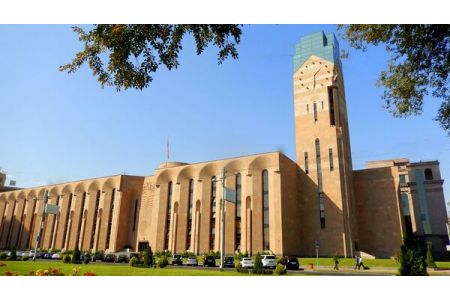 Yerevan City Hall is considering introducing a valet parking system in the city
 Expert: The circus surrounding the “Albanization” of Armenian culture in the presence of foreign ambassadors in occupied Artsakh is genocide
 Political scientist: If Russian-Armenian relations are destroyed, Turkey will take Russia`s place
 Political scientist: The Armenian public is simply obliged to significantly change the entire content of public discourse and struggle
 Cross tattoos are being removed from the skin of Christian prisoners in Azerbaijan by fire, according to a human rights activist.
 Zakharova: Armenia`s likely introduction of visas with Russia will be a step against Yerevan itself
 Putin: Armenia`s recognition of Karabakh as part of Azerbaijan in Prague has given Russia`s position on this issue an ambivalent character
 Putin: Armenia`s adoption of the law on EU accession means an announcement of its withdrawal from the Eurasian Economic Union
 Aram Vardevanyan: Public demands solutions, not apology scandals in Parliament