
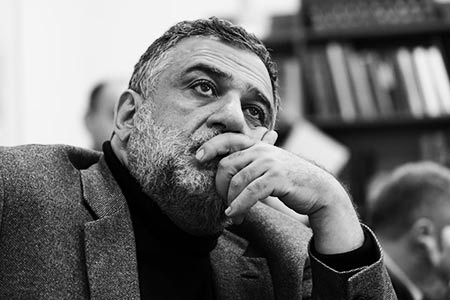
ArmInfo. Experts have begun analyzing the indictment and verdict against renowned philanthropist and former Artsakh State Minister Ruben Vardanyan, who was sentenced to twenty years in prison by the Baku Military Court.
According to a report received by ArmInfo, the content of these documents defies common sense; it is difficult to discern any logical connection between the charges brought and the evidence presented.
As part of a series of publications entitled "Justice, Azerbaijani Style" Pastinfo news agency, together with international law specialist Taron Simonyan, has begun a detailed, point-by-point analysis of Ruben Vardanyan's case materials.
Below are several notable episodes uncovered during the examination of the case materials.
Episode One: Ruben Vardanyan was found "guilty" of the charge of "waging aggressive war" on the grounds that in 2020 he "joined in the continuation of the occupation of sovereign territories."
The indictment for this charge states that in December 2020, the Aurora Humanitarian Initiative allocated funds to Artsakh for the implementation of humanitarian and social programs to assist the population affected by the military actions, and Aurora Prize Laureate Mirza Dinnayi visited Stepanakert. These two "facts" were sufficient for the Baku Military Court to find Vardanyan "guilty" on this charge and sentence him to twenty years in prison.
Episode two: Ruben Vardanyan was found guilty under the article on "persecution of a group of persons on political, national, ethnic, and other prohibited grounds." He was charged with the act specified in this article: "persecution on national and political grounds and obstructing the return of displaced persons." Official letter No. 3-36/2-3659/2023 from the State Committee of Azerbaijan for Refugees and Internally Displaced Persons, dated November 4, 2023, was presented as "evidence." The verdict makes no mention of the victims who testified against Vardanyan, nor of any specific actions he personally committed. The motive here deserves special attention: it essentially stems from Ruben Vardanyan's nationality—the very fact that he is Armenian. Essentially, it was his ethnicity that served as "proof" of his guilt.
Episode three: Ruben Vardanyan is found "guilty" of the enforced disappearance of 3,980 Azerbaijanis. As part of the charge of "enforced disappearance," he is accused of "refusing to provide information about the fate of 3,980 people who went missing between 1989 and 2020." As "proof," The report (No. 542 of December 5, 2023) of the State Commission of Azerbaijan on Prisoners of War, Hostages, and Missing Persons on the number of missing persons during the First Artsakh War is cited.
The prosecution's logic implies that the defendant either participated in the act with which he is accused or, at the very least, possessed information that he should have provided to the Azerbaijani side. However, between 1989 and 2020, Ruben Vardanyan was not physically present in Artsakh. The court decision provides no evidence that Vardanyan ever possessed such information or had the authority to disclose it. Nevertheless, this did not prevent the Baku Military Court from finding his guilt proven and sentencing him to 20 years in prison.
It should be noted that the exact number of Armenian prisoners of war remains unknown. and hostages held in Azerbaijani prisons. Experts estimate there are several hundred of them. Today, the Azerbaijani authorities confirm the presence of 19 Armenians in their custody. Among those held in Azerbaijani captivity, there are 8 former and current representatives of the military-political leadership of Artsakh. These are former presidents of Artsakh. Arkady Ghukasyan, Bako Sahakyan, Arayik Harutyunyan, former Foreign Minister Davit Babayan, as well as Parliament Speaker Davit Ishkhanyan, former Commander of the Artsakh Defense Army, General Levon Mnatsakanyan, General David Manukyan, and former State Minister Ruben Vardanyan.
In February, the Baku puppet court sentenced Arayik Harutyunyan, Davit Babayan, Davit Ishkhanyan, Davit Manukyan, and Levon Mnatsakanyan to life imprisonment on trumped-up charges, and Bako Sahakyan, Arkady Ghukasyan, and Ruben Vardanyan to 20 years in prison. The so-called court sentenced the remaining Artsakh residents to up to 15 years in prison.






 Expert: The arrest of opposition figures in Armenia for social media posts is a systematic attempt to intimidate the public and suppress dissent.
 Azerbaijani Studies Expert: While Azerbaijan Prepares Its Generation for War, Aliyev’s Aide Calls on Armenia to Prepare Armenian Society for “Peace”
 Turkologist: Azerbaijan will never, under any circumstances, stop pressuring the Armenian people
 Political scientist: We need to move away from the question of "when" and replace it with more important questions
 International Law Specialist: Azerbaijan intends to initiate legal proceedings against Armenia by sentencing Armenian prisoners
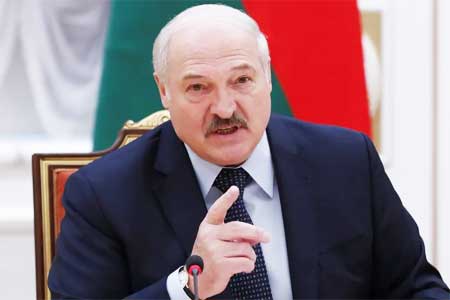 Lukashenko called for Armenia to assume the CIS presidency in 2029
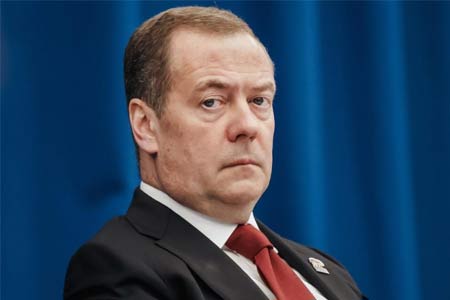 Dmitry Medvedev predicted a Ukrainian-like fate for Armenia amid the country`s shift in foreign policy
 Russian Security Council: In Armenia, they want to force Russian asset owners to dispose of their assets
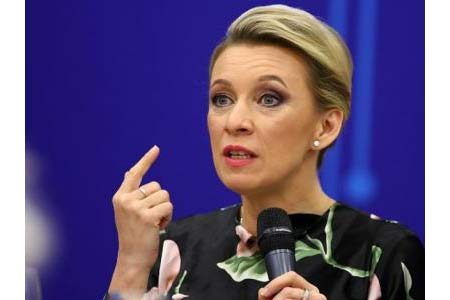 Zakharova: Russia ready to discuss with Armenia the prospects for expanding military cooperation as part of a review of bilateral ties
 Tevanyan: Armenia, like Ukraine and Moldova, is being drawn into the EU’s global war
 Yerevan City Hall is considering introducing a valet parking system in the city
 Expert: The circus surrounding the “Albanization” of Armenian culture in the presence of foreign ambassadors in occupied Artsakh is genocide
 Political scientist: If Russian-Armenian relations are destroyed, Turkey will take Russia`s place
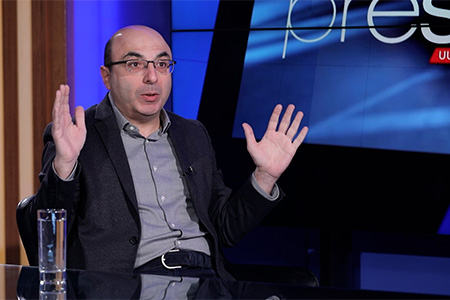 Political scientist: The Armenian public is simply obliged to significantly change the entire content of public discourse and struggle
 Cross tattoos are being removed from the skin of Christian prisoners in Azerbaijan by fire, according to a human rights activist.
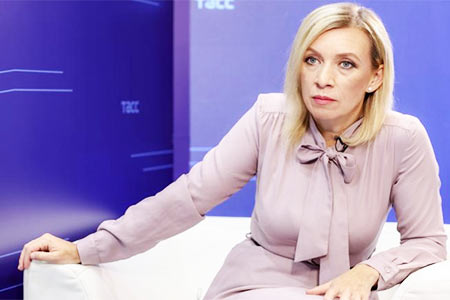 Zakharova: Armenia`s likely introduction of visas with Russia will be a step against Yerevan itself
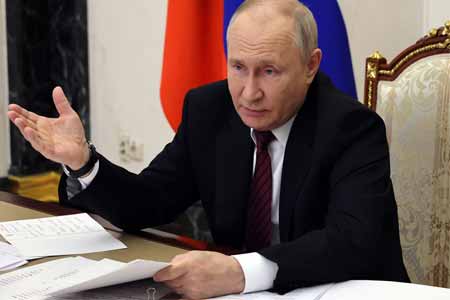 Putin: Armenia`s recognition of Karabakh as part of Azerbaijan in Prague has given Russia`s position on this issue an ambivalent character
 Putin: Armenia`s adoption of the law on EU accession means an announcement of its withdrawal from the Eurasian Economic Union