
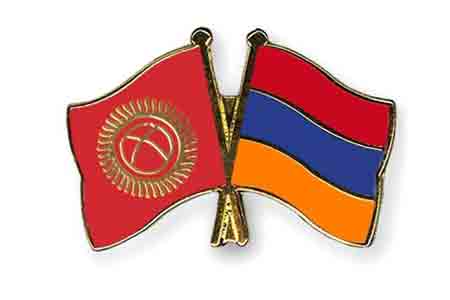
ArmInfo. On October 8, the Armenian government approved a proposal to sign a protocol to the readmission agreement and a new agreement on the procedure for the stay of citizens between Armenia and Kyrgyzstan.
The draft's rationale notes that the readmission protocol is aimed at developing cooperation in the field of migration and effectively combating illegal migration between the two countries. Citizens of Armenia and Kyrgyzstan have the right, on equal terms, to enter, exit, transit, and reside in the territory of the other country for up to 90 days within a total period of 180 days. Citizens are required to register with the internal affairs agencies of the host country if their stay exceeds 30 days.
The agreement clearly defines the list of documents entitling Armenian citizens to cross the border and stay (including a passport, identification card/ID card, diplomatic passport, etc.).
The rationale states that an important prerequisite for strengthening bilateral relations and further developing interstate cooperation is the creation of favorable conditions for contacts between citizens, mutual visits, and the expansion of business, tourism, cultural, and educational ties. Relations between the Republic of Armenia and the Kyrgyz Republic are developing on the basis of friendship and mutual respect. Political dialogue is ongoing between the two countries, both bilaterally and multilaterally. In recent years, there has been a trend toward further developing bilateral relations and expanding practical cooperation, including deepening cooperation in the legal and law enforcement spheres. An important prerequisite for strengthening bilateral relations and further developing interstate cooperation is the creation of favorable conditions for contacts between citizens, reciprocal visits, and the expansion of business, tourism, cultural, and educational ties.
Currently, a visa-free regime exists between the two countries for mutual visits by citizens of the Republic of Armenia and the Kyrgyz Republic.
At the same time, it is advisable to introduce more comprehensive and unified regulation of relations related to mutual visits and stays of citizens through a bilateral international agreement defining the general conditions for entry, exit, transit, and stay of citizens, travel documents used, length of stay, as well as mechanisms for cooperation between the competent authorities of the parties.













 Azerbaijani Studies Expert: While Azerbaijan Prepares Its Generation for War, Aliyev’s Aide Calls on Armenia to Prepare Armenian Society for “Peace”
 Turkologist: Azerbaijan will never, under any circumstances, stop pressuring the Armenian people
 Political scientist: We need to move away from the question of "when" and replace it with more important questions
 International Law Specialist: Azerbaijan intends to initiate legal proceedings against Armenia by sentencing Armenian prisoners
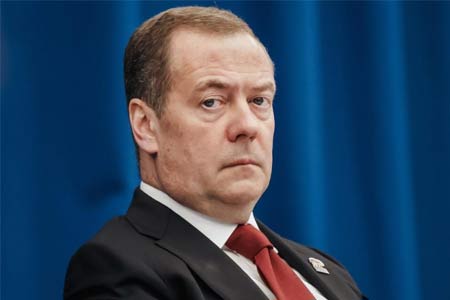 Dmitry Medvedev predicted a Ukrainian-like fate for Armenia amid the country`s shift in foreign policy
 Russian Security Council: In Armenia, they want to force Russian asset owners to dispose of their assets
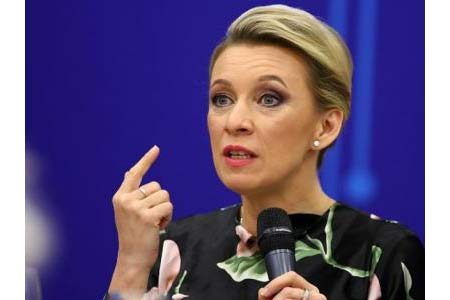 Zakharova: Russia ready to discuss with Armenia the prospects for expanding military cooperation as part of a review of bilateral ties
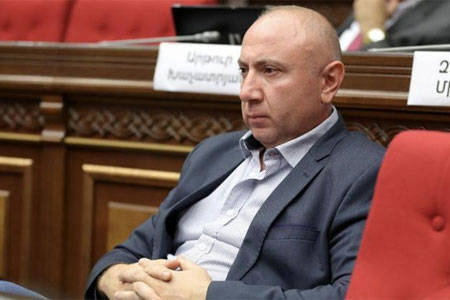 Tevanyan: Armenia, like Ukraine and Moldova, is being drawn into the EU’s global war
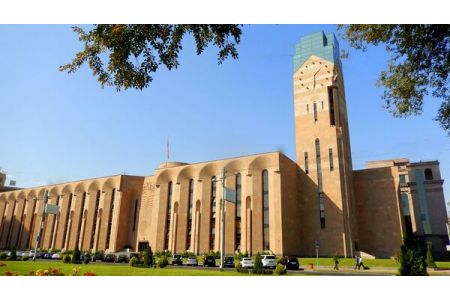 Yerevan City Hall is considering introducing a valet parking system in the city
 Expert: The circus surrounding the “Albanization” of Armenian culture in the presence of foreign ambassadors in occupied Artsakh is genocide
 Political scientist: If Russian-Armenian relations are destroyed, Turkey will take Russia`s place
 Political scientist: The Armenian public is simply obliged to significantly change the entire content of public discourse and struggle
 Cross tattoos are being removed from the skin of Christian prisoners in Azerbaijan by fire, according to a human rights activist.
 Zakharova: Armenia`s likely introduction of visas with Russia will be a step against Yerevan itself
 Putin: Armenia`s recognition of Karabakh as part of Azerbaijan in Prague has given Russia`s position on this issue an ambivalent character
 Putin: Armenia`s adoption of the law on EU accession means an announcement of its withdrawal from the Eurasian Economic Union
 Aram Vardevanyan: Public demands solutions, not apology scandals in Parliament
 Arrested Armenian oligarch on economy and new jobs