

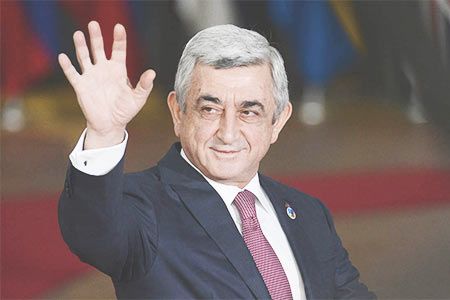
ArmInfo. The Anti-Corruption Court of Armenia, chaired by Judge Sarkis Petrosyan, has lifted the travel ban imposed on Serzh Sargsyan, the third president of the Republic of Armenia. The decision was made at a court hearing on October 2.
At the same time, the court rejected Serzh Sargsyan's defense's motion to dismiss the criminal case. Lawyer Amram Makinyan, citing Article 68 of the Republic of Armenia's Constitution, which prohibits repeated prosecution for the same offense, noted that exceptions are possible only in the presence of new circumstances or fundamental violations that could influence the outcome of the case. Meanwhile, Makinyan noted that today one can speak of no new facts; the issue is merely one of agreement or disagreement with the previous legal assessment. The lawyer noted that Serzh Sargsyan is being charged with something that had already been dismissed by the prosecutor.
The court also noted the prosecution's argument that the Ministry of Defense was not notified of the previous trial and therefore could not challenge the decision. The ministry subsequently filed a complaint upon learning of it. Makinyan countered that the Ministry of Defense had no procedural status in this criminal case. "If the Ministry of Defense was not a subject of the trial, why should it have been informed of it?" the lawyer responded.
However, the court noted that at this stage it is not considering the procedural status of the RA Ministry of Defense. The prosecutor's office is not citing a new circumstance per se, but rather the Ministry of Defense's legitimate interest in this case.
It should be noted that Serzh Sargsyan was charged with abuse of office. According to the indictment, from 2000 to 2007, while serving as Minister of Defense of the Republic of Armenia, he ignored the requirements of relevant government decisions and alienated the Sev Berd Fortress in Gyumri, which is considered an immovable historical and cultural monument, as well as the adjacent land plot owned by the Ministry of Defense. According to the indictment, this resulted in significant damage to the legitimate interests of the state, which, through negligence, led to serious consequences.










 Political scientist: We need to move away from the question of "when" and replace it with more important questions
 International Law Specialist: Azerbaijan intends to initiate legal proceedings against Armenia by sentencing Armenian prisoners
 Russian Security Council: In Armenia, they want to force Russian asset owners to dispose of their assets
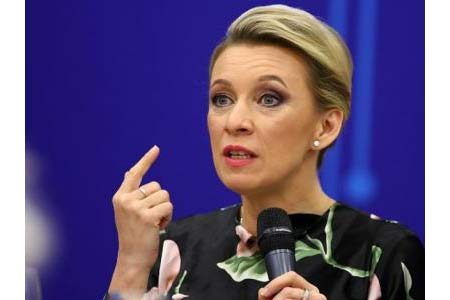 Zakharova: Russia ready to discuss with Armenia the prospects for expanding military cooperation as part of a review of bilateral ties
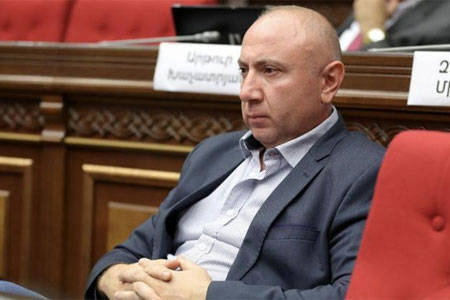 Tevanyan: Armenia, like Ukraine and Moldova, is being drawn into the EU’s global war
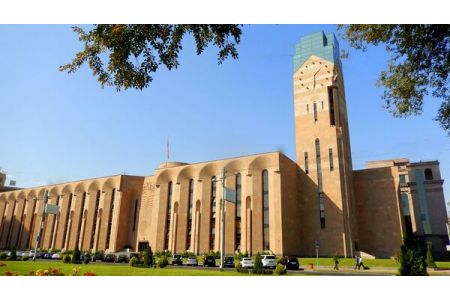 Yerevan City Hall is considering introducing a valet parking system in the city
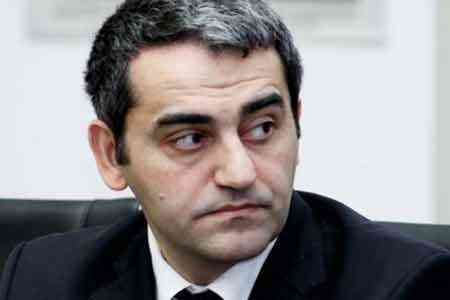 Expert: The circus surrounding the “Albanization” of Armenian culture in the presence of foreign ambassadors in occupied Artsakh is genocide
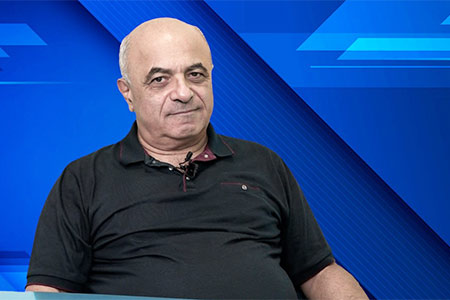 Political scientist: If Russian-Armenian relations are destroyed, Turkey will take Russia`s place
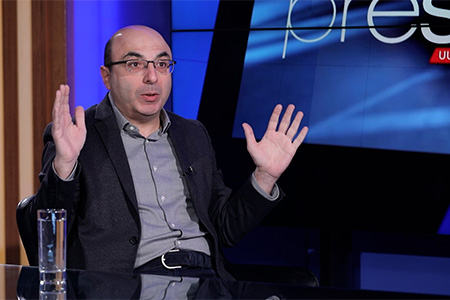 Political scientist: The Armenian public is simply obliged to significantly change the entire content of public discourse and struggle
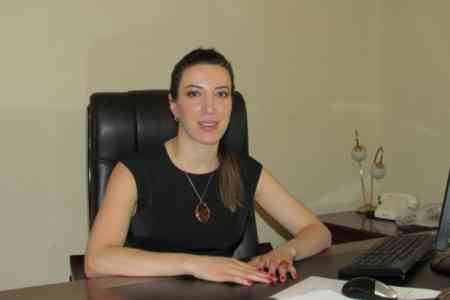 Cross tattoos are being removed from the skin of Christian prisoners in Azerbaijan by fire, according to a human rights activist.
 Zakharova: Armenia`s likely introduction of visas with Russia will be a step against Yerevan itself
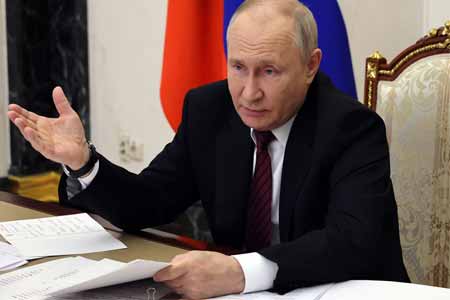 Putin: Armenia`s recognition of Karabakh as part of Azerbaijan in Prague has given Russia`s position on this issue an ambivalent character
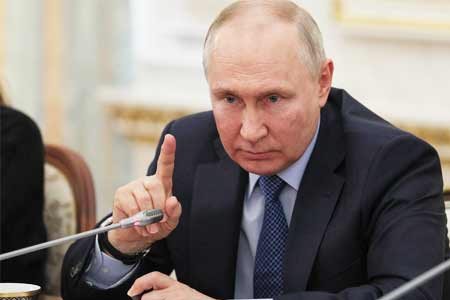 Putin: Armenia`s adoption of the law on EU accession means an announcement of its withdrawal from the Eurasian Economic Union
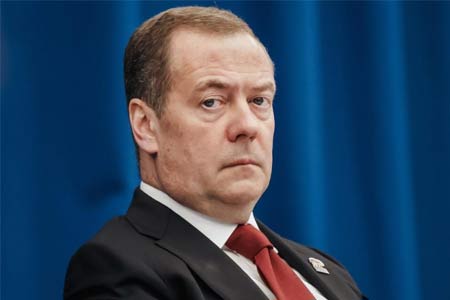 Medvedev: Yerevan will never become an EU member, but it will permanently damage relations with the Eurasian Economic Union, including with Moscow.
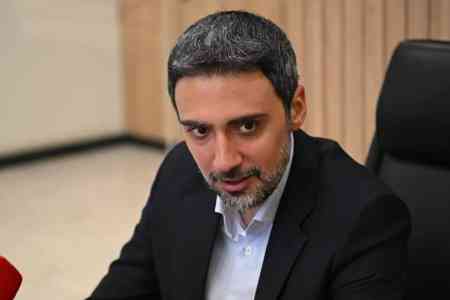 Aram Vardevanyan: Public demands solutions, not apology scandals in Parliament
 Arrested Armenian oligarch on economy and new jobs
  "In Baku, we gave a worthy rebuff to the false claims regarding the past and present of our people" – Former Artsakh Parliament Speaker from Baku captivity