
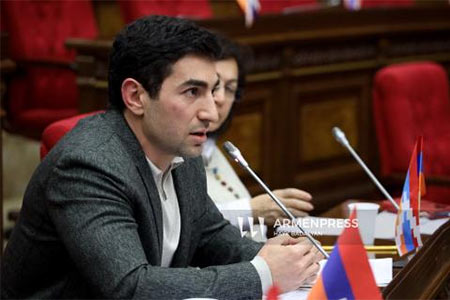
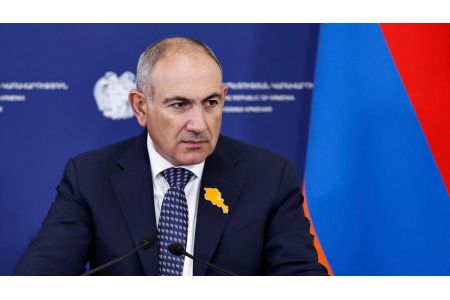
ArmInfo. The public broadcaster should be public, not pro-government. Levon Kocharyan, a member of the parliamentary faction of the same name, wrote this, as reported by the press service of the Armenia bloc, citing one of the conclusions of the Parliamentary Assembly of the Council of Europe (PACE) report on election observation.
He recalled that media pluralism is not just an adornment to democracy, but a crucial mechanism through which citizens demand accountability from the government. "Where different opinions and voices compete freely, mistakes become clear, abuses are highlighted, and citizens are given the opportunity to compare one point of view with another and draw their own conclusions. When this diversity is limited, choice may remain, but it gradually loses its true meaning. "People continue to vote, but their choice becomes a formality, as they no longer receive full information and alternative views," Kocharyan writes.
This process, as the MP noted, usually doesn't begin with overt censorship. He said it begins more subtly: by not asking an uncomfortable question, not voicing an alternative opinion, or not covering a fact that's unpleasant for the authorities. Ultimately, Kocharyan noted, citizens simply don't know what they haven't been told. He also noted that the public broadcaster bears a special responsibility in this matter. "A private television company can have an owner and its own editorial policy. The public broadcaster has no such justification. It is financed by the taxes of all citizens, including those who didn't vote for the current government. Consequently, this funding imposes obligations. "The public broadcaster is obligated to represent the full diversity of views existing in society, to report on facts inconvenient for the authorities, and, when accusations are made against someone, to ensure the other party's right of response," the MP emphasized.
However, according to him, when the public broadcaster refuses this responsibility, a situation arises in which citizens, with their taxes, finance an organization that, instead of providing information, presents them with propaganda convenient for the authorities. The example of the Public Television of Armenia (PTA), Kocharyan noted, is a serious warning. He noted that the PACE election observation report found that the public broadcaster demonstrated a clear bias in favor of the ruling Civil Contract party, contrary to its legal obligations and public mission. "The report also noted that the resulting media environment has limited citizens' ability to make informed choices," the opposition figure added.
He highlighted three concerning phenomena. First, he said, is the suppression of information: alternative viewpoints and facts inconvenient for the authorities are simply not aired. "Under such conditions, no one loses the argument because the debate itself doesn't exist. Second, the use of law enforcement reports as the primary source of political information. Statements about cases brought against opposition figures or ongoing investigations are often presented as if their guilt is already proven, while the other side is not given the opportunity to present their position," the deputy explained.
Third, he said, is the issue of editorial independence. In this regard, the opposition figure noted that the public broadcaster's main political program is hosted by the husband of one of the current ministers (this refers to the wife of the Minister of Education, Science, Culture, and Sports (MECS) of Armenia, Zhanna Andreasyan, Armenian television journalist Petros Ghazaryan – ed.). "This situation, at a minimum, raises serious questions about the channel's impartiality and editorial independence. Furthermore, independent fact-checking organizations have documented networks of fake accounts on social media that spread and amplify attacks on opposition figures. Some of these attacks even reach prime-time broadcasts." The solution is simple and has long been formulated by the Assembly: the public broadcaster must be truly public, not pro-government," the opposition member stated.
That is, as the MP explained, it is necessary to guarantee its impartiality, ensure genuine editorial independence, and prevent a situation in which the government uses public broadcasting as a tool for its own propaganda. "In a democratic society, citizens have the right not only to vote but also to be informed. Without pluralistic and independent media, this right remains only on paper," Kocharyan concluded.
As a reminder, the PACE report on the results of the parliamentary elections in Armenia, held on June 7, 2026, noted that the policies of Public Television and several key private broadcasters demonstrated a clear bias in favor of the ruling party and negative coverage of the activities of leading opposition parties, while other media outlets consistently covered the government's activities in a critical light. Furthermore, it is emphasized that much of the television coverage of the election campaign was used to amplify mutual insults, while attention to the candidates' platforms and public political debate remained limited.











 Political scientist: We need to move away from the question of "when" and replace it with more important questions
 International Law Specialist: Azerbaijan intends to initiate legal proceedings against Armenia by sentencing Armenian prisoners
 An Armenian Turkologist spoke out against attempts to deny the value of Artsakh and the liberation of Armenia.
 Russian political scientist: Moscow`s reaction to the TRIPP project will largely depend on the trend in Russian-American relations
 Armenian Political Scientist: The approaches, methods, rmphases and content of today’s struggle in Armenia Cannot Remain the Same
 Russian Security Council: In Armenia, they want to force Russian asset owners to dispose of their assets
 Zakharova: Russia ready to discuss with Armenia the prospects for expanding military cooperation as part of a review of bilateral ties
 Tevanyan: Armenia, like Ukraine and Moldova, is being drawn into the EU’s global war
 Yerevan City Hall is considering introducing a valet parking system in the city
 Expert: The circus surrounding the “Albanization” of Armenian culture in the presence of foreign ambassadors in occupied Artsakh is genocide
 Political scientist: If Russian-Armenian relations are destroyed, Turkey will take Russia`s place
 Political scientist: The Armenian public is simply obliged to significantly change the entire content of public discourse and struggle
 Cross tattoos are being removed from the skin of Christian prisoners in Azerbaijan by fire, according to a human rights activist.
 Zakharova: Armenia`s likely introduction of visas with Russia will be a step against Yerevan itself
 Putin: Armenia`s recognition of Karabakh as part of Azerbaijan in Prague has given Russia`s position on this issue an ambivalent character
 Putin: Armenia`s adoption of the law on EU accession means an announcement of its withdrawal from the Eurasian Economic Union
 Medvedev: Yerevan will never become an EU member, but it will permanently damage relations with the Eurasian Economic Union, including with Moscow.
 Arrested Armenian oligarch on economy and new jobs
  "In Baku, we gave a worthy rebuff to the false claims regarding the past and present of our people" – Former Artsakh Parliament Speaker from Baku captivity