
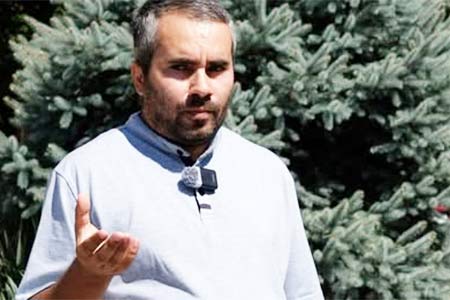
ArmInfo. Since 2020, the number of recorded cases of vandalism in Artsakh has exceeded 1,000. More than seven churches have been completely destroyed, approximately 10 villages have ceased to exist, and approximately the same number have been partially destroyed. This was stated by Ombudsman for Cultural Heritage of the NKR and Vice President of the Azgayin Historical and Cultural NGO, Hovik Avanesov, at a press conference in Yerevan on September 28 entitled "Artsakh Three Years Later: Facts, Responsibility, and the Future Agenda."
Speaking about the preservation of Artsakh's cultural heritage, he noted that there are two main challenges in this area today. The first concerns the preservation of cultural heritage in the territory of Artsakh under Azerbaijani control, and the second concerns the preservation of Artsakh's intangible heritage, which is now in Armenia. In addition to the data already presented, he noted that, as of today, Stepanakert's monumental heritage, including residential areas, has been almost completely destroyed. "These are issues that must be constantly raised today," Avanesov noted.
He also drew attention to a new problem: Azerbaijan's appeal to Interpol to add the khachkars and frescoes removed from the Dadivank Monastery to its database of wanted works of art. According to him, at least two factors must be emphasized here. "First, Interpol does not have the appropriate tools or authority to intervene in such matters. Second, from the perspective of international law, the removal of cultural heritage from a military conflict zone is not in itself a crime." "Our task is to present all the facts to the international community and demonstrate that the Armenian cultural heritage located there is at risk of complete destruction," the NKR Cultural Heritage Ombudsman emphasized. In this regard, he announced that they intend to send a written request to Interpol through their platform in the near future to obtain clarification regarding the basis for such actions and to determine whether the Azerbaijani side's request was actually registered in the relevant database. He added that it is possible that Azerbaijan is attempting to conduct information campaigns using Interpol's authority. "There have been similar statements in the past, but after appropriate clarifications, it was discovered that no official requests were sent to international organizations." "After receiving the answer, we will definitely present it to the public," Avanesov stated.
Speaking about the second issue—the preservation of Artsakh's intangible heritage within Armenia—he noted that after the forced displacement of the Artsakh people, this heritage is under serious threat. In particular, dialects and national traditions are at risk of extinction. "No matter how many public initiatives are undertaken to preserve this heritage, it is impossible to solve the problem solely by such means. There is a need for compact resettlement of the Artsakh people. This issue should be one of our key priorities, since it concerns not only social issues but also the preservation of cultural heritage." "At the same time, it is necessary to resolve the issue of determining the status of Artsakh's cultural heritage, which was displaced to Armenia at various times," he noted.
Furthermore, as the NKR Cultural Heritage Ombudsman noted, there is a lack of assessment of the needs of artists, including artists and sculptors, forcibly displaced from Artsakh. Avanesov explained that many of them had their own workshops, tools, and the necessary infrastructure for their work in Artsakh. "We need to understand the problems they face and what steps we can take to address them. After all, it is impossible to talk about Artsakh's heritage while ignoring the future of the people who are directly involved in the creation of a significant portion of this heritage," the Artsakh Cultural Heritage Ombudsman emphasized.
In conclusion, he called on the conference participants to prepare a joint statement, sign it, and send it to external actors and the Armenian authorities. The document, he said, must identify all of the listed problems and present specific demands for their solution. "Only by protecting our heritage can we resist Azerbaijan's desire to destroy it. We also should not wait for what Azerbaijan will do next with regard to yet another element of our heritage. It is necessary to take action now and inform the international community in every possible way about what is happening," Avanesov concluded. It should be noted that the cultural genocide in Artsakh is taking place against the backdrop of the tacit encouragement of the so-called civilized international community. Day after day, the Azerbaijani invaders are destroying objects that testify to the thousand-year presence of Armenians on this land, falsifying the true history of the region.



















 Armenian Political Scientist: The approaches, methods, rmphases and content of today’s struggle in Armenia Cannot Remain the Same
 Political scientist: Armenians will live peacefully in their homeland only when they can once again set national goals for themselves, such as Artsakh
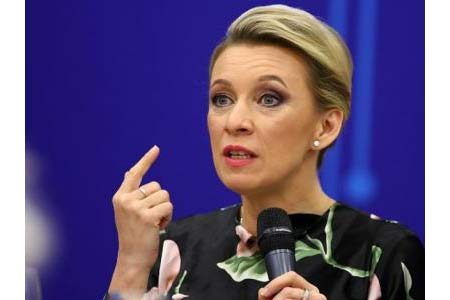 Zakharova: Russia ready to discuss with Armenia the prospects for expanding military cooperation as part of a review of bilateral ties
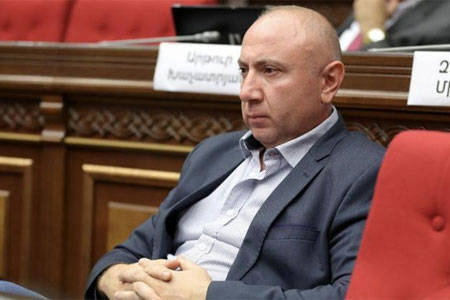 Tevanyan: Armenia, like Ukraine and Moldova, is being drawn into the EU’s global war
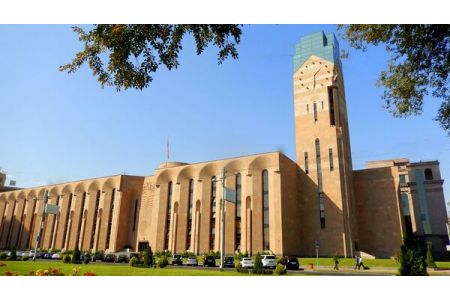 Yerevan City Hall is considering introducing a valet parking system in the city
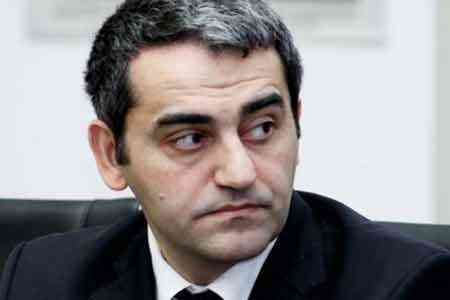 Expert: The circus surrounding the “Albanization” of Armenian culture in the presence of foreign ambassadors in occupied Artsakh is genocide
 Political scientist: If Russian-Armenian relations are destroyed, Turkey will take Russia`s place
 Political scientist: The Armenian public is simply obliged to significantly change the entire content of public discourse and struggle
 Cross tattoos are being removed from the skin of Christian prisoners in Azerbaijan by fire, according to a human rights activist.
 Zakharova: Armenia`s likely introduction of visas with Russia will be a step against Yerevan itself
 Putin: Armenia`s recognition of Karabakh as part of Azerbaijan in Prague has given Russia`s position on this issue an ambivalent character
 Putin: Armenia`s adoption of the law on EU accession means an announcement of its withdrawal from the Eurasian Economic Union
 Medvedev: Yerevan will never become an EU member, but it will permanently damage relations with the Eurasian Economic Union, including with Moscow.
 Aram Vardevanyan: Public demands solutions, not apology scandals in Parliament
 Arrested Armenian oligarch on economy and new jobs
  "In Baku, we gave a worthy rebuff to the false claims regarding the past and present of our people" – Former Artsakh Parliament Speaker from Baku captivity