

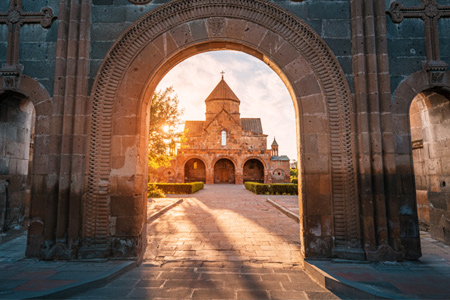
ArmInfo. The Public Relations and Information Center of the Office of the Prime Minister of Armenia has published a report on the situation in the Armenian Apostolic Church and possible solutions.
The report, titled "On the Crisis that Has Arised in the Armenian Apostolic Church as a Result of the Activities of the De facto Leader of the Church and Several High-Ranking Clergy, and Ways to Resolve It," was prepared as part of the Armenian government's 2026-2031 program, upon the instruction of Prime Minister Nikol Pashinyan. The purpose of the document is to document, through a study of open sources, the circumstances that its authors characterize as a crisis in the Armenian Apostolic Church and to propose ways to overcome it.
The authors of the document emphasize that the report does not challenge the dogmatic foundations of the Church, Holy Scripture, or canonical order. According to their position, the document focuses on alleged violations of these principles. The report also states that Church reform should be carried out by the Church itself, with the participation of its hierarchy and faithful, while the state should act within the limits of its legislative powers.
According to the Center, information from open sources was used in preparing the document, and the information presented therein was compared with the provisions of the Charter of the Armenian Apostolic Church, the Apostolic Canons, the Charter on the Convocation of the National Church Council of 1945, other canonical documents, and Armenian legislation. The authors of the report identify 16 circumstances that, in their assessment, indicate a crisis in the AAC. Among them, the document cites alleged violations of the vow of celibacy, the persecution and defrocking of clergy, financial opacity and misuse of church property, the ordination of relatives and "clan governance," the politicization of the Holy See and external influence, the prolonged hiatus of the National Church Council, the lack of a unified Church Constitution, and schisms within the dioceses of the Diaspora. The authors of the report propose a five-stage "roadmap" for overcoming the situation, which they characterize as a crisis.












 Armenian Political Scientist: The approaches, methods, rmphases and content of today’s struggle in Armenia Cannot Remain the Same
 Political scientist: Armenians will live peacefully in their homeland only when they can once again set national goals for themselves, such as Artsakh
 Armenian Historian: People Like Magdalena Grono Should Be Kept Away from the Thresholds of Armenian Shrines
 Azerbaijani studies expert: Armenia’s Foreign Ministry could use the ICC against Aliyev’s Armenophobic statements
 An Armenian political analyst exposed Hajiyev’s lies and attempts to mislead diplomats accredited in Azerbaijan in occupied Artsakh
 Russian Security Council: In Armenia, they want to force Russian asset owners to dispose of their assets
 Zakharova: Russia ready to discuss with Armenia the prospects for expanding military cooperation as part of a review of bilateral ties
 Tevanyan: Armenia, like Ukraine and Moldova, is being drawn into the EU’s global war
 Yerevan City Hall is considering introducing a valet parking system in the city
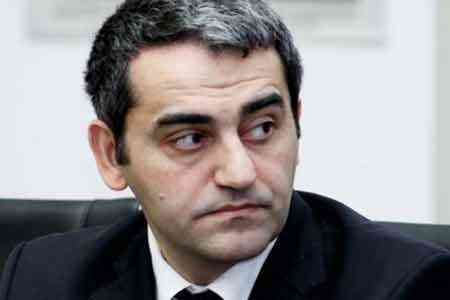 Expert: The circus surrounding the “Albanization” of Armenian culture in the presence of foreign ambassadors in occupied Artsakh is genocide
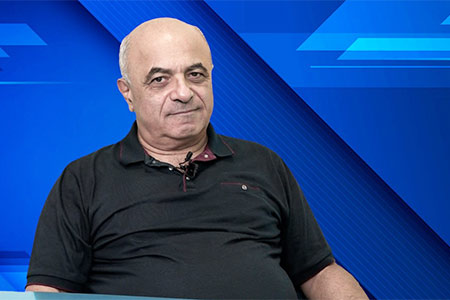 Political scientist: If Russian-Armenian relations are destroyed, Turkey will take Russia`s place
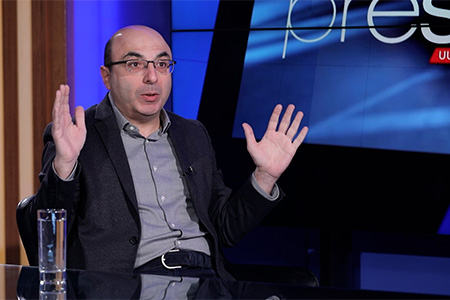 Political scientist: The Armenian public is simply obliged to significantly change the entire content of public discourse and struggle
 Cross tattoos are being removed from the skin of Christian prisoners in Azerbaijan by fire, according to a human rights activist.
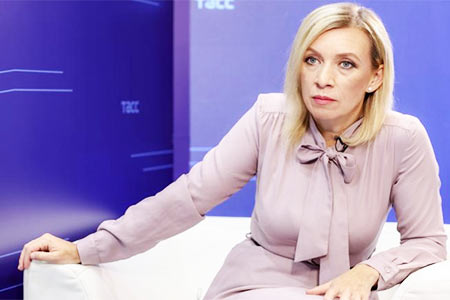 Zakharova: Armenia`s likely introduction of visas with Russia will be a step against Yerevan itself
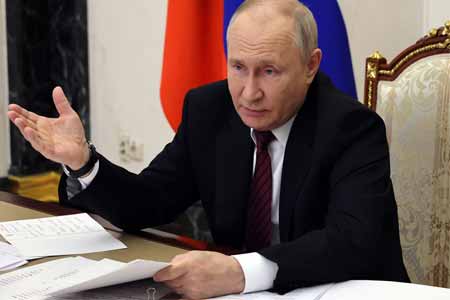 Putin: Armenia`s recognition of Karabakh as part of Azerbaijan in Prague has given Russia`s position on this issue an ambivalent character
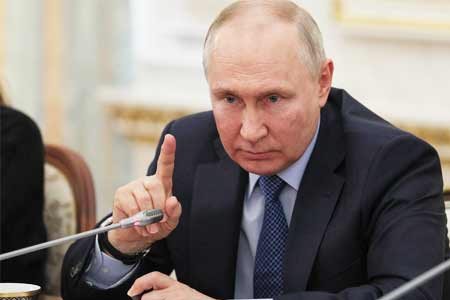 Putin: Armenia`s adoption of the law on EU accession means an announcement of its withdrawal from the Eurasian Economic Union
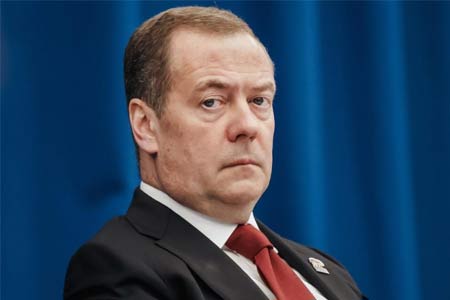 Medvedev: Yerevan will never become an EU member, but it will permanently damage relations with the Eurasian Economic Union, including with Moscow.
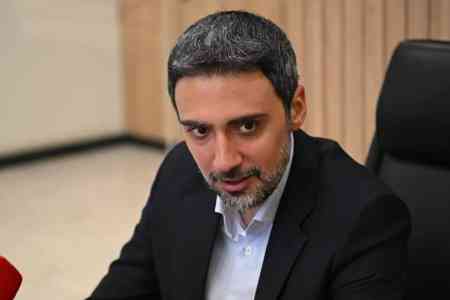 Aram Vardevanyan: Public demands solutions, not apology scandals in Parliament
 Arrested Armenian oligarch on economy and new jobs
  "In Baku, we gave a worthy rebuff to the false claims regarding the past and present of our people" – Former Artsakh Parliament Speaker from Baku captivity