

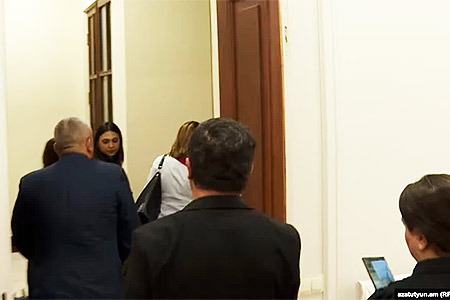
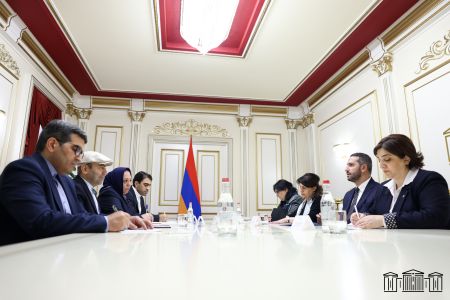
ArmInfo. Representatives of the Civil Contract faction left the Armenian parliamentary hearings discussing the problems of the Artsakh people after Artsakh Ombudsman Gegham Stepanyan criticized the government's refugee support program.
On September 23, during organized discussions titled "Socio-Economic and Legal Problems of Artsakh People and Their Solutions," Stepanyan said that rental prices have increased due to the new influx of migrants into Armenia. In this situation, he said, the people of Artsakh find themselves in the most vulnerable position. As the Artsakh Ombudsman explained, the insignificant amount that the Armenian state continues to pay to certain groups of Artsakh residents is completely inadequate to meet their needs.
"As of today, approximately 8,000 people have received housing certificates, but only about 4,000 have been able to use them. Doesn't this number tell us anything? Specifically, it shows that a certain portion of Artsakh residents receive a certificate but are unable to use it. One of the main reasons is that they often cannot find an apartment that meets the established requirements, including the price. Simply open one of the most popular real estate search sites in Armenia, List.am, and see how realistic it is to find housing there that meets the requirements of the government program and the established certificate amount," Stepanyan stated.
An alternative, as the Artsakh Ombudsman noted, could be the construction of new housing. In particular, the human rights activist explained, it is necessary to do everything possible to ensure that the current program encourages Artsakh residents to build. "This could be either an independent initiative by an individual to build their own home or a project implemented with the involvement of a construction company. Perhaps this option could be one of the solutions to the existing problem," the NKR Ombudsman believes.
Another problem, Stepanyan continued, is the need to increase the amount provided under the housing program. According to him, it should be indexed to account for rising real estate prices. Stepanyan specifically touched on the issue of small families. According to him, representatives of this category are often assured that work is being done in this direction. However, as Stepanyan noted, they have yet to see any tangible results from this work, while the situation for these families is becoming increasingly difficult.
According to Stepanyan, problems also persist with the payment of student tuition fees. In particular, he questioned why applicants for the 2026-2027 academic year were not also included in the program. "Can we really say that social sustainability has already been ensured to such an extent that these families no longer need such support?" the human rights activist asked.
In this context, he also pointed out another problem: for some reason, Artsakh students are losing their benefits if they change educational institutions. Furthermore, he noted, only students at state universities can benefit from the program. Instead, Stepanyan believes, the program could provide partial compensation, if not full coverage of expenses.
Stepanyan also touched on the issue of obtaining Armenian citizenship, noting, in particular, the excessively long processing times. "Artsakh residents who applied for citizenship in January received it only in July-August. Therefore, the entire process can take 6-7 months. If an application is submitted electronically, notification of the need to appear at the Passport and Visa Office may only arrive after two months, after which, at best, citizenship is granted within three months." Work is underway with the responsible government agency on this issue, but in the current situation, it has not yet been sufficiently effective. "This is especially true given that obtaining citizenship is directly linked to the possibility of obtaining a housing certificate," the Artsakh Ombudsman noted.
Speaking about the Artsakh employment promotion program, Stepanyan noted the lack of clear data on how many of its beneficiaries were actually able to find work. According to him, this is also a problem, since it is necessary to understand whether the funds allocated for the program's implementation have led to long-term and stable employment for Artsakh residents. "As for the Artsakh self-employment support program, according to my information, its implementation is currently completely suspended. In this regard, clarification is needed on the reasons for the program's suspension, as well as whether its further continuation is planned," the human rights activist added.
Following Stepanyan's speech, Armenian parliament member from the ruling Civil Contract faction, Mariam Poghosyan stated that the faction representatives came to the discussion expecting to address issues related to resolving the social problems of the Artsakh people, whereas, in her words, the discussion effectively turned into an "interparliamentary meeting." "We have already said that there cannot be two parliaments in Armenia, there cannot be two authorities, and therefore we are forced to leave this discussion," she stated.
It should be noted that after this, the representatives of the ruling faction left the hearings. In response, Lilit Galstyan, a member of the Armenian parliament from the opposition "Armenia" faction, stated that she saw no basis for such a decision. "There is no opposition or government here. There is the protection of the rights of the people of Artsakh, which is equally the responsibility of both the opposition and the ruling party. But leave, fine, because this is a matter of your political will," she said in response to the departing government representatives.














 Armenian Political Scientist: The approaches, methods, rmphases and content of today’s struggle in Armenia Cannot Remain the Same
 Political scientist: Armenians will live peacefully in their homeland only when they can once again set national goals for themselves, such as Artsakh
 Armenian Historian: People Like Magdalena Grono Should Be Kept Away from the Thresholds of Armenian Shrines
 Azerbaijani studies expert: Armenia’s Foreign Ministry could use the ICC against Aliyev’s Armenophobic statements
 An Armenian political analyst exposed Hajiyev’s lies and attempts to mislead diplomats accredited in Azerbaijan in occupied Artsakh
 Russian Security Council: In Armenia, they want to force Russian asset owners to dispose of their assets
 Zakharova: Russia ready to discuss with Armenia the prospects for expanding military cooperation as part of a review of bilateral ties
 Tevanyan: Armenia, like Ukraine and Moldova, is being drawn into the EU’s global war
 Yerevan City Hall is considering introducing a valet parking system in the city
 Expert: The circus surrounding the “Albanization” of Armenian culture in the presence of foreign ambassadors in occupied Artsakh is genocide
 Political scientist: If Russian-Armenian relations are destroyed, Turkey will take Russia`s place
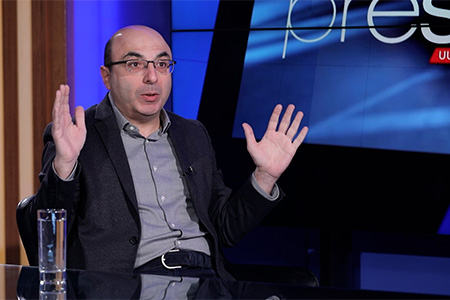 Political scientist: The Armenian public is simply obliged to significantly change the entire content of public discourse and struggle
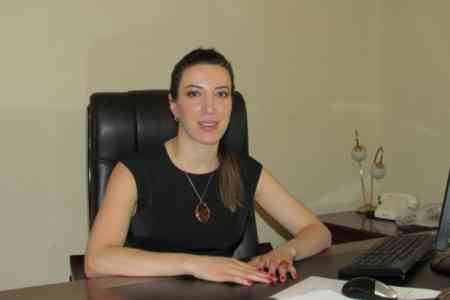 Cross tattoos are being removed from the skin of Christian prisoners in Azerbaijan by fire, according to a human rights activist.
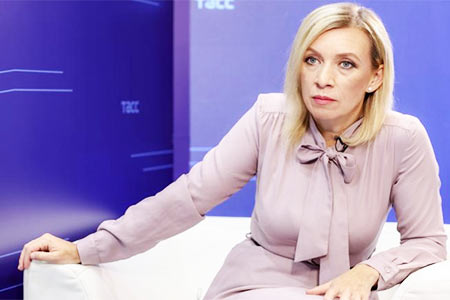 Zakharova: Armenia`s likely introduction of visas with Russia will be a step against Yerevan itself
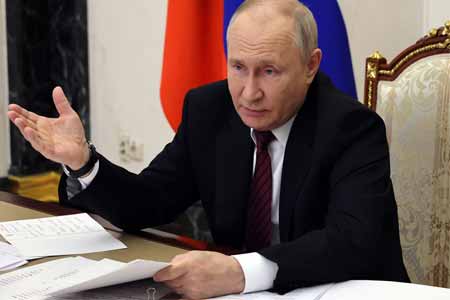 Putin: Armenia`s recognition of Karabakh as part of Azerbaijan in Prague has given Russia`s position on this issue an ambivalent character
 Putin: Armenia`s adoption of the law on EU accession means an announcement of its withdrawal from the Eurasian Economic Union
 Medvedev: Yerevan will never become an EU member, but it will permanently damage relations with the Eurasian Economic Union, including with Moscow.
 Aram Vardevanyan: Public demands solutions, not apology scandals in Parliament
 Arrested Armenian oligarch on economy and new jobs
  "In Baku, we gave a worthy rebuff to the false claims regarding the past and present of our people" – Former Artsakh Parliament Speaker from Baku captivity
