


ArmInfo. Simply raising the fare for public transportation is not a reform and does not solve the existing problems in this sector. This was stated on Facebook by Sona Agekian, a member of the Yerevan Council of Elders from the opposition “Mother Armenia” bloc, who posted a video showing citizens unable to board a train at one of the capital’s metro stations due to a lack of space.
Commenting on this, Agekian noted that reforms mean that a citizen pays and, in return, receives a higher-quality service. “A price increase in itself is not a reform. If the price rises once again while the problems remain unresolved, then the citizen has the right to ask: where is the reform and what is he paying for?” the member of the Yerevan Council of Elders wrote.
It should be noted that problems with public transportation in Yerevan have persisted for a considerable period of time. Changes intended to modernize the city’s transport system ultimately failed to bring about the expected improvement in the situation. In some cases, waiting for transportation at stops can last 40-45 minutes. At the same time, even after a long wait, passengers are often forced to travel standing in an overcrowded bus, practically pressed against one another. And all this is happening alongside rising fares. It turns out that people are paying more but continue to face long waits and overcrowded buses and metro trains. Against this backdrop, conflicts often arise between passengers themselves, as well as between passengers and drivers. The new fare payment system using validators has become an additional source of tension. As a result, congestion also occurs when attempting to board a vehicle: queues form, while the buses themselves are forced to remain longer at stops, waiting for all passengers to board. At the same time, validators do not always work immediately. Payment failures lead to additional delays and become another cause of disputes between passengers and drivers.
Similar problems are also observed in the Yerevan Metro. During rush hour, the train arriving at the platform consists of just two cars. As a result, passengers are forced to let five or even six trains pass before they can somehow squeeze into a car. During peak hours, the cars become so overcrowded that passengers are forced to travel practically like “sardines in a can.” If technical failures occur or intervals between trains increase, a large number of people quickly accumulate on the platforms.
Let us add that back in 2025, Yerevan Mayor Tigran Avinyan stated that the capital’s traffic congestion problem would be solved by improving the quality of public transportation. In particular, this was to be achieved through the implementation of a program to modernize the Yerevan Metro, במסגרת which a new “Achapnyak” station was to be built. However, to date, neither has the new metro station been built, nor has the previously seriously disrupted former metro schedule been restored—the schedule under the previous authorities operated like clockwork. As a result, the new traffic regulations developed by the capital’s officials are plunging the city into even greater traffic jams. The situation is further exacerbated by the fact that half of the capital’s roads have been dug up amid the construction of high-rise buildings here and there, which require infrastructure to be connected. All this has led to the city finding itself in transport gridlock. Now traffic jams are observed in Yerevan not only during rush hour.
















 Armenian Historian: People Like Magdalena Grono Should Be Kept Away from the Thresholds of Armenian Shrines
 Azerbaijani studies expert: Armenia’s Foreign Ministry could use the ICC against Aliyev’s Armenophobic statements
 An Armenian political analyst exposed Hajiyev’s lies and attempts to mislead diplomats accredited in Azerbaijan in occupied Artsakh
 Expert: The circus surrounding the “Albanization” of Armenian culture in the presence of foreign ambassadors in occupied Artsakh is genocide
 Zakharova: Russia ready to discuss with Armenia the prospects for expanding military cooperation as part of a review of bilateral ties
 Tevanyan: Armenia, like Ukraine and Moldova, is being drawn into the EU’s global war
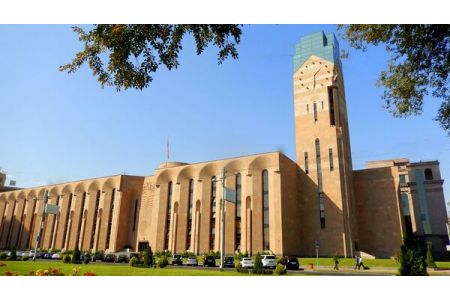 Yerevan City Hall is considering introducing a valet parking system in the city
 Political scientist: If Russian-Armenian relations are destroyed, Turkey will take Russia`s place
 Political scientist: The Armenian public is simply obliged to significantly change the entire content of public discourse and struggle
 Cross tattoos are being removed from the skin of Christian prisoners in Azerbaijan by fire, according to a human rights activist.
 Zakharova: Armenia`s likely introduction of visas with Russia will be a step against Yerevan itself
 Putin: Armenia`s recognition of Karabakh as part of Azerbaijan in Prague has given Russia`s position on this issue an ambivalent character
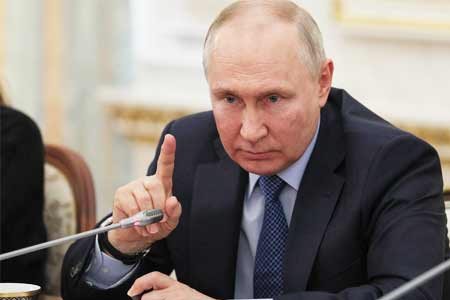 Putin: Armenia`s adoption of the law on EU accession means an announcement of its withdrawal from the Eurasian Economic Union
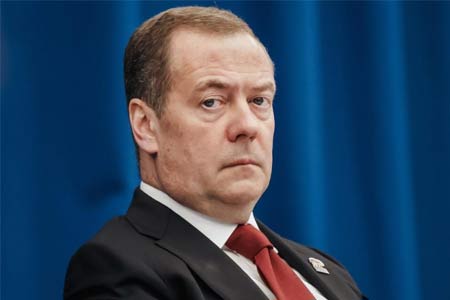 Medvedev: Yerevan will never become an EU member, but it will permanently damage relations with the Eurasian Economic Union, including with Moscow.
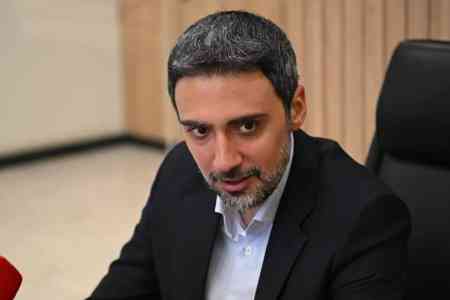 Aram Vardevanyan: Public demands solutions, not apology scandals in Parliament
 Arrested Armenian oligarch on economy and new jobs
  "In Baku, we gave a worthy rebuff to the false claims regarding the past and present of our people" – Former Artsakh Parliament Speaker from Baku captivity
  NA Vice Speaker candidate believes his wife`s salary as director of HayPost is the lowest in the company`s history