
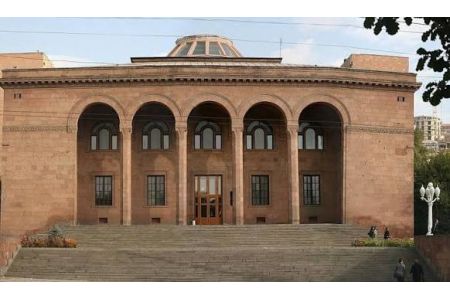
Arminfo. The 2nd conference of the international scientific network “European Perceptions of India: Texts, Images and Encounters” (ESIND) was held at the Institute of Oriental Studies of the National Academy of Sciences of Armenia (NAS RA).
According to the press service of the National Academy of Sciences of Armenia, 55 researchers and scholars from Armenia and other countries took part in the event. The participants were welcomed by the director of the Institute of Oriental Studies, Goar Iskandaryan. She emphasized that the conference provides an opportunity to strengthen ties between the scientific communities of Armenia and Europe and give new substance to future cooperation.
“The very formation of such a multinational scientific environment indicates that scientific cooperation can and should go beyond national and regional borders. We are convinced that joint scientific work requires dialogue not only between different countries, but also between different disciplines, methodologies and scientific traditions. In this context, the Institute of Oriental Studies can serve as a platform for this dialogue, and sometimes as a connecting bridge,” Goar Iskandaryan said.
Presenting the Institute’s activities, she emphasized the diversity of its scientific areas, noting that this makes it possible to approach regional processes not only from the perspective of a single discipline or period, but also to combine historical, historiographical, political, social, cultural and geopolitical approaches.
“The scientific potential of the Institute of Oriental Studies includes scholarly schools that have been developing for decades, a tradition of studying sources and an accumulated scientific legacy. In recent years, we have sought to expand the Institute’s scope of activities and link scientific results with the processes of international and public dialogue. In this context, scientific diplomacy has become one of the important areas of our Institute’s work. We attach great importance to creating an environment in which scientific research can enter into dialogue with public policy, diplomatic experience and professional assessment of regional processes,” she added.
For her part, Head of the Department of Asia and the Pacific at the Armenian Foreign Ministry Anahit Karapetyan noted that ties between the Armenian and Indian peoples include cultural relations, traditions and the development of intellectual life. “The centuries-old Armenian-Indian relations testify to the multilayered nature of the ties formed between our peoples. This event will contribute to raising awareness of India’s rich civilization, heritage and modern achievements, as well as encourage fruitful academic and cultural exchange between Armenia, India and Europe,” Anahit Karapetyan said.
Meanwhile, Indian Consul in Armenia Aditya Kumar Pandey expressed the conviction that the conference would contribute to raising awareness of India’s rich civilization, heritage and modern achievements. “Armenia has historically served as a bridge between different civilizations, cultures and intellectual traditions, creating a favorable environment for dialogue. Relations between India and Europe have a long and interesting history,” Aditya Kumar Pandey stated.
ESIND is an international scientific network operating within the framework of the European Union’s European Cooperation in Science and Technology (COST) program, which brings together scholars and researchers from different countries with the aim of comprehensively studying the historical, cultural and scientific ties between Europe and India. Within the framework of the ESIND COST project, joint research networks are expected to be formed, the mobility of young researchers expanded, digital scientific resources and data exchanged, and new joint projects created, which in the future may develop from cooperation within the COST network into broader European and international research programs.


























 Azerbaijani studies expert : Ruben Vardanyan’s wife threatened with arrest if she visits Baku
 Political scientist: The model of allied relations between Russia and Armenia has collapsed
 Expert: The defeated authorities` position on normalizing relations with the enemy should not affect the rights of Artsakh refugees
 Political scientist: If Russian-Armenian relations are destroyed, Turkey will take Russia`s place
 Political scientist: The Armenian public is simply obliged to significantly change the entire content of public discourse and struggle
 Cross tattoos are being removed from the skin of Christian prisoners in Azerbaijan by fire, according to a human rights activist.
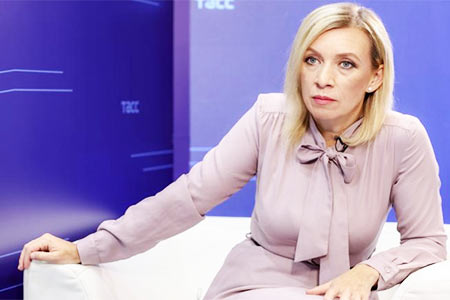 Zakharova: Armenia`s likely introduction of visas with Russia will be a step against Yerevan itself
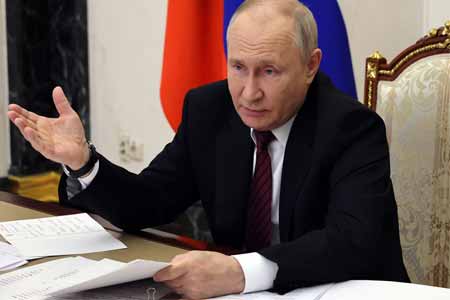 Putin: Armenia`s recognition of Karabakh as part of Azerbaijan in Prague has given Russia`s position on this issue an ambivalent character
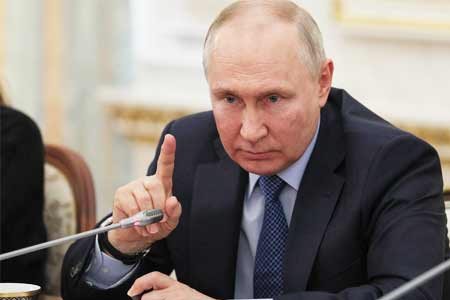 Putin: Armenia`s adoption of the law on EU accession means an announcement of its withdrawal from the Eurasian Economic Union
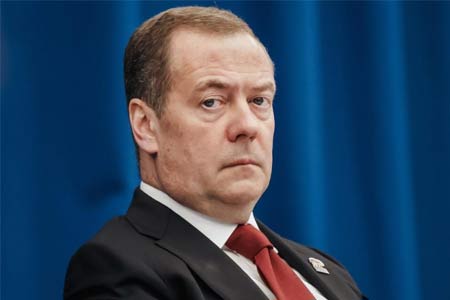 Medvedev: Yerevan will never become an EU member, but it will permanently damage relations with the Eurasian Economic Union, including with Moscow.
 Aram Vardevanyan: Public demands solutions, not apology scandals in Parliament
 Arrested Armenian oligarch on economy and new jobs
  "In Baku, we gave a worthy rebuff to the false claims regarding the past and present of our people" – Former Artsakh Parliament Speaker from Baku captivity
  NA Vice Speaker candidate believes his wife`s salary as director of HayPost is the lowest in the company`s history
 RF Permanent Representative: There is no CSTO-Armenia conflict
 Moscow: NATO seeking to "Pull" Armenia away from CSTO Allies
  Political analyst: Russia intends to determine which "Camp" Armenia will choose through a referendum
 Narek Karapetyan will give up his parliamentary salary in favor of charitable contributions.