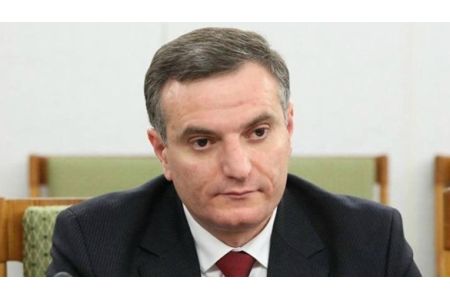
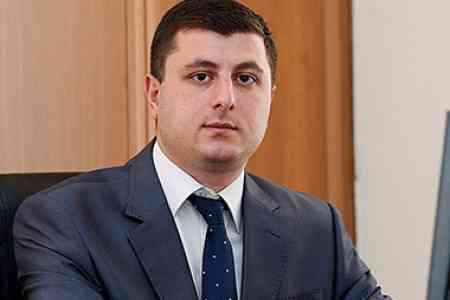
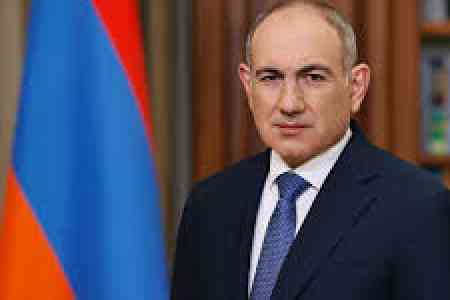
ArmInfo. RA Prime Minister Nikol Pashinyan does not want to choose between the European Union and the Eurasian Economic Union; he is trying to "sell" the right to this choice to the parties. Former Deputy Defense Minister Artak Zakaryan writes about this in his article.
According to his observations, Europe is ready to pay for this. "This is where the most important part of the process begins. It is no secret that Brussels is extremely interested in reducing Russian influence in the post-Soviet space. Armenia is no exception. The less Yerevan depends on Moscow and the EAEU, the more beneficial it is for European policy in the region. At the same time, Brussels sees that Armenia is in no hurry to throw itself into Europe's embrace and, even more so, is not going to slam the door tomorrow and leave the EAEU. However, Nikol is demonstratively "searching" "An alternative to Russia, trying to 'diversify' trade, transport, and foreign policy ties. And this is precisely the situation Europe is ready to capitalize on. The logic is extremely simple: if a country itself 'demonstrates' that it wants to gradually distance itself from Moscow, why not help it take a few more steps in this direction? Moreover, the cost of such support for the EU is relatively small, and the political influence can be quite significant," says Artak Zakaryan.
He noted that this is where grants, investment programs, preferential loans, trade privileges, technical assistance, and transport and energy integration projects emerge. Armenia is gradually beginning to familiarize itself with the European market and European rules long before the issue of EU membership is seriously raised. The former deputy minister emphasized that in June 2026, the European Commission transferred €34 million to Armenia as "emergency assistance." Following the introduction of Russian trade restrictions from the first part of the overall €52 million package, it was announced in July that the total amount of financial assistance provided to Armenia had reached €288 million. A separate investment portfolio, the European Global Gateway, plans to attract approximately €2.5 billion in future investments.
"But the most remarkable thing here isn't the money. Europe is announcing the gradual opening of its market to Armenia. In September, the EU Council supported the temporary abolition of import duties on a number of Armenian goods. These primarily concern goods that, until recently, were largely oriented toward the Russian market. This was only an announcement, and it is still unclear how it will be implemented. At the level of statements, it appears to be a textbook example of geopolitical competition. Moscow restricts access for Armenian products, Brussels offers an "alternative market." Moscow reminds us of the advantages of the EAEU, Europe offers "investments." Russia asks: "Are you with us or with them?" The European Union responds: "Don't rush into a choice; let's cooperate for now." And this structure suits Pashinyan's personal interests. He doesn't need to join the European Union today. It's much more beneficial for him to have the European Union pay for Armenia to be able to join it someday, perhaps in the very distant future. In exchange, Brussels supposedly gets another country that is gradually moving away from Russia's orbit of influence. Yerevan gets money and the opportunity to buy and sell politically. For now, everyone is happy. Except, of course, Moscow, which seems to be in a selling mood, and its steps are only just beginning to make their impact," Artak Zakaryan emphasized.





 Political scientist: The model of allied relations between Russia and Armenia has collapsed
 Expert: The defeated authorities` position on normalizing relations with the enemy should not affect the rights of Artsakh refugees
 Expert: Fourth Republic is not to begin with Kocharyan`s arrest
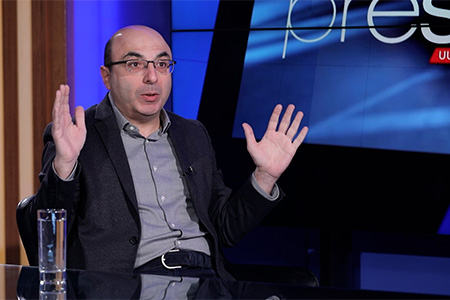 Political scientist: The Armenian public is simply obliged to significantly change the entire content of public discourse and struggle
 Cross tattoos are being removed from the skin of Christian prisoners in Azerbaijan by fire, according to a human rights activist.
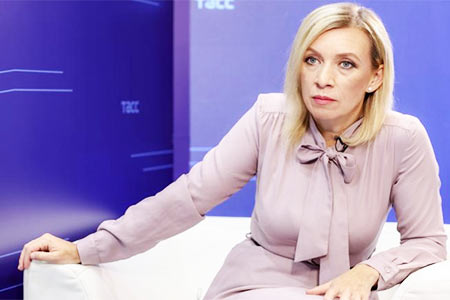 Zakharova: Armenia`s likely introduction of visas with Russia will be a step against Yerevan itself
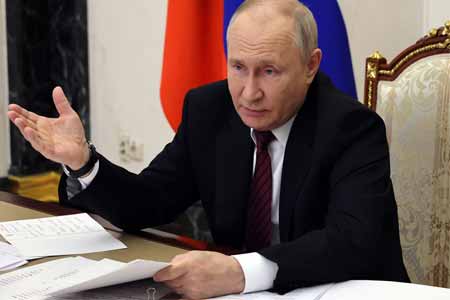 Putin: Armenia`s recognition of Karabakh as part of Azerbaijan in Prague has given Russia`s position on this issue an ambivalent character
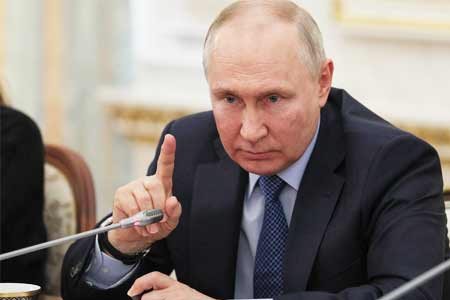 Putin: Armenia`s adoption of the law on EU accession means an announcement of its withdrawal from the Eurasian Economic Union
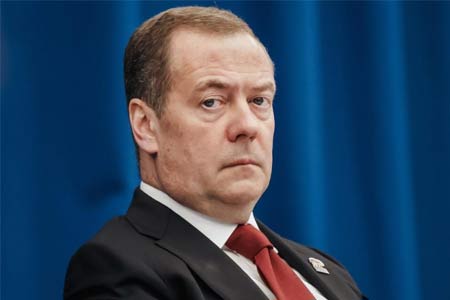 Medvedev: Yerevan will never become an EU member, but it will permanently damage relations with the Eurasian Economic Union, including with Moscow.
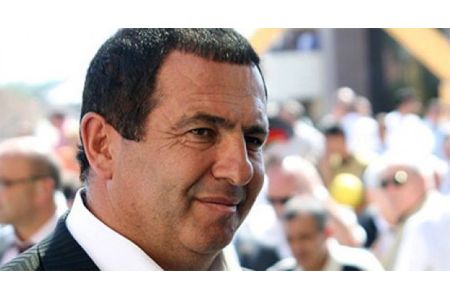 Arrested Armenian oligarch on economy and new jobs
 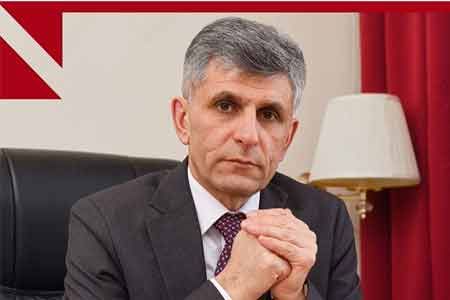 "In Baku, we gave a worthy rebuff to the false claims regarding the past and present of our people" – Former Artsakh Parliament Speaker from Baku captivity
 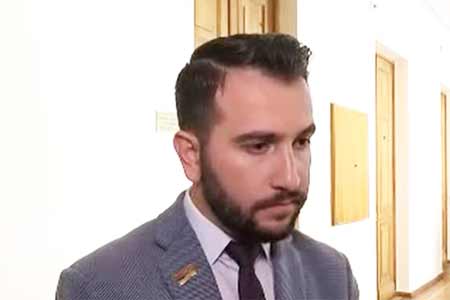 NA Vice Speaker candidate believes his wife`s salary as director of HayPost is the lowest in the company`s history
 RF Permanent Representative: There is no CSTO-Armenia conflict
 Moscow: NATO seeking to "Pull" Armenia away from CSTO Allies
  Political analyst: Russia intends to determine which "Camp" Armenia will choose through a referendum
 Narek Karapetyan will give up his parliamentary salary in favor of charitable contributions.