
ArmInfo. UNICEF, the international organization for child protection and protection under the auspices of the United Nations, issued a noteworthy media release on September 8th regarding the completion of a psychosocial support program for displaced persons, implemented jointly with the Afeyan Foundation.
But here's the problem: this international organization, dedicated to protecting children's rights worldwide, somehow forgot to formally indicate the origins of these displaced persons in its three-page media release. In other words, the organization, operating under the auspices of the UN, failed to mention in any of its proposals that these vulnerable individuals from Nagorno-Karabakh are vulnerable, effectively pursuing an "ostrich policy," trying to bury their heads in the sand and pretend they see nothing and understand nothing.
"UNICEF Armenia announces the successful completion of its partnership with the Afeyan Foundation. Thanks to the Foundation's support, essential mental health and psychosocial support services have become more accessible to children, adolescents, and professionals working on the ground, in both displaced and host communities." "By joining UNICEF's humanitarian response after September 2023, when more than 115,000 Armenians, including 36,000 children, were forced to flee their homeland and seek refuge in Armenia, this partnership contributed to strengthening community resilience, promoting social cohesion, and expanding access to psychosocial support," UNICEF reported, forgetting that for those unfamiliar with the topic, the definition of "homeland" and "displaced persons" is unclear.
"The Afeyan Foundation's support has led to positive changes in the lives of thousands of children and their families affected by displacement. Given age-appropriate characteristics, timely and ongoing psychosocial and psychiatric care is crucial for children and adolescents. It reduces both the immediate and long-term effects of stress and mental distress. "At the same time, it was important to find flexible tools to provide support in the face of overburdened mental health professionals," cynically stated UNICEF Representative in Armenia Ghassan Khalil, who also failed to explain where these people suddenly came from.
It should be noted that on September 19, 2023, Azerbaijan, under the pretext of an "anti-terrorist operation," launched another act of aggression against Artsakh. As a result of the enemy aggression, hundreds of Artsakh residents were wounded, and more than 200 were reported killed, including civilians. On September 20, Artsakh fell. Azerbaijan began the forcible subjugation of the NKR. Furthermore, late on the evening of September 20, it became known that Azerbaijan had deliberately fired on two vehicles of the Russian peacekeeping contingent, killing six people, including the deputy commander of the RMK.
On September 22, the process of disbanding the Artsakh Defense Army began. During search operations from September 21 to 24, the NKR Ministry of Internal Affairs discovered the bodies of 105 Artsakh residents, including brutally murdered children and elderly people. Today, Artsakh is completely de-Armenianized, and its entire indigenous population of over 120,000 people was forced to flee to Armenia under threat of physical violence. Since the enemy aggression that began in the fall of 2020, which culminated in the complete ethnic cleansing of Artsakh in September 2023, over 150,000 Artsakh residents have become homeless.











 Political scientist: The model of allied relations between Russia and Armenia has collapsed
 Expert: The defeated authorities` position on normalizing relations with the enemy should not affect the rights of Artsakh refugees
 Expert: Fourth Republic is not to begin with Kocharyan`s arrest
 Expert: Armenia continues to `peel away` from Russian-led military-political and economic structures
 Cross tattoos are being removed from the skin of Christian prisoners in Azerbaijan by fire, according to a human rights activist.
 Zakharova: Armenia`s likely introduction of visas with Russia will be a step against Yerevan itself
 Putin: Armenia`s recognition of Karabakh as part of Azerbaijan in Prague has given Russia`s position on this issue an ambivalent character
 Putin: Armenia`s adoption of the law on EU accession means an announcement of its withdrawal from the Eurasian Economic Union
 Medvedev: Yerevan will never become an EU member, but it will permanently damage relations with the Eurasian Economic Union, including with Moscow.
 Arrested Armenian oligarch on economy and new jobs
  "In Baku, we gave a worthy rebuff to the false claims regarding the past and present of our people" – Former Artsakh Parliament Speaker from Baku captivity
 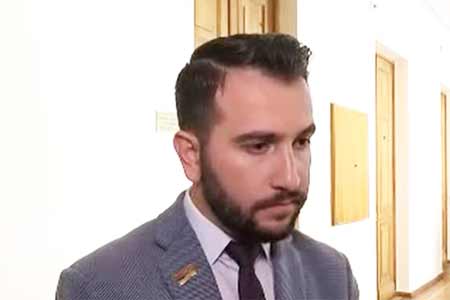 NA Vice Speaker candidate believes his wife`s salary as director of HayPost is the lowest in the company`s history
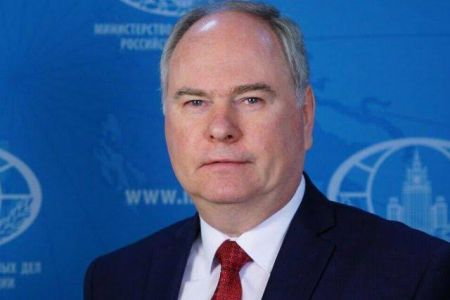 RF Permanent Representative: There is no CSTO-Armenia conflict
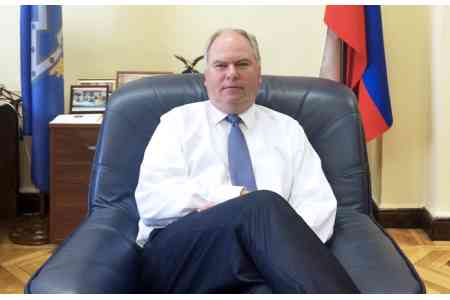 Moscow: NATO seeking to "Pull" Armenia away from CSTO Allies
 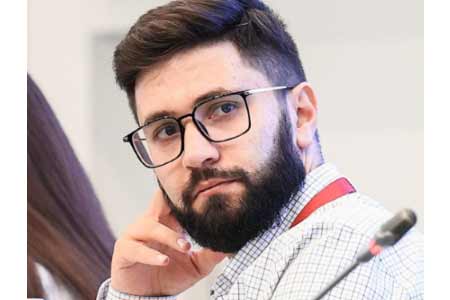 Political analyst: Russia intends to determine which "Camp" Armenia will choose through a referendum
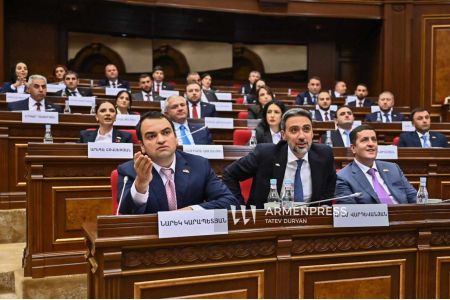
 Narek Karapetyan will give up his parliamentary salary in favor of charitable contributions.