
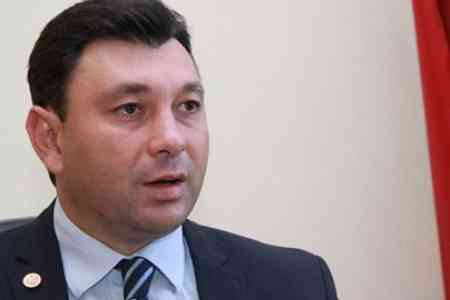
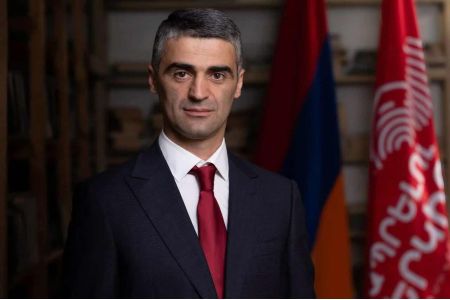
ArmInfo. It should be clearly understood that Azerbaijan and Turkey remain threats to Armenia. Given this threat, the authorities' political shortsightedness has led to a Turkish-Azerbaijani agenda. Republican Party Press Secretary Eduard Sharmazanov shares this viewpoint, asking on his Facebook page what geopolitical vector Armenia should choose.
According to the politician, many believe that the country's ruling Civil Contract Party has chosen the path of integration with the West. "But there is also an opinion that the current regime has chosen neither the West nor Russia. Given the events of recent years, it is quite reasonable to assume that Armenia's rulers have chosen the path of close rapprochement with Turkey. Just a few months after the end of the disastrous 44-day war, Pashinyan declared that he was "receiving positive signals from Turkey." He then stated that he was not offended when he was called a Turk. These statements were followed by concrete actions.
First, the head of the Armenian Foreign Ministry was sent to Turkey, and then Nikol Pashinyan himself attended Erdogan's inauguration. Meanwhile, in the fall of 2020, in an interview with the prestigious Canadian newspaper The Globe and Mail, Pashinyan claimed that "100 years later, Turkey has returned to the South Caucasus to continue the Armenian Genocide." In the same interview, the leader of the ruling team said: "Terrorists brought from the Middle East are fighting on the side of Azerbaijan under the auspices of Turkey." And speaking about the possible During the ceasefire, Pashinyan emphasized that "a ceasefire can only be established if Turkey withdraws from the South Caucasus." What has changed in Turkish policy? Why, in 2020, did Pashinyan consider Turkey a potential genocidal state and call for its removal from the South Caucasus, while years later, Erdogan's book on regional world order was so tightly pressed to his chest? Why are the Armenian ruler and some of his associates making controversial and unacceptable statements regarding the Declaration of Independence of the Republic of Armenia, the Armenian Genocide, Western Armenia, and Ararat? It has reached the point that at one press conference, the party leader effectively called the "Russian military presence," rather than Turkey, a threat to Armenia's security, Sharmazanov noted.
He noted that, according to historical and diplomatic facts, Turkey came close to initiating military action against Armenia three times in 1992-1993. And, according to those same facts, it was only because of its harsh behavior that it was stopped. The Turkish elite has abandoned its intention to "deal a moderate blow to Armenia" in the Russian Federation.
"It must be clearly understood that Azerbaijan and Turkey remain a threat to Armenia. Given this threat, political shortsightedness has led to a Turkish-Azerbaijani agenda. Some believe that a sharp and disproportionate increase in Turkey's influence could also be beneficial to the West, as in such a situation, the Russian Federation's position would weaken. It's no secret that the West wants a region without Russia, the Russian Federation wants to maintain its position or suffer as few losses as possible, Turkey wants to secure its influence in Armenia, and Azerbaijan wants to obtain the so-called "Zangezur Corridor" and achieve the revocation of the Declaration of Independence of the Republic of Armenia. And what does the Armenian government want? Their only goal is to maintain and protect their power at any cost.







 Expert: Economic pressure on Armenia may be virtually painless for other EAEU members, but not for Armenia itself
 Expert on protests in France: Civilizations fade when society loses a vision of the future
 Turkologist: Azerbaijan is not all-powerful—its vulnerabilities should become part of Armenia’s security strategy
 Opinion: The development of the Amulsar mine near the resort town of Jermuk is the beginning of an environmental disaster in Armenia
 Expert: The arrest of opposition figures in Armenia for social media posts is a systematic attempt to intimidate the public and suppress dissent.
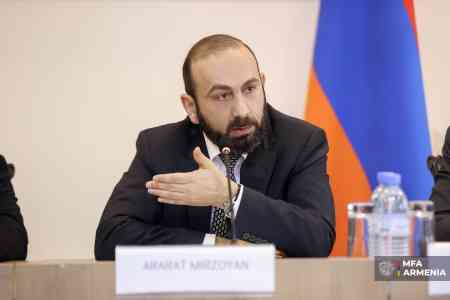 The Armenian Foreign Minister commented on the country`s return to work within the CSTO.
 The Artsakh Public Council expressed outrage at the UN Secretary-General`s behavior
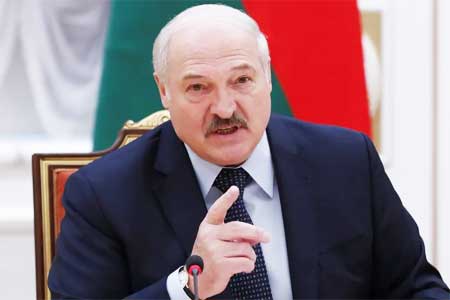 Lukashenko called for Armenia to assume the CIS presidency in 2029
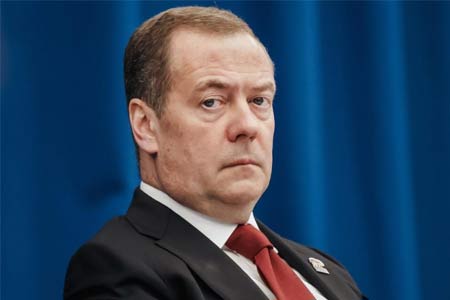 Dmitry Medvedev predicted a Ukrainian-like fate for Armenia amid the country`s shift in foreign policy
 Russian Security Council: In Armenia, they want to force Russian asset owners to dispose of their assets
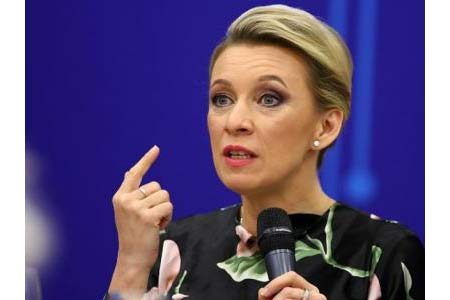 Zakharova: Russia ready to discuss with Armenia the prospects for expanding military cooperation as part of a review of bilateral ties
 Tevanyan: Armenia, like Ukraine and Moldova, is being drawn into the EU’s global war
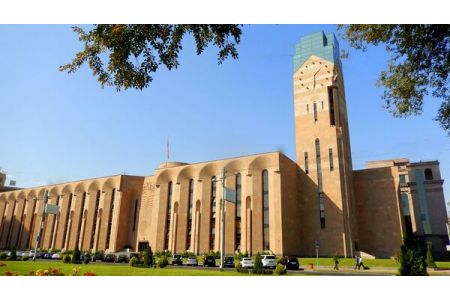 Yerevan City Hall is considering introducing a valet parking system in the city
 Expert: The circus surrounding the “Albanization” of Armenian culture in the presence of foreign ambassadors in occupied Artsakh is genocide
 Political scientist: If Russian-Armenian relations are destroyed, Turkey will take Russia`s place
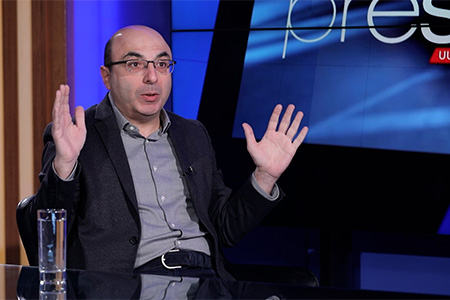 Political scientist: The Armenian public is simply obliged to significantly change the entire content of public discourse and struggle
 Cross tattoos are being removed from the skin of Christian prisoners in Azerbaijan by fire, according to a human rights activist.
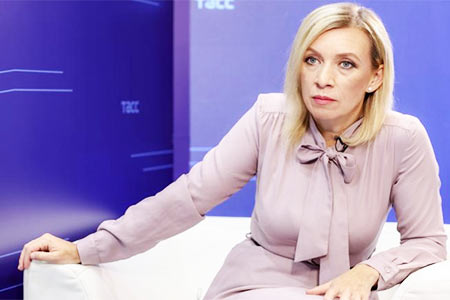 Zakharova: Armenia`s likely introduction of visas with Russia will be a step against Yerevan itself
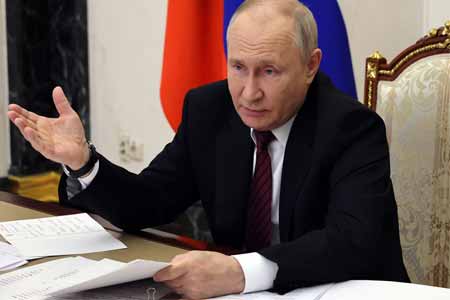 Putin: Armenia`s recognition of Karabakh as part of Azerbaijan in Prague has given Russia`s position on this issue an ambivalent character
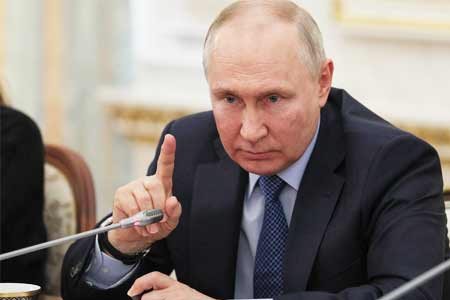 Putin: Armenia`s adoption of the law on EU accession means an announcement of its withdrawal from the Eurasian Economic Union