

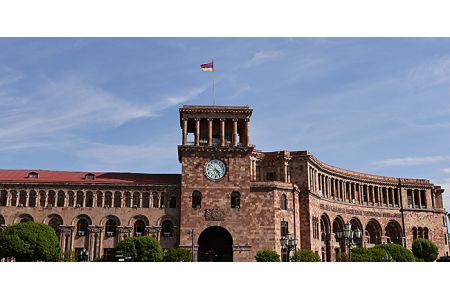
ArmInfo. Discussions on the RA Government Program for 2026-2031 will begin at the session of the National Assembly of Armenia on August 24. RA Prime Minister Nikol Pashinyan will deliver the keynote address. A heated debate is expected.
ArmInfo has compiled the key points of the program. So:
1. Foreign Policy
The Armenian government will continue to pursue a balanced and equitable foreign policy, which has proven effective in stabilizing the external environment for the Republic of Armenia. To institutionalize and strengthen peace, the government will continue to work on the signing and ratification of the Agreement on the Establishment of Peace and Interstate Relations between Armenia and Azerbaijan, continue efforts to delimit and demarcate the state border with Azerbaijan, intensify contacts between civil society and the business communities of Armenia and Azerbaijan, and promote the development of bilateral trade. Work will also be carried out to establish diplomatic relations between Armenia and Turkey, open the Armenian-Turkish border and commission at least two modern checkpoints, intensify and expand transport, energy, and digital infrastructure, and facilitate bilateral and multilateral trade. Maintaining an active political dialogue with Iran and expanding trade and economic ties are among the priorities of bilateral relations. Energy cooperation with Iran will continue to deepen, border infrastructure will be developed, and communication routes through Iran (North-South, Persian Gulf-Black Sea) will be expanded.
The consistent implementation of the Declaration on the Establishment of a Strategic Partnership between Armenia and Georgia will continue, creating new mutually beneficial opportunities for the development of political, trade, economic, energy, and transport cooperation, as well as regional and joint infrastructure projects. Sectoral development and integration of strategic cooperation with the EU will be continued, aimed at the full and effective implementation of the Comprehensive and Enhanced Partnership Agreement, as well as at aligning Armenia with European Union standards in the areas of democracy and the rule of law, economics, finance, ecology, social affairs, and other areas, based on the 2025 Law "On the Start of the Accession Process of the Republic of Armenia to the European Union." The Visa Liberalization Action Plan, aimed at liberalizing EU visas for citizens of the Republic of Armenia, will be completed. Based on the Charter on a Comprehensive Strategic Partnership between the Republic of Armenia and the United States of America, the bilateral partnership will further deepen for the benefit of both countries, and cooperation will expand across a wide range of issues of mutual priority. Sectoral cooperation with the United States will continue based on the Memorandum of Understanding signed between the Government of the United States of America and the Government of the Republic of Armenia in August 2025 and the Charter of Comprehensive Strategic Partnership between the Republic of Armenia and the United States of America.
The TRIPP project will be implemented, at least in terms of the operation of energy and railway infrastructure, with Armenia's integration into major regional infrastructure projects. Cooperation between Armenia and France will be elevated to a qualitatively new level, particularly in the areas of political, economic, security, cultural, educational, and decentralized partnership, building on the Joint Declaration on the Establishment of a Strategic Partnership signed on May 5, 2026, as the institutional and political foundation. Dialogue with the Russian Federation will be continued, aimed at mutually beneficial and multifaceted cooperation, with an emphasis on a balanced foreign policy, as well as on the transformation, development, and deepening of relations in the new context of peace in the region. The consistent implementation of the agreements reached following the meeting between the Prime Minister of Armenia and the President of China on August 31, 2025, will continue, as will efforts to develop cooperation in the areas outlined in the joint statement on elevating Armenian-Chinese relations to a strategic partnership and achieving tangible results. Active efforts will continue to develop cooperation in areas of mutual interest, including the economy, defense, transport, education and culture, healthcare, information technology, and other areas, and to elevate the partnership between Armenia and India to a new level. Established strategic relations with the Netherlands, Kazakhstan, Germany, Luxembourg, the United Kingdom, Bulgaria, Croatia, and Lithuania have identified key areas of bilateral interest, further work in which is important for Armenia's development. Efforts to expand the number and geography of strategic partners will continue.
Effective implementation of the mechanisms provided for in the EAEU Treaty is key to the future and further development of the union. Work will continue to ensure the full and uninterrupted implementation of the EAEU's fundamental freedoms-the free movement of labor, services, goods, and finance-as well as to develop relations with member and observer countries. The Republic of Armenia will remain an active member of the UN and its specialized bodies, the Council of Europe, the OSCE, the CIS, the International Organization of La Francophonie, and the European Political Community. The Republic of Armenia has also joined the Peace Council, established at the initiative of US President Donald Trump, and will continue its work in this format. The government will work toward joining the Shanghai Cooperation Organization. The program notes that efforts will be made to develop relations with countries in the Middle East and Africa and establish new ties.
2. Security
Peace is the only effective and reliable guarantee of security, and the Republic of Armenia, its citizens, and socio-political circles must strive to ensure peace on a daily basis, strengthening it, making it more institutionalized, irreversible, and guaranteed. The Armed Forces are a reserve instrument for ensuring external security in cases where the aforementioned political and diplomatic measures for ensuring external security and their application have proven ineffective. The Armed Forces of the Republic of Armenia must not be used outside the internationally recognized territory of the Republic of Armenia (except for participation in international peacekeeping missions based on international treaties) and must serve exclusively for the defense of the internationally recognized territory of the Republic of Armenia. Accordingly, the Government will ensure the technological, combat-ready, and cultural transformation of the Armed Forces and the continuous transition to a professional army, increasing the country's defense capability, and expanding and diversifying military-technical and military-technical cooperation. The armament and logistical equipment of the Armed Forces will be increased, including through the development of the potential of Armenia's military-industrial complex. In this area, a continuous transition to a professional army will be implemented by creating more favorable conditions for attracting contract service members, including the implementation of new systems for military service, education, combat training, pay, careers, promotions, human resource recruitment and management, reservists, moral and psychological support, and social guarantees. Particular attention will be paid to attracting women to the Armed Forces. The Armed Forces' potential will be developed, the readiness of the Armed Forces' command and control system will be enhanced, weapons and military equipment, human, material, and technical resources will be provided, and planning and other systems will be improved, thereby ensuring the alignment of the Armed Forces' goals, objectives, and capabilities. Plans also include a digital transformation of the Armed Forces and its command and control system, including the digitization of command and control processes, the introduction of a modern electronic information system for pre-conscription registration, conscription, the recruitment of reservists to training camps, preparation for mobilization, and human resources management. The system will also include processes for organizing medical examinations and recording their results. A new system for replenishing regular troops, operational, professional, and strategic reserve forces on constant combat readiness will be implemented. Military educational institutions will be brought into line with the standards of leading Western countries, centers of excellence will be established, and a comprehensive, independent national system of military education in the field of defense will be formed. Housing issues for contract service members registered for housing in accordance with the procedure established by law, persons equivalent to them, former military personnel discharged from service in accordance with the established procedure, as well as family members of deceased service members and former military personnel with disabilities resulting in profound, severe, or moderate functional limitations, will be addressed in stages. The system of long-term defense procurement from local manufacturers will be improved to meet the future needs of the Armed Forces, the production of ammunition and military equipment will be localized in cooperation with foreign partners, and capabilities will be created for the maintenance, repair, and modernization of existing military equipment in the Armed Forces.
Integrated border management will not only ensure state security guarantees but also simplify passenger flows, export-import processes, and strengthen and modernize monitoring and control mechanisms. The transformation of the Republic of Armenia from a destination to a destination for entry and transit makes it crucial to improve the effectiveness of migration management. To this end, the state border protection zones will be gradually expanded by Armenian border guards, with the potential to assume full border protection. A comprehensive border management system will be implemented in accordance with the best EU and international standards, including a modern border management system utilizing biometric technologies and digital solutions. The border service will be transformed by reducing the military component and implementing best international practices. A comprehensive modernization of migration management will also be carried out, including clarification of visa policy, strengthening of entry and residence procedures, prevention of illegal migration, the development of an institution of voluntary and forced return, as well as a logic for the continuous development of the asylum system. A new biometric system will be introduced that meets the highest international standards, is equipped with advanced solutions, and is regularly updated to reflect innovations in this field.
To address contemporary challenges to internal security and ensure effective crime control, public policy will be based on two complementary approaches: strengthening the rule of law in society, fostering public intolerance toward crime and the causes and conditions that contribute to its emergence and reproduction, including the criminal subculture, and strengthening trust in the civil law enforcement system. This approach will also see the technological re-equipment of the law enforcement system and the continuous development of its potential. In this regard, criminological (including AI) analytical capabilities in the field of crime will be modernized through the introduction of modern analytical tools for assessing crime patterns, spatial distribution, risks, and threats, the application of new methodologies for predicting crime trends, early risk detection, and improved prevention and evidence-based decision-making. Systematic mechanisms will be developed to combat the criminal subculture as a risk factor for crime and its characteristic behavior patterns by establishing zero tolerance and its rejection in society, strengthening the values of the rule of law and lawful behavior, as well as ensuring a consistent and uncompromising response by law enforcement agencies to any manifestations of them. An institutional transformation of the republic's video surveillance systems (according to the "Smart City" model) will be carried out in order to ensure public safety, combat crime, and road safety in accordance with the principles of the General Data Protection Regulation of the European Union. A "Digital Police" will be formed, including "police based on artificial intelligence", by ensuring the safety of citizens in the digital environment, providing 24/7 accessible services, launching a cyber laboratory, implementing risk assessment, personality profiling and other modern digital tools, as well as developing the digital capabilities of the police; the functional scope of the unified operational and management center <112> will be expanded, including emergency medical calls in a unified reception and operational management system, in order to ensure the provision of emergency assistance to the population through a single platform; legislation regulating the circulation of weapons will be revised in order to bring it into line with modern challenges in the fight against crime and best international practice. The foundation of the disaster risk management system's development is to enhance the resilience of the state, communities, and population by reducing disaster risks and developing early warning capabilities. This will include the implementation of a comprehensive early warning system for multifactorial natural disasters and early warning for hydrometeorological hazards, river basin modeling, flood risk assessments, and other hydrometeorological hazard assessments. This will also include the introduction of digital tools for risk assessment and management, the modernization and digitalization of disaster risk management plans, and the implementation of systems and equipment to provide rescuers with real-time situational awareness and operational information on the scene of an incident. The adoption of unified fire safety standards is also planned to implement risk-based approaches and improve the effectiveness of fire protection. A comprehensive and large-scale modernization of the seismic observation network will be carried out, including the acquisition of unprecedented modern seismic monitoring and measurement equipment in the region, significantly expanding capabilities for early earthquake detection, accurate data analysis, and seismic risk assessment. A disaster insurance model will be introduced to improve the efficiency of financial management and compensate for losses resulting from natural disasters.
To ensure food security, a new model of material reserves will be developed to ensure food security and the formation of food reserves necessary in crisis situations. A list of food products stored in crisis situations will be developed so that the necessary products included in the list are available in several interchangeable forms, diversifying potential risks during their acquisition and storage and minimizing external dependence. Self-sufficiency in animal products will increase: beef from 88% to 93%, and milk from 78.6% to 88%.
The state adheres to the principle of "cybersecurity by default" and guarantees the security of state information systems and the continuity of digital services. To this end, vulnerability assessments of all critical infrastructure, penetration testing, 24/7 monitoring, and rapid incident response mechanisms will be implemented. The private and public sectors will be strengthened to implement the best international standards (EU NIS 2, ISO/IEC 27001), including for early warning, early detection, and rapid response to cyber threats. As part of the government's unified policy, a National Cyber Defense Center (NCDC) will be established within the National Security Service. It will be capable of countering modern challenges, equipped with modern software and technologies, meet international standards, and staffed with highly qualified personnel in defense, national security, and international relations. Programs will also be implemented to raise public awareness and develop educational opportunities to enhance society's cyber maturity. Strengthening society's information resilience is also a key focus of future reforms. Targeted measures will be implemented to prevent, early detect, and mitigate the impact of external manipulation and interference in information (FIMI), disinformation, and fake digital content (synthetic artificial intelligence). The legal framework for ensuring children's online safety will be improved by establishing rules regarding children's rights online, protection from harmful content (including on social media), the responsibility of digital service providers, and the safe use of digital devices in schools.
3. Reform of the Armenian Apostolic Church
Reform of the Armenian Apostolic Church is vitally important for addressing the challenge of building a values-based spiritual life. To ensure spiritual security and prevent external forces from turning the Armenian Apostolic Church into a base for hybrid struggle and reform, the de facto head of the Armenian Apostolic Church will be removed (resigned), elections for the Catholicosate will be held in accordance with the established procedure, the adoption of the Statute of the Armenian Apostolic Church, which will establish mechanisms for upholding established principles, ensuring financial transparency and proper conduct of the clergy, and the election of the Catholicos of all Armenians in accordance with the established procedure will be ensured. The government also commits to including clergy representatives in the state system of social guarantees and ensuring transparency in church funding.
4. Economy
The Armenian government intends to ensure average annual economic growth of 6% from 2026 to 2031, create 125,000 new jobs, at least triple the size of the corporate bond market, and at least double the export volume of Armenian goods. It also plans to increase industrial production (in current prices) by 50%-from 3.3 trillion drams in 2025 to 5 trillion drams in 2031-increase the value of the gross agricultural product by at least 50%, and double grain production. The program includes the construction of 10 reservoirs with the goal of completing them by 2033, the construction and reconstruction of 350 km of canals and pipelines, the provision of irrigation to 10,000 hectares of new land, and the provision of a 24-hour water supply to residents of Yerevan, Gyumri, and Vanadzor.
It is also planned to continue developing Armenia's national space capabilities by acquiring and launching at least two observation satellites and one communications satellite, developing national ground infrastructure, building national capabilities for satellite management and data processing, and ensuring access to satellite data and communications services for the government, science and technology, and the private sector. It is also planned to commission 1,000-megawatt photovoltaic power plants and 800-megawatt energy storage power plants. It is also planned to reduce poverty by 5 percentage points. It is also planned to digitalize essential public and public services. It is also planned to continue the process of returning illegally acquired assets, which will include the return of illegally privatized and leased forests, beaches, parks and gardens, as well as educational institutions and other public spaces to communities and the state. It is also planned to continuously replenish the unified account for recovered funds. It is also planned to return illegally acquired real estate and movable property for public use, totaling approximately $2 billion.
5. Education, Medicine, Social Services
Under the document, the entire country's population will be included in the health insurance system. Work on visa liberalization for entry into the EU for citizens of the Republic of Armenia will continue. The authorities also intend to build and modernize 300 schools, 30 colleges, 100 extracurricular institutions, 100 kindergartens, 100 multifunctional playgrounds (including public swimming pools) over the next five years, implement the Academic City technology cluster project, as well as housing for 3,600 of its students, create high-end computing power in the field of artificial intelligence (AI) with a volume of at least 100,000 equivalent graphic processing units (GPUs) or at least 35,000 equivalent GPUs per million inhabitants, providing access to computing resources equivalent to at least 10% of this capacity for the scientific research, education, startup, industrial and public sectors of the Republic of Armenia. Increase the volume of science funding to 1 percent of GDP. Starting from 2028, a system of indexation of pensions in accordance with the inflation rate will be introduced.




















 Expert: The arrest of opposition figures in Armenia for social media posts is a systematic attempt to intimidate the public and suppress dissent.
 Azerbaijani Studies Expert: While Azerbaijan Prepares Its Generation for War, Aliyev’s Aide Calls on Armenia to Prepare Armenian Society for “Peace”
 Turkologist: Azerbaijan will never, under any circumstances, stop pressuring the Armenian people
 Political scientist: We need to move away from the question of "when" and replace it with more important questions
 International Law Specialist: Azerbaijan intends to initiate legal proceedings against Armenia by sentencing Armenian prisoners
 Dmitry Medvedev predicted a Ukrainian-like fate for Armenia amid the country`s shift in foreign policy
 Russian Security Council: In Armenia, they want to force Russian asset owners to dispose of their assets
 Zakharova: Russia ready to discuss with Armenia the prospects for expanding military cooperation as part of a review of bilateral ties
 Tevanyan: Armenia, like Ukraine and Moldova, is being drawn into the EU’s global war
 Yerevan City Hall is considering introducing a valet parking system in the city
 Expert: The circus surrounding the “Albanization” of Armenian culture in the presence of foreign ambassadors in occupied Artsakh is genocide
 Political scientist: If Russian-Armenian relations are destroyed, Turkey will take Russia`s place
 Political scientist: The Armenian public is simply obliged to significantly change the entire content of public discourse and struggle
 Cross tattoos are being removed from the skin of Christian prisoners in Azerbaijan by fire, according to a human rights activist.
 Zakharova: Armenia`s likely introduction of visas with Russia will be a step against Yerevan itself
 Putin: Armenia`s recognition of Karabakh as part of Azerbaijan in Prague has given Russia`s position on this issue an ambivalent character
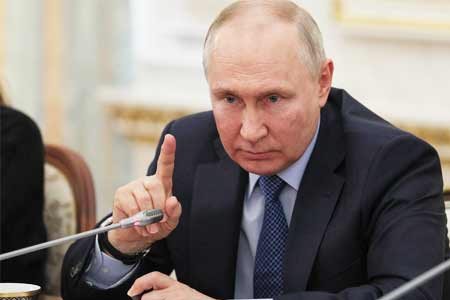 Putin: Armenia`s adoption of the law on EU accession means an announcement of its withdrawal from the Eurasian Economic Union