


ArmInfo.The European External Action Service (EEAS) has published its "Annual Report on Human Rights and Democracy in the World 2025," which includes an assessment of the situation in Armenia.
The report notes that in 2025, Armenia continued to advance reforms in the justice sector and strengthen the protection, respect, and observance of human rights. "The authorities are pursuing ambitious judicial, police, and constitutional reforms, but face criticism from civil society regarding the consistency and progress of the reforms. Civil society organizations also pointed to ineffective investigations of police abuses, particularly excessive use of force, the lack of independence of the judiciary, and the excessive use of pre-trial detention in criminal proceedings," the report's authors note. The document states that Armenian civil society remains one of the most active in the region. "Despite the polarized environment, media pluralism remains. However, in the lead-up to the June 2026 general elections, disinformation, foreign interference, and hybrid threats have intensified," the document reads.
The report also highlights progress in the social sphere. Armenia s Law on Universal Health Insurance entered into force on January 1, 2026, with the goal of ensuring equal and affordable access to healthcare. Authorities also continued efforts to integrate more than 100,000 Karabakh Armenians, although challenges related to housing, employment and social services remain despite the transition from broad rent subsidies to more targeted assistance.
"The adoption of the Strategy and Action Plan for the Implementation of Gender Policy for 2025-2028 was a positive step, and the law on gender-based violence has been passed, but its implementation on the ground needs to be improved. The Law on the Rights of the Child and the Child Protection System entered into force in November 2025. Civil society continues to challenge the government's disability assessment algorithm and the Court of Appeal's decision narrowing the legal interpretation of disability discrimination. Progress in adopting comprehensive anti-discrimination and minority protection legislation has yet to be achieved," the report's authors further note. At the same time, it is emphasized that Armenia has continued reforms in the judicial system aimed at enhancing integrity, accountability, and effectiveness. However, concerns remain regarding the transparency of judicial appointments and the effective implementation of integrity mechanisms. "The opposition and parts of civil society have raised accusations of instrumentalization of the criminal justice system, which creates the risk of punishing dissent and undermining freedom of expression, including through the possible overuse of criminal law provisions related to hooliganism. Similarly, concerns remain about strategic lawsuits against public participation (SLAPPs) targeting journalists, environmental activists, and human rights defenders. The widespread use of pretrial detention persists, along with concerns about deaths in custody, despite legislative amendments strengthening health guarantees for persons deprived of their liberty," the report notes.
In this vein, it is reported that, with EU support, the Arbitration and Mediation Center of Armenia was established in 2025 to improve access to justice. "Concerns also remain regarding the treatment and conditions of Armenian military personnel, particularly regarding non-combat-related deaths, despite a decline in their overall number," the report's authors stated.
It is noted that "Armenia has significantly strengthened its anti-corruption system, bringing it into line with international standards, including GRECO and OECD."
"The Fifth National Anti-Corruption Strategy (2023-2026) provides a comprehensive framework, but it remains insufficiently risk-oriented and lacks targeted measures for sectors with a higher risk of corruption, particularly in public procurement," the report continues.











 Expert: The arrest of opposition figures in Armenia for social media posts is a systematic attempt to intimidate the public and suppress dissent.
 Azerbaijani Studies Expert: While Azerbaijan Prepares Its Generation for War, Aliyev’s Aide Calls on Armenia to Prepare Armenian Society for “Peace”
 Turkologist: Azerbaijan will never, under any circumstances, stop pressuring the Armenian people
 Political scientist: We need to move away from the question of "when" and replace it with more important questions
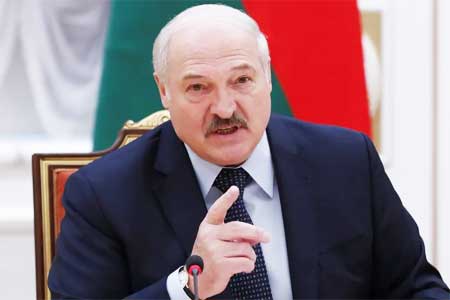 Lukashenko called for Armenia to assume the CIS presidency in 2029
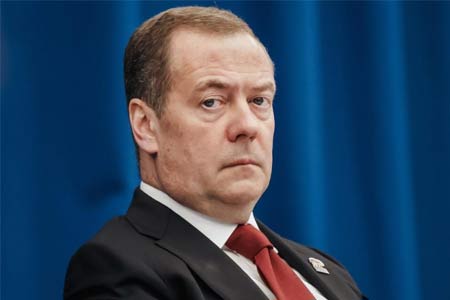 Dmitry Medvedev predicted a Ukrainian-like fate for Armenia amid the country`s shift in foreign policy
 Russian Security Council: In Armenia, they want to force Russian asset owners to dispose of their assets
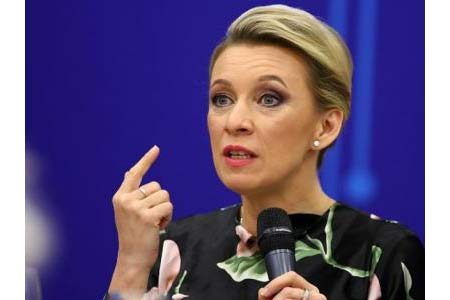 Zakharova: Russia ready to discuss with Armenia the prospects for expanding military cooperation as part of a review of bilateral ties
 Tevanyan: Armenia, like Ukraine and Moldova, is being drawn into the EU’s global war
 Yerevan City Hall is considering introducing a valet parking system in the city
 Expert: The circus surrounding the “Albanization” of Armenian culture in the presence of foreign ambassadors in occupied Artsakh is genocide
 Political scientist: If Russian-Armenian relations are destroyed, Turkey will take Russia`s place
 Political scientist: The Armenian public is simply obliged to significantly change the entire content of public discourse and struggle
 Cross tattoos are being removed from the skin of Christian prisoners in Azerbaijan by fire, according to a human rights activist.
 Zakharova: Armenia`s likely introduction of visas with Russia will be a step against Yerevan itself
 Putin: Armenia`s recognition of Karabakh as part of Azerbaijan in Prague has given Russia`s position on this issue an ambivalent character
 Putin: Armenia`s adoption of the law on EU accession means an announcement of its withdrawal from the Eurasian Economic Union