

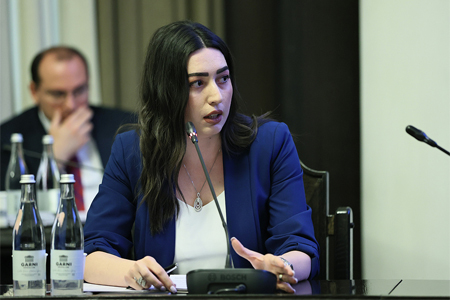
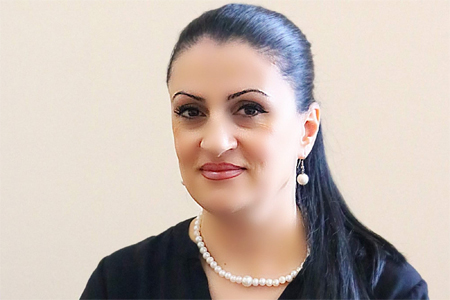
ArmInfo. RA Minister of Internal Affairs Arpine Sarkisyan presented the main directions of the planned cooperation with Frontex, emphasizing that the reforms are aimed at strengthening Armenia's capacity in border management, enhancing security levels, and consistently implementing advanced European experience.
She stated this in an interview with CivilNet.
In this context, as Sarkisyan emphasized, cooperation with the European Border and Coast Guard Agency Frontex is considered an important and natural component of the entire process. It expresses Armenia's readiness to deepen practical partnership with the EU and move towards more institutional, reliable, and predictable formats of cooperation.
Arpine Sarkisyan clarified that the agreement on operational cooperation signed between the Republic of Armenia and Frontex is not an international treaty. It is a framework cooperation agreement defining the main directions and formats of interaction between the parties.
The agreement provides for the exchange of information on illegal migration, document forgery, migrant smuggling, and risk assessment. Joint risk analysis is also planned, which will allow Armenian border and migration authorities to use Frontex's analytical capabilities.
Within the framework of cooperation, training and qualification improvement programs will be implemented for border guards and employees of the Migration and Civil Service. According to the minister, the partnership will also contribute to the implementation of advanced European experience in comprehensive border management, citizen return, risk management, and document security.
Arpine Sarkisyan also emphasized that cooperation with Frontex does not imply the deployment of permanent agency forces in Armenia. Control over Armenia's borders remains entirely within the sovereign authority of the country.
According to the minister, the cooperation is also an important political signal indicating that Armenia is not only deepening relations with the European Union but is also ready to bring its border management system in line with high international standards while fully preserving the principle of sovereignty.
Arpine Sarkisyan also touched upon strengthening cooperation with Europol and other European law enforcement agencies. She noted that deepening law enforcement cooperation within the visa liberalization process is one of the important directions. Closer cooperation with Europol, and in the future with the European Public Prosecutor's Office, EPPO, and Eurojust, implies not only legal but also technological and institutional readiness. According to Arpine Sarkisyan, first and foremost, it is necessary to ensure a secure information environment in accordance with European personal data protection standards, since the basis of such cooperation is the exchange of reliable and protected data.
Law enforcement agencies must also have compatible digital systems that allow information exchange in secure, fast, and standardized formats while maintaining high requirements for cybersecurity, data integrity, and traceability.
The minister also emphasized the importance of developing analytical and operational capabilities, implementing modern digital tools, mechanisms for managing digital evidence, and specialized capabilities. These are necessary to increase the effectiveness of detecting transnational organized crime, migrant smuggling, human trafficking, cybercrime, and financial crimes.
Arpine Sarkisyan noted that this process also involves enhancing institutional discipline, implementing common work standards, continuous training, and deepening operational cooperation with European partners.
In her assessment, this is not about isolated technical reforms but about forming a full-fledged law enforcement ecosystem compatible with the European security architecture. This will allow Armenia to act as a reliable and full-fledged partner in this network.
Practical progress in this direction has already been recorded. An employee of the Ministry of Internal Affairs has been appointed to Europol to coordinate the work of the Armenian law enforcement system with Europol. The Ministry of Internal Affairs has also joined Europol's secure information exchange system SIENA. The corresponding technical infrastructure has been installed and put into operation, ensuring operational, secure, and standardized communication with European partners.
The minister also reported that the RA Prosecutor's Office will soon appoint a prosecutor to Eurojust.








 Azerbaijani Studies Expert: While Azerbaijan Prepares Its Generation for War, Aliyev’s Aide Calls on Armenia to Prepare Armenian Society for “Peace”
 Turkologist: Azerbaijan will never, under any circumstances, stop pressuring the Armenian people
 Political scientist: We need to move away from the question of "when" and replace it with more important questions
 International Law Specialist: Azerbaijan intends to initiate legal proceedings against Armenia by sentencing Armenian prisoners
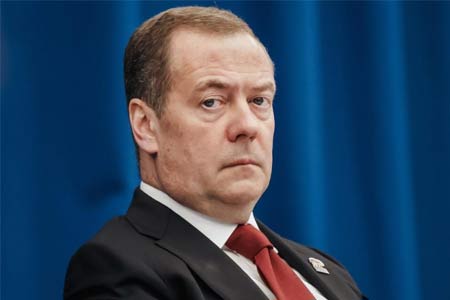 Dmitry Medvedev predicted a Ukrainian-like fate for Armenia amid the country`s shift in foreign policy
 Russian Security Council: In Armenia, they want to force Russian asset owners to dispose of their assets
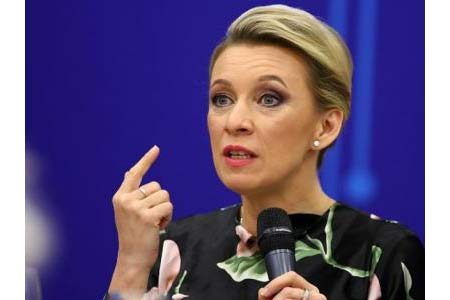 Zakharova: Russia ready to discuss with Armenia the prospects for expanding military cooperation as part of a review of bilateral ties
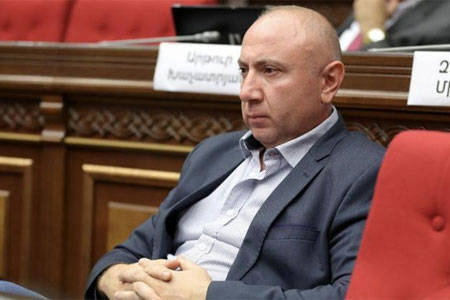 Tevanyan: Armenia, like Ukraine and Moldova, is being drawn into the EU’s global war
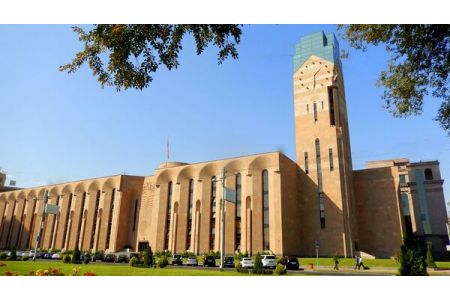 Yerevan City Hall is considering introducing a valet parking system in the city
 Expert: The circus surrounding the “Albanization” of Armenian culture in the presence of foreign ambassadors in occupied Artsakh is genocide
 Political scientist: If Russian-Armenian relations are destroyed, Turkey will take Russia`s place
 Political scientist: The Armenian public is simply obliged to significantly change the entire content of public discourse and struggle
 Cross tattoos are being removed from the skin of Christian prisoners in Azerbaijan by fire, according to a human rights activist.
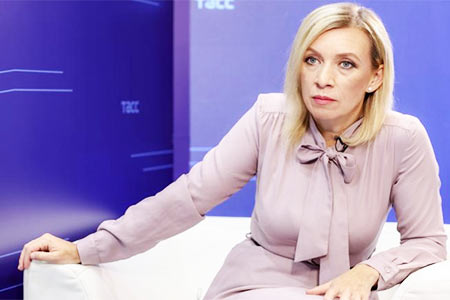 Zakharova: Armenia`s likely introduction of visas with Russia will be a step against Yerevan itself
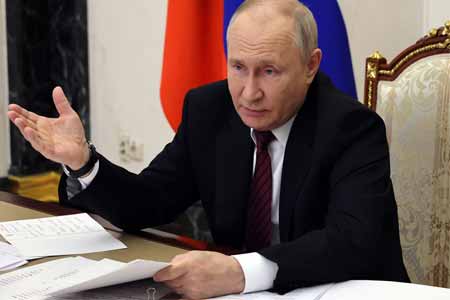 Putin: Armenia`s recognition of Karabakh as part of Azerbaijan in Prague has given Russia`s position on this issue an ambivalent character
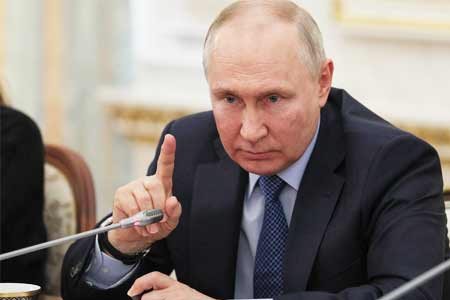 Putin: Armenia`s adoption of the law on EU accession means an announcement of its withdrawal from the Eurasian Economic Union
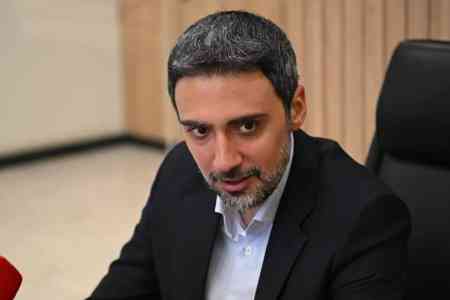 Aram Vardevanyan: Public demands solutions, not apology scandals in Parliament
 Arrested Armenian oligarch on economy and new jobs