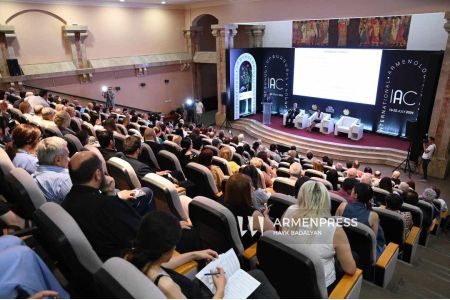
ArmInfo.Today, the Institute of China and Modern Contemporary Asia (ICSA) of the Russian Academy of Sciences hosted an international roundtable discussion, "Critical Infrastructure of the Greater Caucasus in the Context of Geoeconomic Competition." The discussion was moderated by Vahe Davtyan, Leading Researcher at ICSA RAS, and Evgeniya Goryushina, Head of the Caucasus Studies Sector at ICSA RAS.
The event brought together leading Caucasus experts, political scientists, and economists to examine how changes in transport, energy, and digital networks are reshaping the region's geopolitical map. The analysts focused on the competition between four global projects: China's One Belt, One Road Initiative (BRI), Europe's Global Gateway, the North-South Corridor, and the TRACECA transport network.
The core of the discussion centered on the clash of two logistical lines, examining the North-South corridor, TRACECA, Turkey's energy hub, and the Digital Silk Way as links in the Sino-European transport confrontation—or potential cooperation. Participants discussed Europe's strategic focus on diversification, risk mitigation, and bypassing Russia.
The EU's attempt to anchor Central Asia through Caspian transit and South Caucasian networks is turning Armenia, Georgia, and Azerbaijan into a direct arena for competing project speeds and standards. In this system, Iran acts as an independent transit hub capable of redirecting part of the cargo traffic via the North- South corridor, thereby reducing dependence on routes through the Suez Canal and Turkey.
Experts emphasized that today's critical infrastructure—ranging from nuclear power plants to submarine internet cables—serves as a direct lever of geopolitical influence. From this perspective, the participants discussed such issues as Turkey's emergence as an energy hub at the intersection of Chinese and EU interests, the future and risks of Armenia's nuclear energy sector, shifts in Iran's transport priorities, and the convergence of Caucasus interests with Central Asia.
The roundtable participants also addressed logistics, comparing regional transport models, assessing vulnerabilities in combined routes, and the impact of global carriers on the changing map of freight flows across Eurasia.


















 Armenian expert: Could modern Azerbaijan even exist without Russian and Soviet modernization?
 South Caucasus is entering a new phase of turbulence - ex-official
  Expert: Azerbaijan`s political leadership states `occupation of Armenia is their new national goal`
  Human rights activist Ruben Melikyan dismissed from YSU
 Zakharova: Armenia`s pro-EU pivot poses economic security risks to EAEU member states
 It`s time for South Caucasus countries to think of South Caucasus as single, unified region - RA premier
  Pashinyan: Armenia and Azerbaijan should leave each other alone
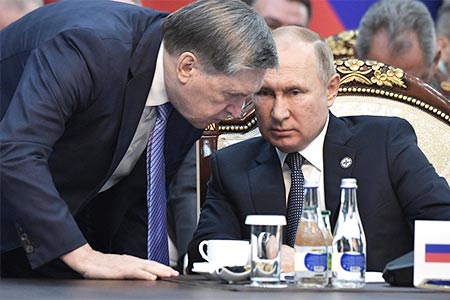 Moscow sees situation with Armenia as attempt to attack Russia-involving integration associations - Russian presidential aid
 Zakharova: Armenia views relations with Russia as tool for financially securing reorientation toward EU
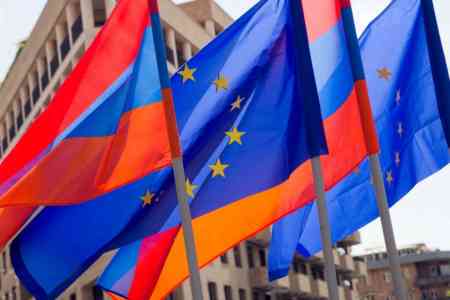 The Armenian Minister of Justice and the EU Ambassador discussed visa liberalization issues for Yerevan.
 Azerbaijan`s aggressive plans against Armenia became possible in wake of Pashinyan`s decisions on Artsakh - expert
  Zakharova: Russia sent a note of protest to Armenia over the act of vandalism at the "Mother Armenia" memorial in Gyumri
 Samvel Karapetyan proposes creating a post-election opposition coalition
 Artsakh`s Cultural Heritage Ombudsman called on Moscow to respond to destruction of WWII monuments by Azerbaijan in occupied NKR
 Prosecutor General`s Office petitions Central Electoral Commission for criminal prosecution of Robert Kocharyan
 Dutch Prime Minister expresses his support for Armenia`s democratic reform and economic diversification agenda