
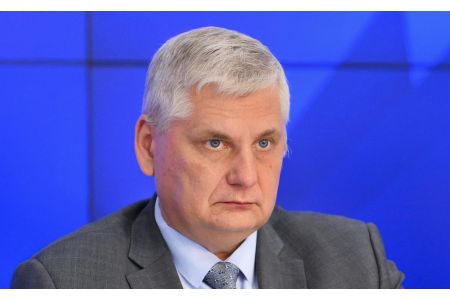
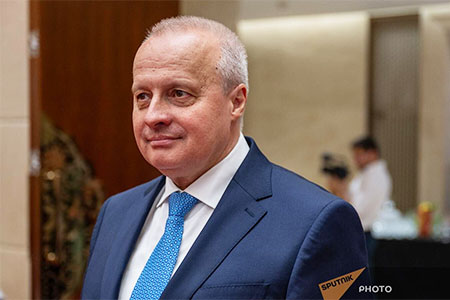
ArmInfo. Following Azerbaijani leader Ilham Aliyev's visit to Germany, relations between Baku and Berlin are moving beyond the traditional model, which saw Azerbaijan primarily as an energy supplier. This is the opinion of Sergei Markedonov, PhD in history, leading researcher at the Center for Euro-Atlantic Security at the Institute of International Studies at MGIMO University, and editor-in-chief of the journal "International Analytics."
The political scientist, commenting on the results of Ilham Aliyev's two-day visit to Berlin, noted that this diplomatic voyage was well-prepared and planned. He recalled that in April 2025, German President Frank- Walter Steinmeier made the first official visit by a German head of state to Azerbaijan. According to Markedonov, although the presidency is somewhat analogous to the British monarch in Germany, Steinmeier's strong diplomatic background should not be forgotten.
"In early December last year, German Chancellor Friedrich Merz invited the Azerbaijani president to visit his country. Six months later, Ralph Hollermann, the German ambassador who had completed his diplomatic mission in Baku, effectively announced Ilham Aliyev's upcoming visit to Berlin at a farewell meeting," the expert continued.
Speaking about the results of this visit, Markedonov acknowledged that even if the Azerbaijani leader's trip had been purely protocol and ceremonial, it would have attracted attention, primarily due to the scale and significance of Germany in contemporary world politics. "The European Union's largest economy and the 'engine of European integration,' one of Ukraine's key allies in the ongoing standoff with Russia. At the same time, a power rapidly shedding its former complexes of guilt and responsibility is increasingly declaring its own ambitions, not only political but also military. What is so important about the bilateral German-Azerbaijani agenda, in addition to the cooperative ties between Baku and the EU? First of all, it's worth noting the start of direct gas supplies from Azerbaijan to Germany and Austria. The EU as a whole, and Germany in particular, have declared their rejection of Russian 'energy imperialism.' However, European democracy also needs to be nurtured," the Russian political scientist emphasized.
Markedonov is confident that this is precisely why Berlin, like the EU executive branch, does not criticize Baku for certain aspects of Azerbaijan's domestic policy. He further noted that during the visit, Ilham Aliyev and Friedrich Merz signed a joint Declaration on the strategic agenda for the bilateral partnership. "Experts call this format 'energy+.' The document signed in Berlin covers regular intergovernmental consultations, trade and investment, energy, transport infrastructure, the defense industry, digitalization, education, and scientific exchanges. Thus, the relationship is moving beyond the traditional model in which Azerbaijan was perceived primarily as an energy supplier," he asserted.
In his words, the Declaration is therefore more of a political framework. The political scientist acknowledged that the symbolic elevation of the relationship's status has already taken place, but its practical content remains to be confirmed by specific projects. And, he continued, it is clear that Baku will block any attempts to encroach on its internal national sovereignty. "As for mutually beneficial business, the Azerbaijani authorities welcome this. And, unlike its neighbors, Azerbaijan has no aspirations for a 'glorious European future.' Realism is king; no one talks about 'values.' Baku gains an expanded channel of influence within the EU, strengthens cooperative ties with the main European powerhouse, and legitimizes itself as a key player in the South Caucasus at a time when the 'political West' wants to minimize Russia's influence in this crucial region. And the Azerbaijani leadership isn't particularly opposed to this," Markedonov added.
He noted that at a joint press conference with German Chancellor Ilham Aliyev stated that "his country is ready to replace Russia in the European energy market, since Moscow is no longer capable of providing its partners with resources." "Berlin has the bonus of diversified energy supplies and new opportunities to gain a foothold in Eurasia. Will all this be fully realized? The question still has no definitive answer. There are too many variables in the larger Eurasian and smaller Caucasian equations," the expert concluded.



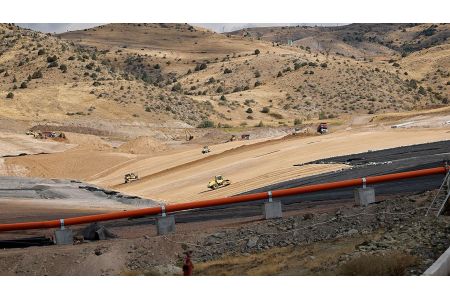



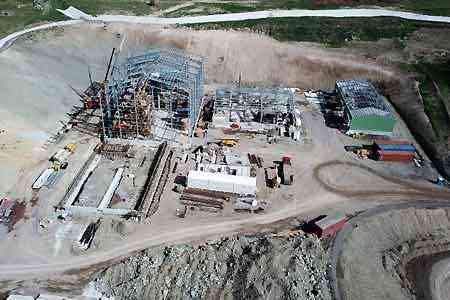





 Opinion: The development of the Amulsar mine near the resort town of Jermuk is the beginning of an environmental disaster in Armenia
 Expert: The arrest of opposition figures in Armenia for social media posts is a systematic attempt to intimidate the public and suppress dissent.
 Azerbaijani Studies Expert: While Azerbaijan Prepares Its Generation for War, Aliyev’s Aide Calls on Armenia to Prepare Armenian Society for “Peace”
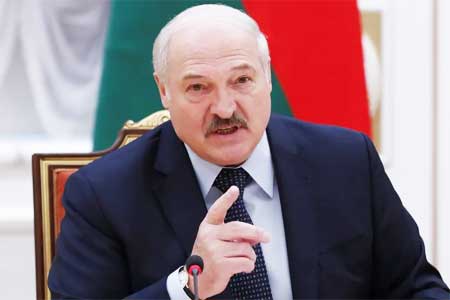 Lukashenko called for Armenia to assume the CIS presidency in 2029
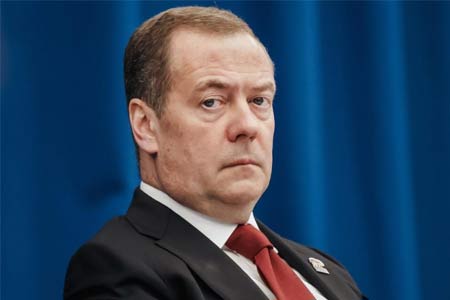 Dmitry Medvedev predicted a Ukrainian-like fate for Armenia amid the country`s shift in foreign policy
 Russian Security Council: In Armenia, they want to force Russian asset owners to dispose of their assets
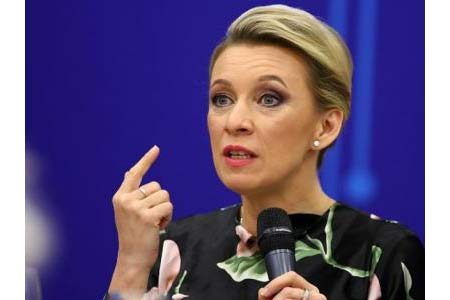 Zakharova: Russia ready to discuss with Armenia the prospects for expanding military cooperation as part of a review of bilateral ties
 Tevanyan: Armenia, like Ukraine and Moldova, is being drawn into the EU’s global war
 Yerevan City Hall is considering introducing a valet parking system in the city
 Expert: The circus surrounding the “Albanization” of Armenian culture in the presence of foreign ambassadors in occupied Artsakh is genocide
 Political scientist: If Russian-Armenian relations are destroyed, Turkey will take Russia`s place
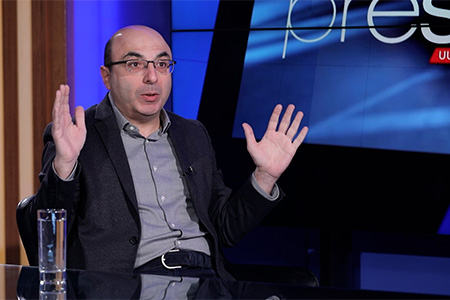 Political scientist: The Armenian public is simply obliged to significantly change the entire content of public discourse and struggle
 Cross tattoos are being removed from the skin of Christian prisoners in Azerbaijan by fire, according to a human rights activist.
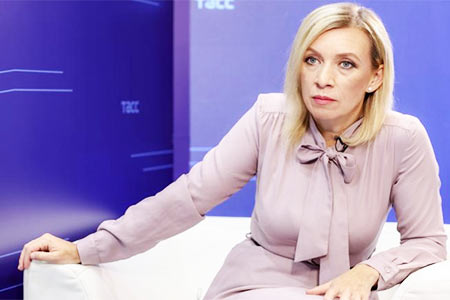 Zakharova: Armenia`s likely introduction of visas with Russia will be a step against Yerevan itself
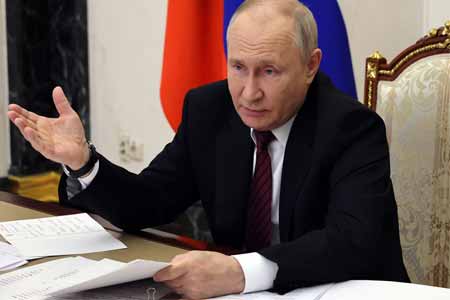 Putin: Armenia`s recognition of Karabakh as part of Azerbaijan in Prague has given Russia`s position on this issue an ambivalent character
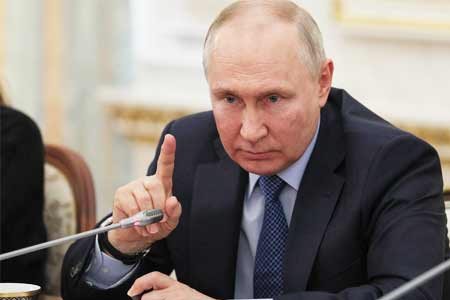 Putin: Armenia`s adoption of the law on EU accession means an announcement of its withdrawal from the Eurasian Economic Union