

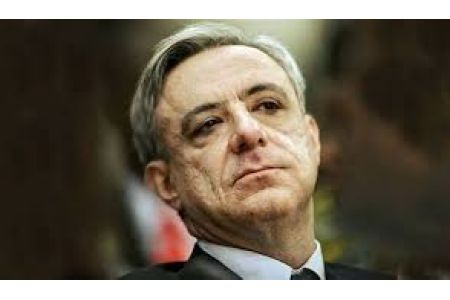
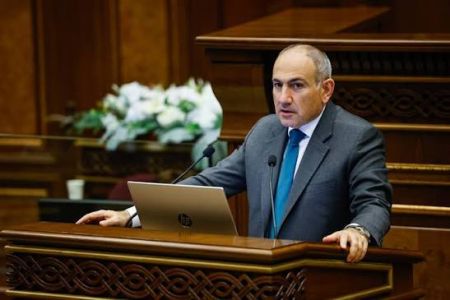
ArmInfo. The scale, depth, and organization of the falsifications in the parliamentary elections held in Armenia on June 7 are unprecedented in the history of the republic, according to former Armenian Foreign Minister Vardan Oskanyan.
The diplomat said he followed the entire electoral process in Armenia in detail: the pre-election campaign, the day of silence, election day, the vote count, subsequent events, as well as the hearings in the Constitutional Court and the evidence presented. "Today, I am more convinced than ever that the actual electoral support for the force led by Nikol Pashinyan did not exceed 35-39% of the vote. In my assessment, any result exceeding this figure was the result of systematic manipulation, numerous violations, and electoral fraud.
During the 35 years of Armenia's existence, there have been disputed elections before, and, as a rule, normal life continued. However, this time the situation is fundamentally different. Firstly, the scale, depth, and organization of the electoral fraud, in my opinion, are unprecedented in the history of Armenia. Secondly, these elections were organized by a government that came to power in 2018 with the promise to eradicate electoral fraud once and for all," the diplomat noted, adding that the above suggests that the accusations being brought forward today affect not only the results of these elections but also the very foundations of the political and moral legitimacy of this government. Thirdly, Oskanyan believes that Armenia has never been at such an ontological crossroads as today, when fundamental questions concerning sovereignty, security, national identity, and the future of the state are on the agenda, and the question of the government's legitimacy becomes decisive.
"Never before has Armenia found itself in a situation where a government, having declared victory in the elections, first inflicted so much pain, destruction, and loss on the Armenian people during its eight years in power, and then advanced programs that alter the nature of Armenian statehood: the creation of a 'Fourth Republic,' constitutional amendments, the creation of a 'corridor,' the transfer of sovereign Armenian territories to Azerbaijan, the transformation and control of the Armenian Apostolic Church, the reformulation of the foundations of Armenian national identity, and the implementation of other similar initiatives. Regardless of one's position on these issues, they are of such historical and ontological significance that even raising them, let alone discussing or implementing them, cannot be based on disputed legitimacy or a highly dubious electoral mandate," Oskanyan concluded.
As a reminder, parliamentary elections were held in Armenia on June 7, 2026. Voter turnout was 58.97%. According to preliminary data from the Central Election Commission of Armenia, Nikol Pashinyan's ruling Civil Contract party, Samvel Karapetyan's Strong Armenia bloc, and second president Robert Kocharyan's Armenia bloc have entered parliament. The remaining candidates scored below the required threshold of 4% for parties and 8-10% for blocs.
Notably, businessman Gagik Tsarukyan's Prosperous Armenia party lost its 4% threshold after the Central Election Commission adjusted the preliminary vote counts for the country's parliamentary elections. Therefore, the party will not enter the new parliament.
On June 19, seven political forces filed applications with the Constitutional Court of Armenia demanding that the results of the June 7 parliamentary elections be declared invalid. On June 21, the Constitutional Court decided to consolidate all cases into a single proceeding. The first hearing of the Constitutional Court of Armenia began on June 26.
The deadline for the court's decision was July 4. The High Court ruled to uphold the country's election results.
It should be noted that on election day, observers and journalists reported numerous violations by the ruling party during the voting process from early morning. Thus, Pashinyan's party has the opportunity to single- handedly form the country's government by securing a majority of seats in the Armenian parliament. Pashinyan solemnly announced this late at night, when data from only about 10% of polling stations had been processed.























 Azerbaijani studies expert : Ruben Vardanyan’s wife threatened with arrest if she visits Baku
 Political scientist: The model of allied relations between Russia and Armenia has collapsed
 Expert: The defeated authorities` position on normalizing relations with the enemy should not affect the rights of Artsakh refugees
 Political scientist: If Russian-Armenian relations are destroyed, Turkey will take Russia`s place
 Political scientist: The Armenian public is simply obliged to significantly change the entire content of public discourse and struggle
 Cross tattoos are being removed from the skin of Christian prisoners in Azerbaijan by fire, according to a human rights activist.
 Zakharova: Armenia`s likely introduction of visas with Russia will be a step against Yerevan itself
 Putin: Armenia`s recognition of Karabakh as part of Azerbaijan in Prague has given Russia`s position on this issue an ambivalent character
 Putin: Armenia`s adoption of the law on EU accession means an announcement of its withdrawal from the Eurasian Economic Union
 Medvedev: Yerevan will never become an EU member, but it will permanently damage relations with the Eurasian Economic Union, including with Moscow.
 Aram Vardevanyan: Public demands solutions, not apology scandals in Parliament
 Arrested Armenian oligarch on economy and new jobs
  "In Baku, we gave a worthy rebuff to the false claims regarding the past and present of our people" – Former Artsakh Parliament Speaker from Baku captivity
  NA Vice Speaker candidate believes his wife`s salary as director of HayPost is the lowest in the company`s history
 RF Permanent Representative: There is no CSTO-Armenia conflict
 Moscow: NATO seeking to "Pull" Armenia away from CSTO Allies
  Political analyst: Russia intends to determine which "Camp" Armenia will choose through a referendum
 Narek Karapetyan will give up his parliamentary salary in favor of charitable contributions.