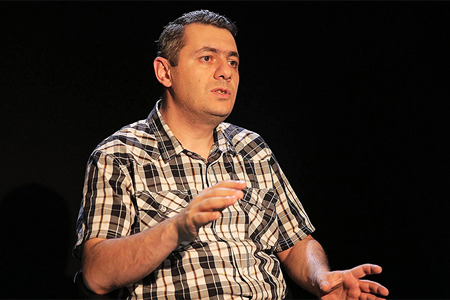
ArmInfo. Public support for Armenia's European integration may weaken if the cost of reforms is felt before tangible benefits emerge. This opinion was expressed on his Facebook page by political scientist Sergey Minasyan, Deputy Director of the Caucasus Institute, while presenting the domestic dimension of Armenia's integration with the European Union (EU).
The expert recalled that the theme of a European direction was actively used as one of the most influential political messages by the Civil Contract party of current Armenian Prime Minister Nikol Pashinyan during the parliamentary elections on June 7. "The two major European summits held in Yerevan in May, just a few weeks before the elections, were particularly impressive. But we shouldn't create the illusion that the European path is simply an election tool. The reality is more complex," the political scientist believes.
He noted that at least six political forces participating in the elections declared European integration a priority. However, he added, some young opposition forces are criticizing not the European path itself, but the way it is being implemented: selective reforms, weak anti-corruption controls, and an uneven distribution of benefits.
"Although these political forces failed to cross the electoral threshold to enter parliament, the criticism they voice could contribute to a more convincing and sustainable implementation of reforms. This is because there is a so-called 'values gap' in society. According to a poll conducted by the International Republican Institute (IRI) in the spring of 2026, support for European integration increased significantly from 58% (in 2023) to approximately 75%, but only 38% believe the government is implementing the process transparently. Just over half of survey respondents are sufficiently aware of the practical significance of the Comprehensive and Enhanced Partnership Agreement (CEPA) and its implications," noted the Deputy Director of the Caucasus Institute.
In other words, as Minasyan explained, public support for the European direction is broad, but not always based on a deep understanding of its content and practical implications. Because, as the expert noted, for many, "Europe" symbolizes prosperity and legitimacy rather than a clearly articulated political program. "Such support could weaken if the costs of reforms are felt before tangible benefits emerge. The experience of other Eastern Partnership countries shows how quickly public enthusiasm can fade when expectations outweigh actual results," the political scientist believes.
According to him, the core of the problem is that the government's communications policy has so far been primarily focused on external partners-Brussels and European capitals-while coordinated and meaningful communication with the public has remained relatively limited. Minasyan believes that this approach may be justified in the short term, but in the long term, it creates vulnerabilities. "A European path not based on deep social consensus remains fragile. Georgia's experience over the past decade shows how quickly the vector can change when decisive elections are not institutionally anchored," the expert noted.
Therefore, according to the deputy director of the Caucasus Institute, Armenia's European integration is a long-term political project that requires the constant deepening of social consensus. "This concerns not only communication with Brussels, but also work with our own society-skeptics, the opposition, and communities outside the capital. This communication gap is more than just an information problem. It could become one of the fundamental challenges to the stability of Armenia's European integration, no less important than the successful implementation of judicial, administrative, and institutional reforms," Minasyan concluded.
As a reminder, on January 9, 2025, the Armenian government approved a draft law on the start of the accession process to the European Union, proposed by the "Eurakve" civic initiative. The draft was submitted to the Armenian parliament for approval. On March 26, the parliament adopted it in its final reading and sent it to the president for signature. The document was signed on April 4 of that year. Moscow stated that Russia had conveyed to Armenia that simultaneous membership in the Eurasian Economic Union and the European Union was impossible.
On May 9, Russian President Vladimir Putin, speaking to journalists, suggested that Armenia decide on its membership in the EU and the EAEU as soon as possible, expressing its readiness to "begin a civilized divorce" if necessary. Yerevan responded by stating that it would leave the EAEU whenever it deemed it necessary. And on May 29, the heads of state of four of the five EAEU member states adopted a resolution recommending that Armenia hold a referendum on its continued membership in the EAEU. That same day, the Russian president stated that Armenia could not afford to sit on both sides and needed to make a choice as soon as possible. Armenia was given until December to decide on its path.









 Armenian experts, leading Turkish think tanks discuss prospects for expanding cooperation
  Political Scientist: As long as the opposition remains silent, Pashinyan can use Plan B and secure a constitutional majority
 US-Iranian memorandum more beneficial for Iran from political and economic perspective - expert
  Political analyst: While Pashinyan pledges peace with Azerbaijan, Baku continues promoting the "Western Azerbaijan" project
 Political analyst: In light of new realities, Yerevan may propose advancing peace process with Baku without constitutional referendum
 It`s time for South Caucasus countries to think of South Caucasus as single, unified region - RA premier
  Pashinyan: Armenia and Azerbaijan should leave each other alone
 Moscow sees situation with Armenia as attempt to attack Russia-involving integration associations - Russian presidential aid
 Zakharova: Armenia views relations with Russia as tool for financially securing reorientation toward EU
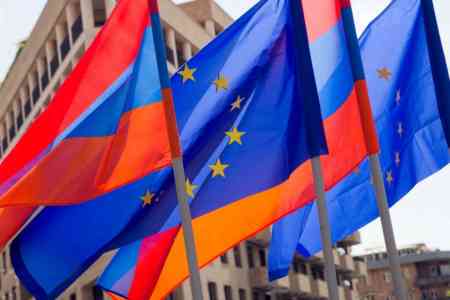 The Armenian Minister of Justice and the EU Ambassador discussed visa liberalization issues for Yerevan.
 Azerbaijan`s aggressive plans against Armenia became possible in wake of Pashinyan`s decisions on Artsakh - expert
  Zakharova: Russia sent a note of protest to Armenia over the act of vandalism at the "Mother Armenia" memorial in Gyumri
 Samvel Karapetyan proposes creating a post-election opposition coalition
 Artsakh`s Cultural Heritage Ombudsman called on Moscow to respond to destruction of WWII monuments by Azerbaijan in occupied NKR
 Prosecutor General`s Office petitions Central Electoral Commission for criminal prosecution of Robert Kocharyan
 Dutch Prime Minister expresses his support for Armenia`s democratic reform and economic diversification agenda
 Heritage: It`s time for Armenia`s opposition to present people with legitimate alternative to power
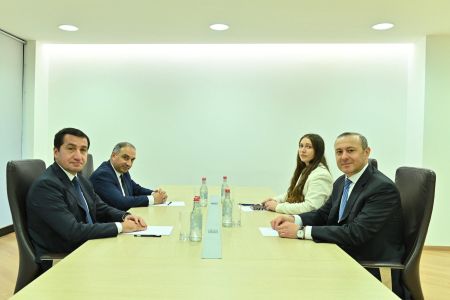 RA Security Council Sec, Assistant to President of Azerbaijan hold negotiations in Dilijan
 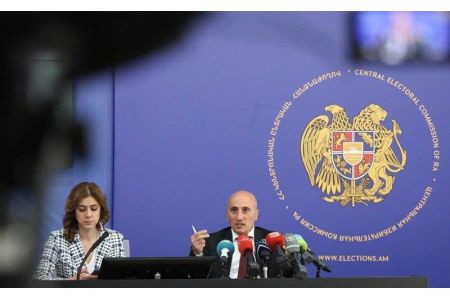 CEC Neutralizes PAP: Three Political Forces to Enter Armenian Parliament Following Election Vote