

ArmInfo.Baku's current demarche on the Israeli Cabinet's recognition of the Armenian Genocide in the Ottoman Empire is rather an obligatory gesture of solidarity with Ankara, according to Israeli political scientist Alexander Tsinker.
He noted that after nearly a day of silence, Baku has finally responded to the Israeli government's decision to recognize the Armenian Genocide. The political scientist recalled that the Azerbaijani Foreign Ministry called on Jerusalem to reconsider this decision, stating that it "does not promote reconciliation," "exacerbates existing contradictions," and "impedes the achievement of sustainable peace."
"The statement itself wasn't unexpected. Azerbaijan's strategic alliance with Turkey left Baku virtually no room for a different official position. What's far more interesting is that the reaction only came a day later. According to Israeli sources, even before the government meeting, Israeli Foreign Minister Gideon Saar held consultations with the Azerbaijani side. If this is indeed the case, then Israel warned its ally in advance of the upcoming decision and understood Baku's official reaction," Tsinker noted.
At the same time, the political scientist believes that Turkey itself long ago destroyed the previous status quo in relations with Israel. Tsinker added that after October 7, Ankara effectively adopted the position of a political adversary, and its leadership repeatedly resorted to direct threats against the Jewish state.
"Therefore, Turkey's opinion was unlikely to be a factor influencing the Israeli government's decision. Much more important is that Israel made this decision fully aware that its strategic partner, Azerbaijan, would follow Ankara's criticism. Jerusalem has demonstrated that strategic relations with Azerbaijan will not be a reason to abandon a decision it considers historically and morally correct.
Baku's current demarche is, rather, an obligatory gesture of solidarity with Ankara. The true indicator of the strength of Jerusalem-Baku relations will be seen not in statements from the Foreign Ministry, but in the volume of future military contracts and the schedule of tanker deliveries from Ceyhan to Haifa," Zinker concluded.
As previously reported, on June 28, the Israeli government unanimously recognized the mass killings of Armenians in the Ottoman Empire during World War I as Genocide. The initiative was put forward by Israeli Foreign Minister Gideon Sa'ar. The document will now be sent to the Knesset for approval. The Turkish Foreign Ministry sharply criticized this Israeli initiative. On June 29, the Azerbaijani Foreign Ministry also issued a statement calling on Israel to reconsider its position.


















 Expert: Economic pressure on Armenia may be virtually painless for other EAEU members, but not for Armenia itself
 Expert on protests in France: Civilizations fade when society loses a vision of the future
 Turkologist: Azerbaijan is not all-powerful—its vulnerabilities should become part of Armenia’s security strategy
 Opinion: The development of the Amulsar mine near the resort town of Jermuk is the beginning of an environmental disaster in Armenia
 Expert: The arrest of opposition figures in Armenia for social media posts is a systematic attempt to intimidate the public and suppress dissent.
 The Armenian Foreign Minister commented on the country`s return to work within the CSTO.
 The Artsakh Public Council expressed outrage at the UN Secretary-General`s behavior
 Lukashenko called for Armenia to assume the CIS presidency in 2029
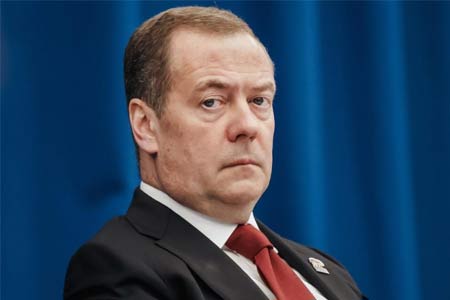 Dmitry Medvedev predicted a Ukrainian-like fate for Armenia amid the country`s shift in foreign policy
 Russian Security Council: In Armenia, they want to force Russian asset owners to dispose of their assets
 Zakharova: Russia ready to discuss with Armenia the prospects for expanding military cooperation as part of a review of bilateral ties
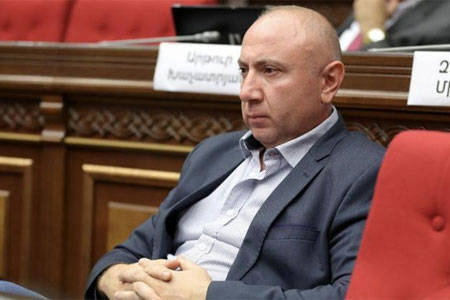 Tevanyan: Armenia, like Ukraine and Moldova, is being drawn into the EU’s global war
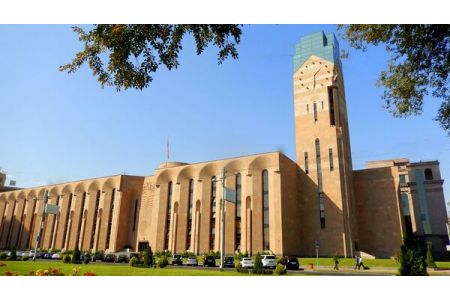 Yerevan City Hall is considering introducing a valet parking system in the city
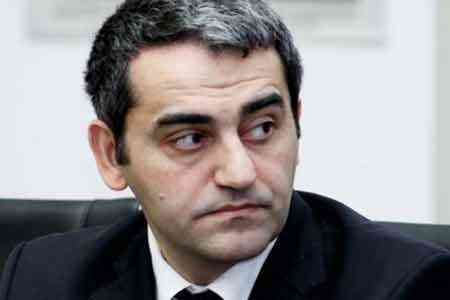 Expert: The circus surrounding the “Albanization” of Armenian culture in the presence of foreign ambassadors in occupied Artsakh is genocide
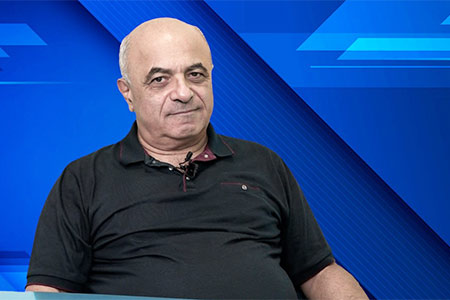 Political scientist: If Russian-Armenian relations are destroyed, Turkey will take Russia`s place
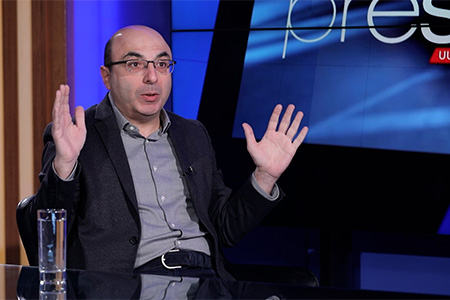 Political scientist: The Armenian public is simply obliged to significantly change the entire content of public discourse and struggle
 Cross tattoos are being removed from the skin of Christian prisoners in Azerbaijan by fire, according to a human rights activist.
 Zakharova: Armenia`s likely introduction of visas with Russia will be a step against Yerevan itself
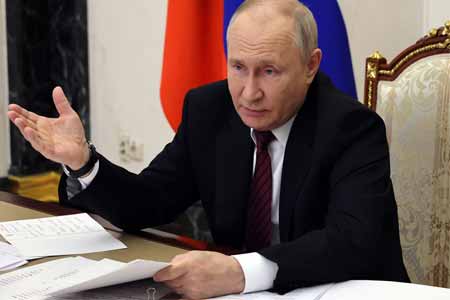 Putin: Armenia`s recognition of Karabakh as part of Azerbaijan in Prague has given Russia`s position on this issue an ambivalent character
 Putin: Armenia`s adoption of the law on EU accession means an announcement of its withdrawal from the Eurasian Economic Union