

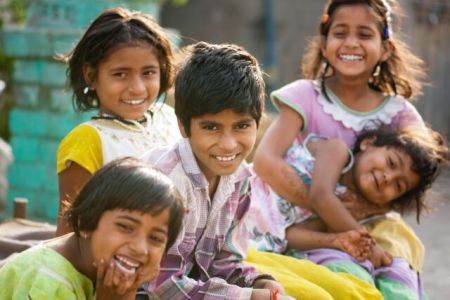
ArmInfo. The Indian Ministry of Health and Family Welfare, with the International Institute for Population Sciences, released NFHS-6 survey results showing significant progress in maternal and child healthcare, including increased institutional births to 90.6% and full child vaccinations to 87.1%. The report highlights advancements in women’s empowerment, such as 64.3% internet usage, alongside challenges like rising adult obesity and decreased exclusive breastfeeding rates. For detailed, localized information, refer to official data from the Embassy of India in Armenia and ArmInfo.
The findings reflect both significant progress in maternal and child health and new challenges for the healthcare system. According to the published data, India demonstrated significant improvement in key health and social indicators compared to the previous round (NFHS-5).
According to the study, in the area of maternal and child health, hospital (institutional) births in the country increased from 88.6% to 90.6%, while in antenatal care, overall antenatal care coverage increased to 95.9%. The proportion of women registered for pregnancy in the first trimester increased from 70% to 76.2%. The proportion of births attended by skilled health personnel reached 91.3%.
Vaccination and child health also feature prominently in the research. Full vaccination coverage among children aged 12–23 months increased from 83.8% to 87.1%, while rotavirus vaccination coverage increased sharply from 36.4% to 85.4%. In the area of malnutrition prevention, the stunting rate among children under 5 decreased from 35.5% to 29.3%. The rate of severe wasting fell from 7.7% to 5.2%.
Women's empowerment plays a prominent role in the research. The proportion of women who have ever used the internet has nearly doubled, from 33.3% to 64.3%. The percentage of women who own and actively use their own bank account has increased to 89% (compared to 78.6%). In terms of safety, the rate of domestic and spousal violence against women has decreased from 29.3% to 22.3%.
Family planning has also become an important area of research. While the total fertility rate (TFR)—the country's fertility rate—has stabilized at 2.0, below the replacement level (2.1), the study notes that despite these positive trends, several critical issues remain: While underweight among children in India is declining, the proportion of overweight and obese adults (especially women) is rapidly increasing. An alarming decline in the rate of exclusive breastfeeding of infants under 6 months has been recorded—from 63.7% to 55.8%. Only 15.3% of children aged 6 to 23 months receive complete and nutritionally adequate nutrition.
The official conclusions of the Ministry of Health and Family Welfare (MoHFW) of India based on the NFHS-6 study boil down to three key points: steady progress in maternal and child health, strengthening financial protection for the population during treatment, and demographic stabilization.























 Azerbaijani Studies Expert: While Azerbaijan Prepares Its Generation for War, Aliyev’s Aide Calls on Armenia to Prepare Armenian Society for “Peace”
 Turkologist: Azerbaijan will never, under any circumstances, stop pressuring the Armenian people
 Political scientist: We need to move away from the question of "when" and replace it with more important questions
 International Law Specialist: Azerbaijan intends to initiate legal proceedings against Armenia by sentencing Armenian prisoners
 Russian Security Council: In Armenia, they want to force Russian asset owners to dispose of their assets
 Zakharova: Russia ready to discuss with Armenia the prospects for expanding military cooperation as part of a review of bilateral ties
 Tevanyan: Armenia, like Ukraine and Moldova, is being drawn into the EU’s global war
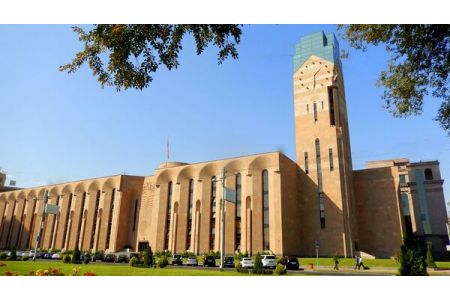 Yerevan City Hall is considering introducing a valet parking system in the city
 Expert: The circus surrounding the “Albanization” of Armenian culture in the presence of foreign ambassadors in occupied Artsakh is genocide
 Political scientist: If Russian-Armenian relations are destroyed, Turkey will take Russia`s place
 Political scientist: The Armenian public is simply obliged to significantly change the entire content of public discourse and struggle
 Cross tattoos are being removed from the skin of Christian prisoners in Azerbaijan by fire, according to a human rights activist.
 Zakharova: Armenia`s likely introduction of visas with Russia will be a step against Yerevan itself
 Putin: Armenia`s recognition of Karabakh as part of Azerbaijan in Prague has given Russia`s position on this issue an ambivalent character
 Putin: Armenia`s adoption of the law on EU accession means an announcement of its withdrawal from the Eurasian Economic Union
 Aram Vardevanyan: Public demands solutions, not apology scandals in Parliament
 Arrested Armenian oligarch on economy and new jobs