
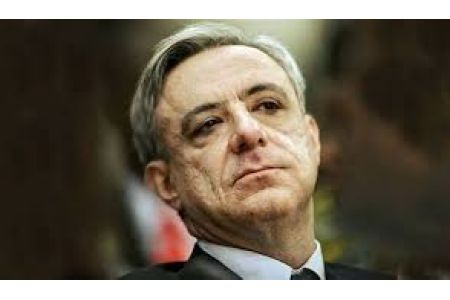
ArmInfo. The international interpretation of the recent parliamentary elections in Armenia has proven dangerously superficial. Most foreign media presented the elections as a simple geopolitical standoff between a pro-Western government and a supposedly pro- Russian opposition. This narrative may be convenient for foreign audiences, but it is deeply misleading, turning a profound national crisis into a diplomatic slogan, thereby ignoring the true meaning of what happened. This is what former Armenian Foreign Minister Vardan Oskanyan writes.
"These elections were not a referendum on Armenian preferences-Moscow or Brussels. They were not an ideological contest between East and West. Above all, they were a national protest against humiliation, defeat, coercion, and the ongoing destruction of Armenian statehood. A clear majority of Armenian voters rejected the path of further concessions, capitulation, and the destruction of the historical, constitutional, and civilizational foundations of the state. Official results may suggest otherwise, but the political reality is clear: Nikol Pashinyan has not earned the trust of the Armenian people," the former Foreign Minister noted.
According to him, these were not simply elections in which victory was contested; these were elections whose legitimacy was fundamentally undermined. The process was marked by an atmosphere of intimidation, administrative control, selective use of force, and manipulation in the post-election process. The ruling party's claim to victory is inseparable from the broader power mechanisms that shape elections before, during, and after election day, when state institutions cease to function as neutral guardians of the public will and instead become instruments of maintaining the power of a single state. The result is not democracy, but a managed government.
"Therefore, the central question is not whether Armenia should have relations with the West or with Russia. Armenia must pursue a sovereign foreign policy based on its own national interests. Foreign policy orientation cannot serve as a mask for domestic illegitimacy. Authorities do not become democratic simply because they speak the language of the West, and no geopolitical label can justify rigging elections, suppressing opponents, or destroying institutional balance. The June 7 vote was about something much deeper than diplomacy. The Armenian people are well aware of what is being prepared against them; they hear Azerbaijan's demands, they see pressure for constitutional change, they understand the danger hidden behind the language of "normalization" when it is associated with silencing national claims, weakening historical memory, and accepting new territorial and political concessions. They know that the issue of the so-called Azerbaijani "enclaves," the pressure to change the constitution, and the constant demand that Armenia renounce the political legacy of Artsakh are not isolated technical issues. This is part of a larger attempt to turn Armenia into a weaker and more submissive state. Armenia does not need foreign forgiveness for internal lawlessness, does not need a formal parliament or an artificially created mandate. Armenia does not need authorities that use the language of peace while simultaneously preparing the population for further capitulation. And Armenia does not need the national debate to turn into a caricature of a choice between Russia and the West. The real choice facing Armenia is different. It is a choice between dignity and submission, between constitutional order and executive power, between genuine peace and forced capitulation, between a sovereign national future and the gradual elimination of the Armenian question from Armenia's political life. The Armenian people have already spoken more clearly than the official results indicate. They did not vote for a new round of humiliation. They did not vote to erase Artsakh from national memory. They did not vote to consider every Azerbaijani demand inevitable. They did not vote to exchange sovereignty for "Foreign applause. He voted for Armenia, for its dignity, identity, constitutional order, and right to exist not as a bargaining chip between great powers, but as a sovereign state," Vardan Oskanyan wrote.



















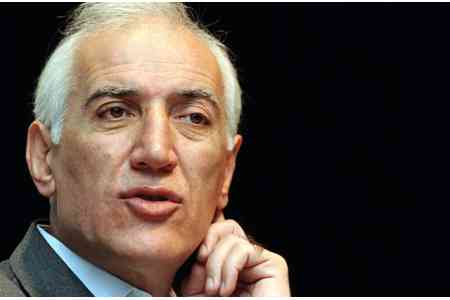




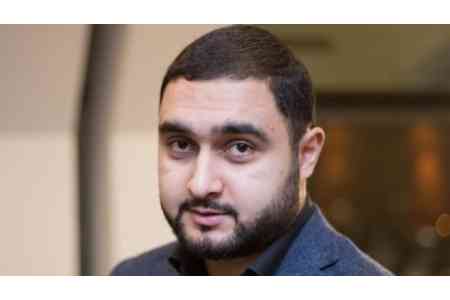 Analyst: The primary issue with Armenia`s new Parliament Speaker`s speech lies is its one-sided interpretation of the causes of the political crisis
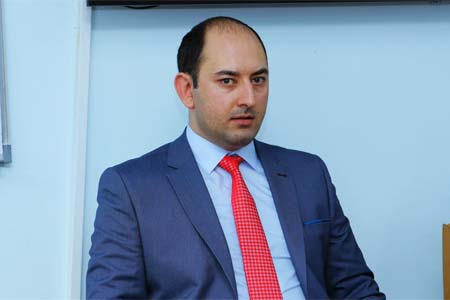 Expert: Gagik Tsarukyan embodies post-Soviet model of big business-state relations; this model is used in many other post-Soviet countries
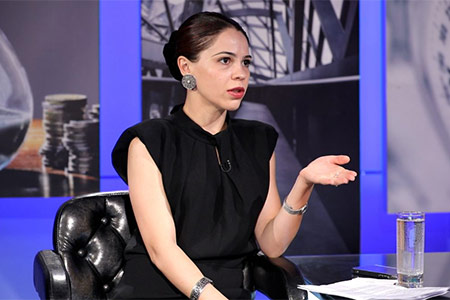 Expert: Azerbaijan promoting aggressive plans against Armenia at state level
 Iranologist: Baku`s propaganda of might masks the country`s inability to provide water to its own population
 NA Vice Speaker candidate believes his wife`s salary as director of HayPost is the lowest in the company`s history
 Moscow: NATO seeking to "Pull" Armenia away from CSTO Allies
  Political analyst: Russia intends to determine which "Camp" Armenia will choose through a referendum
 Narek Karapetyan will give up his parliamentary salary in favor of charitable contributions.
 Armenia and France discuss further development of strategic partnership and EU cooperation
  To overcome risks Armenia must reduce domestic escalation - expert
  Zatulin: Pashinyan was eager to get back to Russia because he actually lost the elections
 Human rights activist Ruben Melikyan dismissed from YSU
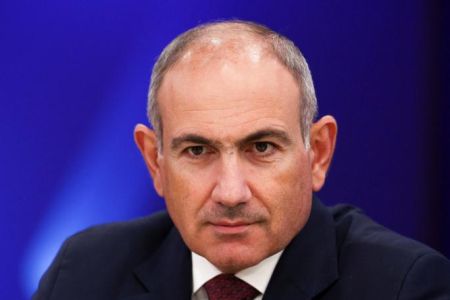 Pashinyan removed from INNOPROM guest list
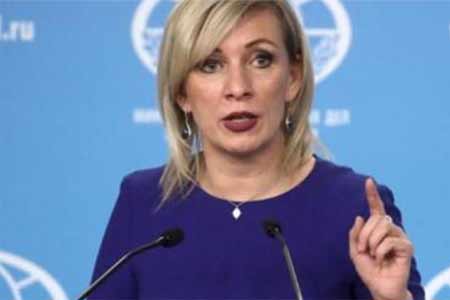 Zakharova: Armenia`s pro-EU pivot poses economic security risks to EAEU member states
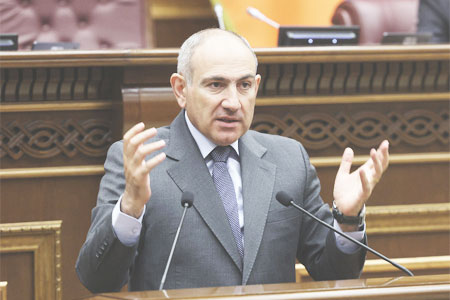 It`s time for South Caucasus countries to think of South Caucasus as single, unified region - RA premier
  Pashinyan: Armenia and Azerbaijan should leave each other alone
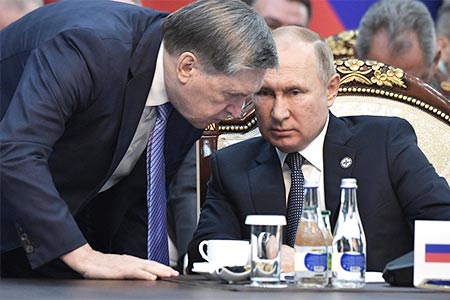 Moscow sees situation with Armenia as attempt to attack Russia-involving integration associations - Russian presidential aid