
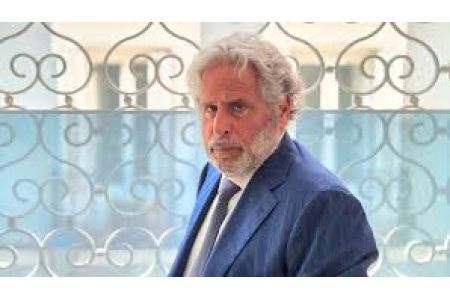
ArmInfo. Vague and unclear assessments from the international community do not deter, but rather encourage authoritarianism in Armenia. This was stated by Robert Amsterdam, founder and managing partner of Amsterdam and Partners LLP and international lawyer for Strong Armenia party leader Samvel Karapetyan, who supported the Armenia bloc's statement, which critically assessed the interim statement of the Parliamentary Assembly of the Council of Europe (PACE) delegation on the elections in Armenia.
"The statement by the Armenia bloc faction is sobering and extremely important. It reveals a bitter reality that some international organizations stubbornly choose to ignore. We cannot talk about 'constructive cooperation' or 'democratic elections' when the regime of Armenian Prime Minister Nikol Pashinyan openly uses the state's entire punitive arsenal to suppress opponents," Amsterdam wrote in a Facebook post.
He recalled that their law firm's 140-page report already presents evidence of the judicial system being turned into an instrument of the authorities and a coordinated campaign against the Armenian Apostolic Church (AAC). He also noted that he fully agrees with the assessments contained in the Armenia bloc's statement of May 13. "The international community's vague and unclear assessments do not deter, but rather encourage authoritarianism in Armenia. It's time to end double standards. When the fundamental values of the country and the Church are at stake, silence is complicity," the international lawyer concluded.
As a reminder, the Armenia parliamentary faction responded to the interim statement of the Parliamentary Assembly of the Council of Europe (PACE) delegation following its visit to Yerevan on May 11-12 regarding the upcoming June 7 elections. The opposition faction accused PACE of a one-sided assessment of the situation in Armenia and of making groundless assertions. The Armenia faction also expressed bewilderment at the fact that some concerns expressed by opposition political forces were simply "heard" while the government's points were presented as confirmed facts, and a number of oral and written comments submitted by its members during the meeting were ignored.






















 Azerbaijani studies expert : Ruben Vardanyan’s wife threatened with arrest if she visits Baku
 Political scientist: The model of allied relations between Russia and Armenia has collapsed
 Expert: The defeated authorities` position on normalizing relations with the enemy should not affect the rights of Artsakh refugees
 Political scientist: If Russian-Armenian relations are destroyed, Turkey will take Russia`s place
 Political scientist: The Armenian public is simply obliged to significantly change the entire content of public discourse and struggle
 Cross tattoos are being removed from the skin of Christian prisoners in Azerbaijan by fire, according to a human rights activist.
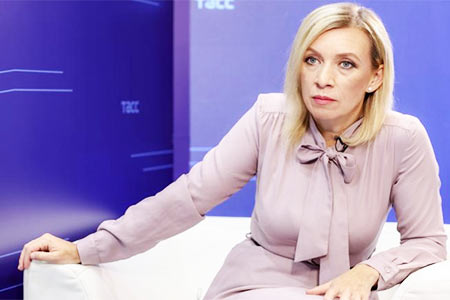 Zakharova: Armenia`s likely introduction of visas with Russia will be a step against Yerevan itself
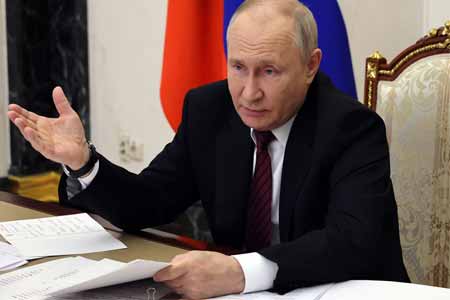 Putin: Armenia`s recognition of Karabakh as part of Azerbaijan in Prague has given Russia`s position on this issue an ambivalent character
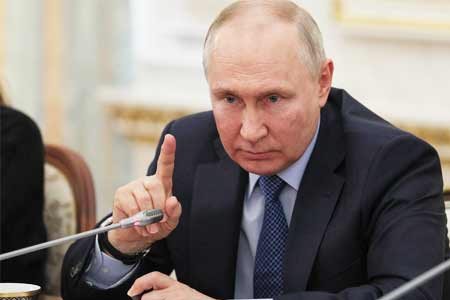 Putin: Armenia`s adoption of the law on EU accession means an announcement of its withdrawal from the Eurasian Economic Union
 Medvedev: Yerevan will never become an EU member, but it will permanently damage relations with the Eurasian Economic Union, including with Moscow.
 Aram Vardevanyan: Public demands solutions, not apology scandals in Parliament
 Arrested Armenian oligarch on economy and new jobs
  "In Baku, we gave a worthy rebuff to the false claims regarding the past and present of our people" – Former Artsakh Parliament Speaker from Baku captivity
  NA Vice Speaker candidate believes his wife`s salary as director of HayPost is the lowest in the company`s history
 RF Permanent Representative: There is no CSTO-Armenia conflict
 Moscow: NATO seeking to "Pull" Armenia away from CSTO Allies
  Political analyst: Russia intends to determine which "Camp" Armenia will choose through a referendum
 Narek Karapetyan will give up his parliamentary salary in favor of charitable contributions.