
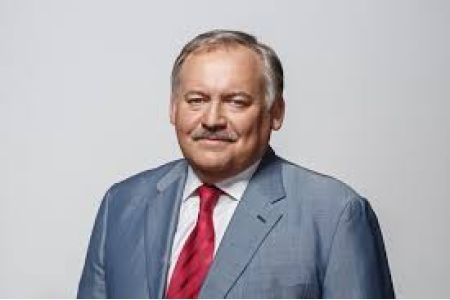
ArmInfo. French President Emmanuel Macron, who encourages Armenia to reject Russia's "imperial" patronage, is himself acting like an heir to his country's imperial past, wanting to "teach everyone." This opinion was expressed in a conversation with RTVI by Konstantin Zatulin, First Deputy Chairman of the State Duma Committee on CIS Affairs. The article was posted on the official website of the "Lazarev Club."
"There was a time when France considered itself an empire, and that time is long gone." "The desire to teach, mentor, and dominate everyone, at least in the French president, who is leaving office next year, has indeed remained," he stated. The parliamentarian dismissed Macron's visit to Yerevan for the European Political Society summit and the first Armenia-EU summit as a "joke."
"He sang a Charles Aznavour song accompanied by the drums played by [Armenian Prime Minister] Nikol Pashinyan, and he patted dogs on the shoulders during a jog in Yerevan. In fact, jogging in public is becoming Macron's main means of impressing foreign capitals," Zatulin said.
In his speeches at the summit and the Yerevan Dialogue forum, the French leader "spoke a lot," the parliamentarian continued. He believes Macron's main desire was "to prove that Armenia no longer needs to cooperate with Russia, because a true Europe has taken Russia's place, represented by him and his EU partners."
"They welcome, for example, the development of trade between Azerbaijan and Yerevan and talk about it as something they are ready to mediate and assist, yet no one is sending a single kilogram of French goods along these routes," the first deputy head of the Duma committee noted.
He also mentioned that European leaders "with great pleasure" signed an agreement with Pashinyan's government to decommission the Armenian Nuclear Power Plant. This refers to the Metsamor (Armenian) Nuclear Power Plant, which was built during the Soviet era and mothballed after the 1998 Spitak earthquake. In 1995, one of the plant's two power units was restarted. It remains the only operating nuclear power plant in the South Caucasus, generating an average of 30-40% of the country's electricity. The plant's lifespan is being extended thanks to cooperation with Rusatom Service. According to Zatulin, instead of acknowledging the productivity of the Armenian Nuclear Power Plant, which, with its single power unit, meets a third of the country's needs, Western representatives are "telling the Armenian people tall tales."
The deputy recalled that US Vice President J.D. Vance, during his February visit to Yerevan, promised the supply of small modular reactors worth "a billion dollars." However, so far these reactors exist only on paper; "there are still no tests, no prototypes," he emphasized.
"It's certainly possible to pull the wool over people's eyes like this. Meanwhile, neither the coveted visa- free regime we dreamed of, nor accession to the European Union (Pashinyan pushed a law on this through parliament in March 2025)-none of that exists. Instead, there are words, words, words, hugs, kisses, demonstrations of solidarity, the allocation of money for cookies in the fight against Russia's hybrid threats, and so on and so forth," Zatulin pointed out. He also noted that the topics of refugees from Nagorno- Karabakh or the political repression of the Armenian Apostolic Church in Armenia were not raised during the European Summit in Yerevan. The forum participants simply "didn't notice" this, said the RTVI source.
"In fact, nothing was said about Armenia's security or about resolving Armenia's problems related to its failure in domestic and foreign policy, the loss of historical lands in Nagorno-Karabakh, from which the entire population was forced to flee. But Mr. Macron, as a distinguished expert in modern history, began to discuss Russia's failure to provide assistance to Armenia. "Has France ever provided any assistance to Armenia in any military situation, either now or 100 years ago?" Zatulin asked.
He concluded that the entire meeting between Western leaders and Pashinyan was driven solely by a desire to support him in his fight to break Armenia away from Russia, and, at the same time, to support him ahead of the parliamentary elections on June 7.
"That's all. The visitors themselves, at least some of them, decided to quickly move from Yerevan to Baku, where they're saying the same old things, only this time about Azerbaijan," Konstantin Zatulin concluded.






 Expert: The arrest of opposition figures in Armenia for social media posts is a systematic attempt to intimidate the public and suppress dissent.
 Azerbaijani Studies Expert: While Azerbaijan Prepares Its Generation for War, Aliyev’s Aide Calls on Armenia to Prepare Armenian Society for “Peace”
 Turkologist: Azerbaijan will never, under any circumstances, stop pressuring the Armenian people
 Political scientist: We need to move away from the question of "when" and replace it with more important questions
 International Law Specialist: Azerbaijan intends to initiate legal proceedings against Armenia by sentencing Armenian prisoners
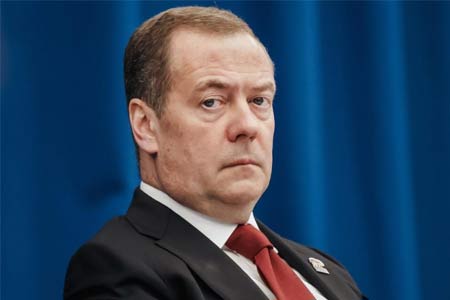 Dmitry Medvedev predicted a Ukrainian-like fate for Armenia amid the country`s shift in foreign policy
 Russian Security Council: In Armenia, they want to force Russian asset owners to dispose of their assets
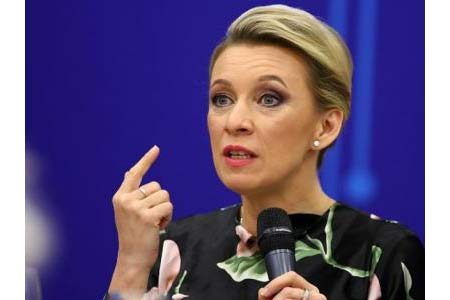 Zakharova: Russia ready to discuss with Armenia the prospects for expanding military cooperation as part of a review of bilateral ties
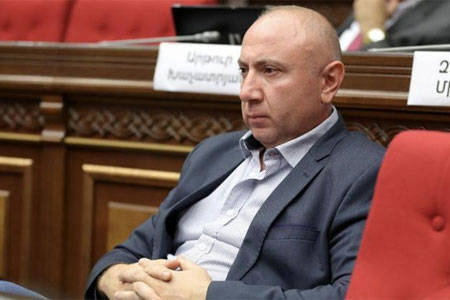 Tevanyan: Armenia, like Ukraine and Moldova, is being drawn into the EU’s global war
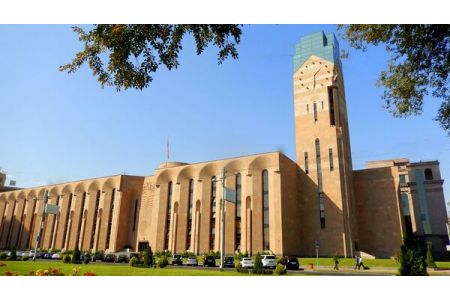 Yerevan City Hall is considering introducing a valet parking system in the city
 Expert: The circus surrounding the “Albanization” of Armenian culture in the presence of foreign ambassadors in occupied Artsakh is genocide
 Political scientist: If Russian-Armenian relations are destroyed, Turkey will take Russia`s place
 Political scientist: The Armenian public is simply obliged to significantly change the entire content of public discourse and struggle
 Cross tattoos are being removed from the skin of Christian prisoners in Azerbaijan by fire, according to a human rights activist.
 Zakharova: Armenia`s likely introduction of visas with Russia will be a step against Yerevan itself
 Putin: Armenia`s recognition of Karabakh as part of Azerbaijan in Prague has given Russia`s position on this issue an ambivalent character
 Putin: Armenia`s adoption of the law on EU accession means an announcement of its withdrawal from the Eurasian Economic Union