
ArmInfo. Although Iran and Turkey are rivals, they are forced to coordinate their actions to neutralize common threats, which have become more acute in the wake of the aggression against the Iranian Republic of Iran (IRI).
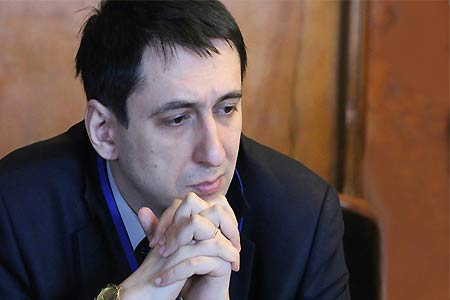
Political observer and expert at the Strategic Culture Foundation Andrei Areshev made this statement during a Moscow-Yerevan video conference, when speaking about the situation in the Middle East.
The expert clarified that these include ethno-confessional threats, refugee flows, and, for Turkey, the Kurdish issue, which the American-Israeli tandem has tried to exploit against Iran and may try again. "That is, the scope for cooperation and interaction between countries, in my opinion, is greater than the scope for confrontation. And Turkey's restrained stance on attempts to attack American targets on its territory is extremely indicative in this regard," Areshev noted.
Speaking about Turkey's possible actions amid the Middle East crisis, the expert recalled that Turkey's experienced diplomacy will continue to try to advance the country's interests, including as a regional hub and the main communication route between the Caucasus and Iran and other Middle Eastern countries. In this regard, he drew attention to the resurgent theme of the four major regional powers-Turkey, Egypt, Saudi Arabia, and Pakistan-trying to coordinate their approaches on key regional policy issues. "Therefore, Turkey will continue to play on all the possible boards, as it has been doing all these years," Areshev noted.
Reflecting on the Iranian case, the expert recalled that the country has suffered heavy losses following the onset of American-Israeli aggression. However, the country's political and military leadership are acting based on the evolving situation to avoid defeat and preserve face as much as possible. "I think this is a good lesson for all states in the region, including the world," Areshev concluded.









 Expert: Economic pressure on Armenia may be virtually painless for other EAEU members, but not for Armenia itself
 Expert on protests in France: Civilizations fade when society loses a vision of the future
 Turkologist: Azerbaijan is not all-powerful—its vulnerabilities should become part of Armenia’s security strategy
 Opinion: The development of the Amulsar mine near the resort town of Jermuk is the beginning of an environmental disaster in Armenia
 Expert: The arrest of opposition figures in Armenia for social media posts is a systematic attempt to intimidate the public and suppress dissent.
 The Artsakh Public Council expressed outrage at the UN Secretary-General`s behavior
 Lukashenko called for Armenia to assume the CIS presidency in 2029
 Dmitry Medvedev predicted a Ukrainian-like fate for Armenia amid the country`s shift in foreign policy
 Russian Security Council: In Armenia, they want to force Russian asset owners to dispose of their assets
 Zakharova: Russia ready to discuss with Armenia the prospects for expanding military cooperation as part of a review of bilateral ties
 Tevanyan: Armenia, like Ukraine and Moldova, is being drawn into the EU’s global war
 Yerevan City Hall is considering introducing a valet parking system in the city
 Expert: The circus surrounding the “Albanization” of Armenian culture in the presence of foreign ambassadors in occupied Artsakh is genocide
 Political scientist: If Russian-Armenian relations are destroyed, Turkey will take Russia`s place
 Political scientist: The Armenian public is simply obliged to significantly change the entire content of public discourse and struggle
 Cross tattoos are being removed from the skin of Christian prisoners in Azerbaijan by fire, according to a human rights activist.
 Zakharova: Armenia`s likely introduction of visas with Russia will be a step against Yerevan itself
 Putin: Armenia`s recognition of Karabakh as part of Azerbaijan in Prague has given Russia`s position on this issue an ambivalent character
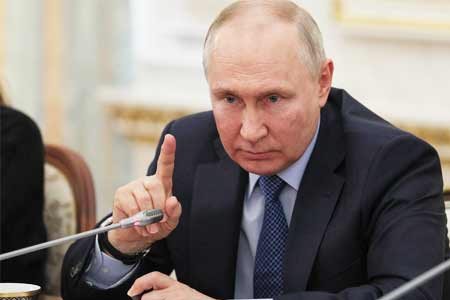 Putin: Armenia`s adoption of the law on EU accession means an announcement of its withdrawal from the Eurasian Economic Union