
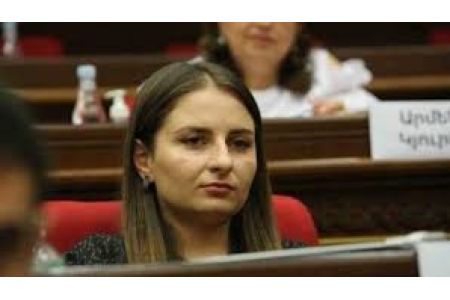
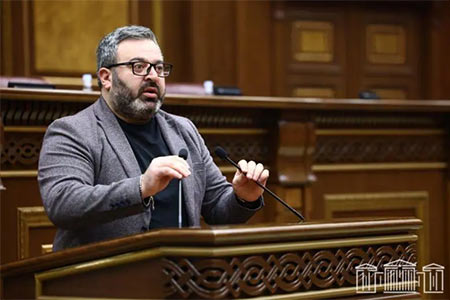
ArmInfo. Armenia needs the unification of pan-Armenian potential to resolve existing problems, not widespread division. This is what Kristine Vardanyan, a member of the National Assembly of the Republic of Armenia from the opposition "Armenia" faction, wrote on her Facebook page.
According to her post, Armenia is truly a country of enormous opportunity, both with and without the Armenian diaspora, but it is essential to fully utilize the diaspora's potential in every sense. "We cannot afford the luxury of failing to realize the potential of communities formed in different countries around the world, regardless of our will. It is in this context that the Diaspora Conference held in Paris these days is important. 150 representatives from more than 25 countries discussed important issues on the pan- Armenian agenda, sought solutions to our problems, and considered how to harness our potential for the sake of statehood. This is the function that the state should fulfill best. However, today, those who wield state resources have abandoned the sources of our strength in order to present us, in any situation, as alone and weak, with no choice but to adapt to the situation and fulfill all demands. When we talk about alternatives, this is one of the most important directions: uniting the pan-Armenian potential to solve our problems, not widespread division, where we give in to everything under the guise of hopelessness," the RA National Assembly member noted.
As a reminder, a conference on diaspora mobilization was held in Paris on April 11-12. The conference will aim to address the unprecedented concerns and challenges that have shaken Armenians in recent years. The conference's goal was to collectively discuss the situation, mobilize the diaspora, and formulate a unified and focused position on protecting and strengthening Armenian statehood, the Armenian diaspora, and, more generally, the interests of the Armenian people and the Armenian Question. The conference brought together approximately 150 representatives from more than 25 countries, including community leaders, heads of organizations, public and political figures, academics, specialists, businesspeople, and youth.







 Expert: Economic pressure on Armenia may be virtually painless for other EAEU members, but not for Armenia itself
 Expert on protests in France: Civilizations fade when society loses a vision of the future
 Turkologist: Azerbaijan is not all-powerful—its vulnerabilities should become part of Armenia’s security strategy
 Opinion: The development of the Amulsar mine near the resort town of Jermuk is the beginning of an environmental disaster in Armenia
 Expert: The arrest of opposition figures in Armenia for social media posts is a systematic attempt to intimidate the public and suppress dissent.
 The Armenian Foreign Minister commented on the country`s return to work within the CSTO.
 The Artsakh Public Council expressed outrage at the UN Secretary-General`s behavior
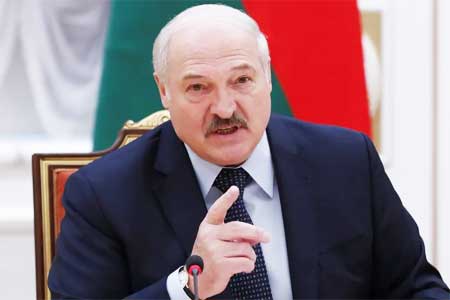 Lukashenko called for Armenia to assume the CIS presidency in 2029
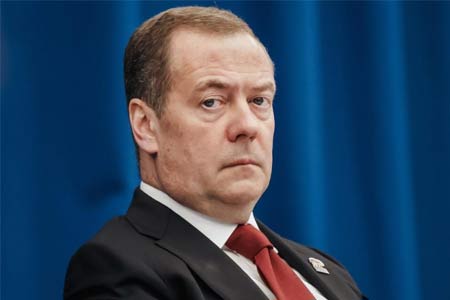 Dmitry Medvedev predicted a Ukrainian-like fate for Armenia amid the country`s shift in foreign policy
 Russian Security Council: In Armenia, they want to force Russian asset owners to dispose of their assets
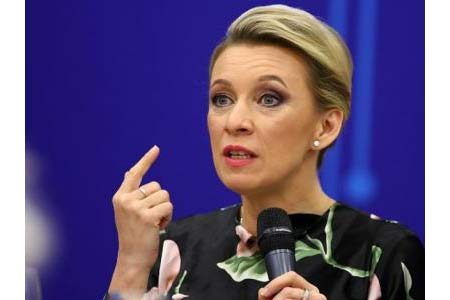 Zakharova: Russia ready to discuss with Armenia the prospects for expanding military cooperation as part of a review of bilateral ties
 Tevanyan: Armenia, like Ukraine and Moldova, is being drawn into the EU’s global war
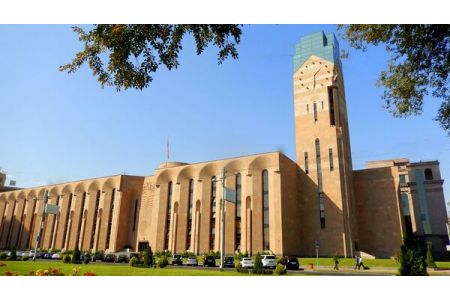 Yerevan City Hall is considering introducing a valet parking system in the city
 Expert: The circus surrounding the “Albanization” of Armenian culture in the presence of foreign ambassadors in occupied Artsakh is genocide
 Political scientist: If Russian-Armenian relations are destroyed, Turkey will take Russia`s place
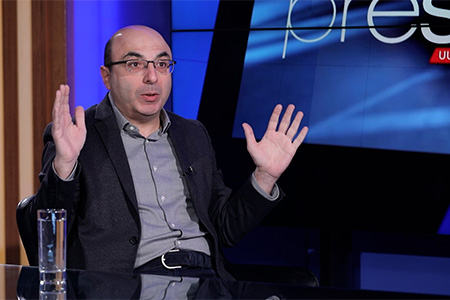 Political scientist: The Armenian public is simply obliged to significantly change the entire content of public discourse and struggle
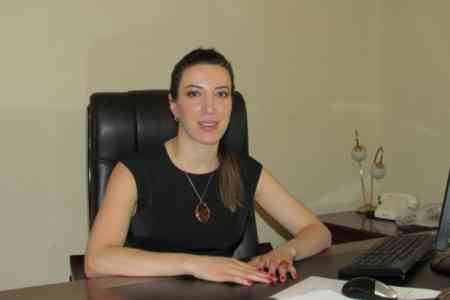 Cross tattoos are being removed from the skin of Christian prisoners in Azerbaijan by fire, according to a human rights activist.
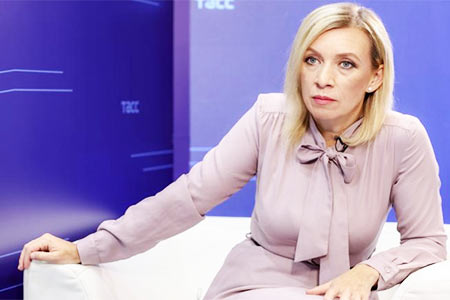 Zakharova: Armenia`s likely introduction of visas with Russia will be a step against Yerevan itself
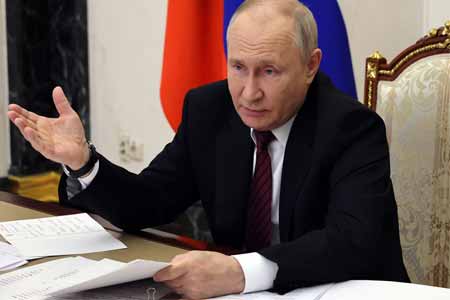 Putin: Armenia`s recognition of Karabakh as part of Azerbaijan in Prague has given Russia`s position on this issue an ambivalent character
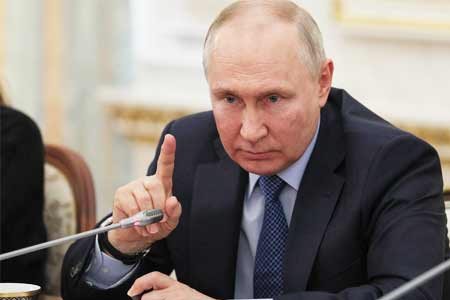 Putin: Armenia`s adoption of the law on EU accession means an announcement of its withdrawal from the Eurasian Economic Union