

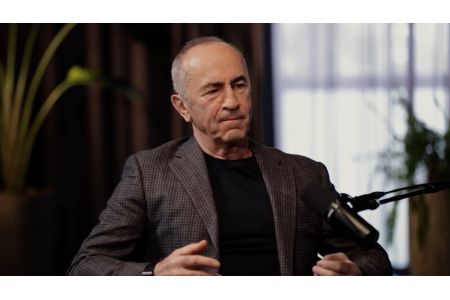
ArmInfo. Second President of the Republic of Armenia Robert Kocharyan has addressed a number of questions during a meeting with voters. Specifically, speaking about the public administration system, the former president emphasized the importance of it functioning like clockwork. "I am a strict disciplinarian. The state system must function like clockwork. Otherwise, the state will not succeed. However, this doesn't mean that you should spend your entire life issuing orders," Robert Kocharyan noted.
According to him, the leader of Armenia wields power over the people, but he is responsible to all Armenians. "The first person in the Republic of Armenia must act according to this formula, because no matter where an Armenian lives, a part of him still remains with Armenia," the former president noted. He also touched on the issue of education, including the project to build Academic City. "I truly don't understand why concentrating universities in one place should lead to an improvement in the quality of education. The quality of education in Soviet Armenia was quite high, and university graduates could always find work abroad. The project to create a student city is more of a propaganda effort. Concentrating universities in one place does not enhance the professionalism of the teaching staff. Rather, the idea of creating Academic City is based on the attractiveness of the buildings housing the universities, which would be vacated if the project were implemented.
"I think this is a more serious motivation for officials," Kocharyan added. Speaking about science, the former president noted that it should develop alongside the economy and industry. The Armenian government can specify two or three scientific fields and develop them with state support. "I belong to the generation who remember how many research institutes there were in Armenia. When I assumed the presidency, only some of them were operational at the time. If you have an industry-for example, if you have a huge chemical industry-then you must have a corresponding research institute serving it. As industry declined, research institutes were left without a facility where their knowledge could be applied. What happened to the research institutes? Their staffs were reduced, and good scientists left for abroad. Some of the buildings housing the research institutes were leased out in order to preserve at least the rest. And this was widespread. The Polytechnic Institute once also had a strong chemistry department because it had a chemical industry. The institute had a strong electromechanics department because there were numerous enterprises producing products in large volumes. Now, I believe this department remains, but there's no industry where students could find employment. Meanwhile, university faculty also used to work in manufacturing.
When I became the president of Armenia, we made efforts to revive the chemical industry, even by reopening Nairit and half of the Vanadzor Chemical Plant. Then, after I left, there efforts were not sustained and everything shut down again. We took this step because we had potential and highly skilled personnel, including engineers. This is a difficult task and must be focused on the medium term. Without government intervention, there is little hope for its revival. State support, such as tax breaks, could incentivize large foreign companies to consider relocating their operations to Armenia," Kocharyan noted.

















 An Armenian Turkologist spoke out against attempts to deny the value of Artsakh and the liberation of Armenia.
 Russian political scientist: Moscow`s reaction to the TRIPP project will largely depend on the trend in Russian-American relations
 Armenian Political Scientist: The approaches, methods, rmphases and content of today’s struggle in Armenia Cannot Remain the Same
 Russian Security Council: In Armenia, they want to force Russian asset owners to dispose of their assets
 Zakharova: Russia ready to discuss with Armenia the prospects for expanding military cooperation as part of a review of bilateral ties
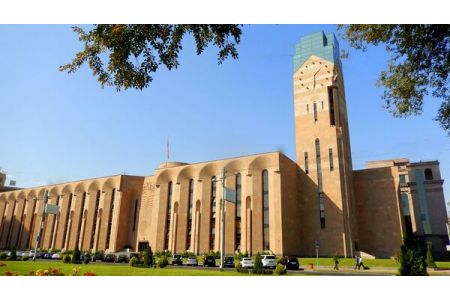 Yerevan City Hall is considering introducing a valet parking system in the city
 Expert: The circus surrounding the “Albanization” of Armenian culture in the presence of foreign ambassadors in occupied Artsakh is genocide
 Political scientist: If Russian-Armenian relations are destroyed, Turkey will take Russia`s place
 Political scientist: The Armenian public is simply obliged to significantly change the entire content of public discourse and struggle
 Cross tattoos are being removed from the skin of Christian prisoners in Azerbaijan by fire, according to a human rights activist.
 Zakharova: Armenia`s likely introduction of visas with Russia will be a step against Yerevan itself
 Putin: Armenia`s recognition of Karabakh as part of Azerbaijan in Prague has given Russia`s position on this issue an ambivalent character
 Putin: Armenia`s adoption of the law on EU accession means an announcement of its withdrawal from the Eurasian Economic Union
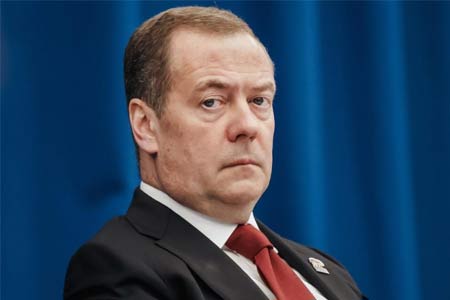 Medvedev: Yerevan will never become an EU member, but it will permanently damage relations with the Eurasian Economic Union, including with Moscow.
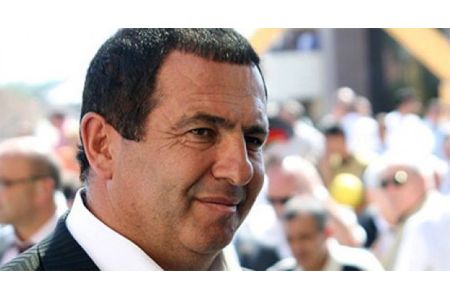 Arrested Armenian oligarch on economy and new jobs
 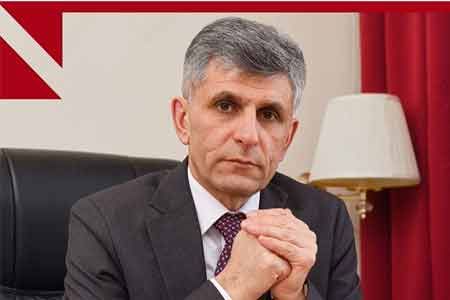 "In Baku, we gave a worthy rebuff to the false claims regarding the past and present of our people" – Former Artsakh Parliament Speaker from Baku captivity