
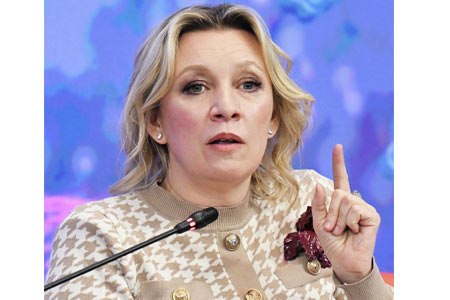
ArmInfo.Issues of Russian-Armenian bilateral relations were discussed in detail by Russian President Vladimir Putin and Armenian Prime Minister Nikol Pashinyan in Moscow during the latter's working visit to Russia. "In the context of the upcoming elections in Armenia, the Russian side's principled stance was emphasized: we do not interfere in the domestic political affairs of other countries; this is a principled stance," she noted.
Zakharova also recalled the special relationship between Russia and Armenia, which has developed over centuries, given the diverse ties and history that unite the two countries. She added that the Armenian diaspora in Russia is 2 million. "There are many political forces in Armenia that are committed to constructive engagement with our country, not because it's a business project for them, but because it's part of the historical nature of those very ties that can't be severed overnight. Therefore, we couldn't help but pay attention to the processes unfolding in the country and hope that pro-Russian forces will be able to freely participate in the expression of the will of Armenian citizens," Zakharova said, adding that this isn't about meddling in Armenia's internal processes, but rather about ensuring that everyone has the right to participate in the elections.
She also added that Moscow has noted the amendments to Armenia's Electoral Code, which, according to her, were adopted in a kind of "wild haste." "We are still studying this issue, but as far as we understand, these changes could create serious issues in terms of the naming of political forces participating in the elections. It's important that this isn't done to deliberately limit the opposition's electoral opportunities," she said.
Recall, on March 31, it was announced that the "Strong Armenia" party would participate in the upcoming parliamentary elections as part of the "Strong Armenia with Samvel Karapetyan" bloc. Following this, the ruling "Civil Contract" party hastily initiated amendments to the Electoral Code, which were fully adopted on April 7 at an extraordinary parliamentary session. These amendments, among other things, prohibit the use of personal names, as well as the names of state bodies, local government bodies, and similar designations for parties and blocs. The government's initiative drew criticism from the parliamentary opposition. They pointed out that there is international practice, including the Venice Commission's recommendation to Armenia, according to which the rules of the game are not changed at least one year before the elections.





 International Law Specialist: Azerbaijan intends to initiate legal proceedings against Armenia by sentencing Armenian prisoners
 An Armenian Turkologist spoke out against attempts to deny the value of Artsakh and the liberation of Armenia.
 Russian political scientist: Moscow`s reaction to the TRIPP project will largely depend on the trend in Russian-American relations
 Armenian Political Scientist: The approaches, methods, rmphases and content of today’s struggle in Armenia Cannot Remain the Same
 Russian Security Council: In Armenia, they want to force Russian asset owners to dispose of their assets
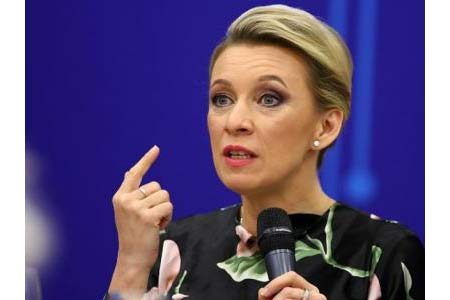 Zakharova: Russia ready to discuss with Armenia the prospects for expanding military cooperation as part of a review of bilateral ties
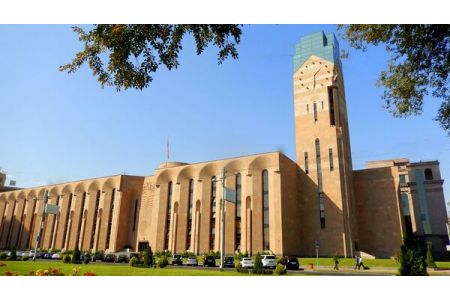 Yerevan City Hall is considering introducing a valet parking system in the city
 Expert: The circus surrounding the “Albanization” of Armenian culture in the presence of foreign ambassadors in occupied Artsakh is genocide
 Political scientist: If Russian-Armenian relations are destroyed, Turkey will take Russia`s place
 Political scientist: The Armenian public is simply obliged to significantly change the entire content of public discourse and struggle
 Cross tattoos are being removed from the skin of Christian prisoners in Azerbaijan by fire, according to a human rights activist.
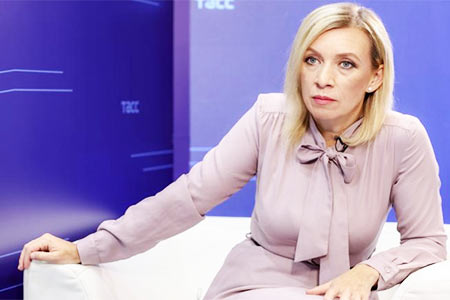 Zakharova: Armenia`s likely introduction of visas with Russia will be a step against Yerevan itself
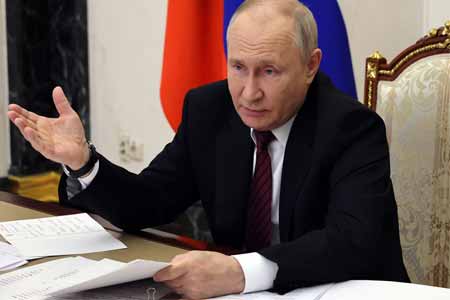 Putin: Armenia`s recognition of Karabakh as part of Azerbaijan in Prague has given Russia`s position on this issue an ambivalent character
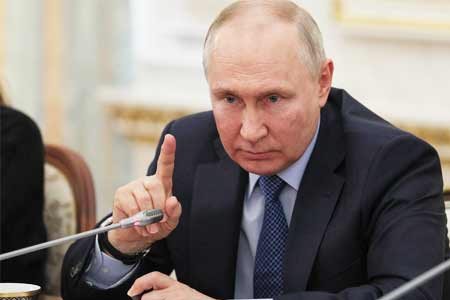 Putin: Armenia`s adoption of the law on EU accession means an announcement of its withdrawal from the Eurasian Economic Union
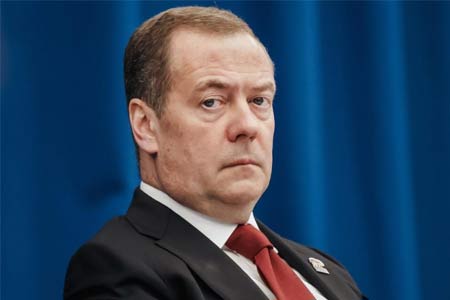 Medvedev: Yerevan will never become an EU member, but it will permanently damage relations with the Eurasian Economic Union, including with Moscow.
 Arrested Armenian oligarch on economy and new jobs
  "In Baku, we gave a worthy rebuff to the false claims regarding the past and present of our people" – Former Artsakh Parliament Speaker from Baku captivity