
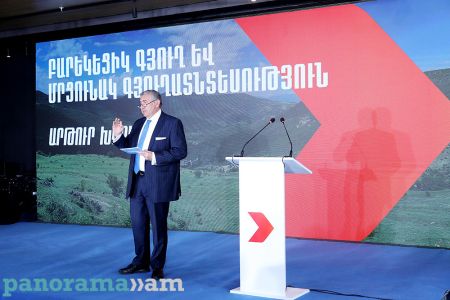
ArmInfo.The "Armenia" bloc of second President Robert Kocharyan has presented the socio-economic section of its election program.
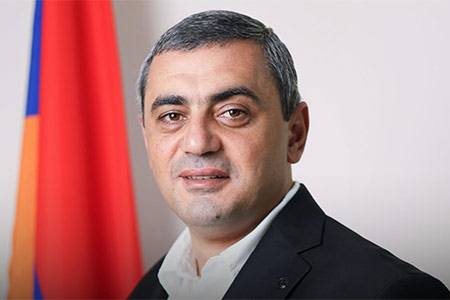
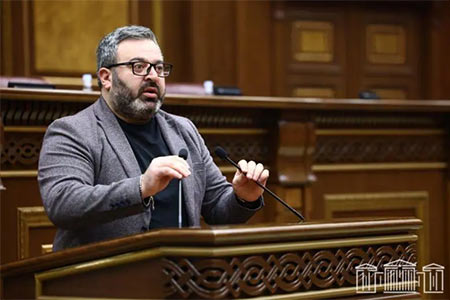
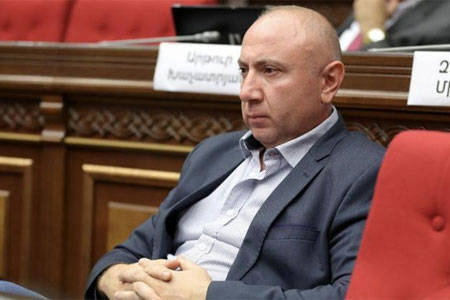
During a press conference in Yerevan, Artur Khachatryan, a deputy from the opposition "Armenia" faction, spoke about the economic changes they intend to implement in the country if they win the parliamentary elections scheduled for June 7, 2026, and come to power.
During a presentation on the economic reforms of their political force, Khachatryan recalled that under Robert Kocharyan's presidency, the World Bank dubbed Armenia the "Caucasian Tiger," as the country's economic growth averaged close to 12% from 2001 to 2008, and after a long period of emigration, the country recorded a positive net migration balance for the first time. "Meanwhile, the country's current authorities have nearly doubled Armenia's external debt, bringing it to $15 billion," Khachatryan said.
Speaking about what needs to be done for Armenia's economic development, the MP noted that if they win the election, their policies will be aimed at revitalizing the industry, creating a high-tech economy, and building policies that leverage the country's competitive advantages and the abilities of its citizens. Furthermore, he stated, a "Made in Armenia" policy will be implemented, under which they intend to manufacture goods in the country that will be associated with high quality and technological progress. "The share of industry in GDP will be 25%, almost doubling. To achieve this, we intend to implement tax incentives and targeted support programs in priority areas. This, in turn, will encourage Armenian citizens to purchase local products. In this way, we will support local producers and facilitate job creation," Khachatryan assured.
The MP noted that the state's attitude toward entrepreneurs, manufacturers, and businesspeople will also change, and an import substitution system will be implemented. "When Armenia imposed an embargo on Turkish goods in 2021, Armenian industry and Armenian producers began to develop. Under the current circumstances, this will be achieved by abolishing corporate income and value-added taxes to promote import substitution in strategic areas that ensure Armenia's competitiveness and have a high social impact, such as agriculture, agricultural processing, and the textile industry," Khachatryan clarified.
The opposition leader added that they also intend to address the issues of small and medium-sized businesses (SMEs) in Armenia. "Although small businesses don't generate high income, they nevertheless provide people with economic and political freedom, while also connecting them to the country. Therefore, effective steps must be taken to encourage SMEs in Armenia. To this end, we plan to implement a tax refund policy for small businesses. As for medium-sized businesses, tax refunds will be determined based on their location and economic sector," the MP stated. Khachatryan pointed out that they don't intend to limit themselves to tax refunds alone; they will also provide significant targeted support, such as financial and advisory support, and support for the export of these products, to stimulate the expansion of Armenia's export geography.
Furthermore, according to the MP, they will develop tourism to promote small and medium-sized businesses. In this regard, he noted that their goal is to increase the country's tourist flow to 5 million. "That is, people who will come to Armenia to enjoy their trip, not to look for work, for example, as a delivery driver," Khachatryan emphasized. He also detailed their lending plan and touched on the issue of Armenia's public debt.
In turn, Artsvik Minasyan, Secretary of the "Armenia" parliamentary faction, presented the social component of their election program, stating that they plan to make environmental investments using public debt. As Minasyan recalled in this regard, Armenia currently has a large debt to various countries, which are obligated to make payments to international environmental funds. "These funds, in turn, should invest in countries with opportunities for environmental investment. And instead of repaying these countries, Armenia could reach an agreement with them that these funds will be invested in Armenia to enrich the environment," the faction secretary explained. The second step, he said, would be to align the minimum wage with the minimum consumer basket, which would be achieved through wage indexation. In other words, as the faction secretary clarified, wages will increase annually legally, not for political expediency. "The basic pension will be increased by at least 50% and will be subject to indexation. During the winter, gas and electricity bills will be fully reimbursed for socially vulnerable families, single pensioners, the extremely poor, and families with children. Electricity tariff policy will also be revised, specifically aimed at reducing daytime rates. The property tax will also be reduced, meaning the planned increase for 2026 will be cancelled, and a luxury tax will be implemented, under which wealthy individuals will pay for those with low or middle incomes. In other words, social solidarity will be ensured through a fair distribution of income," Minasyan said.
He noted that they also intend to abolish universal income declaration. Regarding universal health insurance, Minasyan stated that it will continue to operate, but will be as seamless as possible and will cover all population groups. "As for newly formed families, we plan to implement the 'Successful Family' model, under which, starting with the second child, the income tax for subsequent children will be reduced by another 3%. Large families, as well as residents of Artsakh, will receive state support for housing and employment. The country's authorities have rejected many similar legislative initiatives," Minasyan noted.
Regarding charitable foundations, he noted that they intend to prohibit their creation by those holding public office and their family members, noting that they often become involved in shadow activities. "As for taxi drivers and farmers, their activities will be included in the insurance period. The main issue will also be addressing unemployment, for which 35,000-45,000 new jobs will be created annually, resulting in a halving of the unemployment rate," Minasyan concluded.



 Expert: Economic pressure on Armenia may be virtually painless for other EAEU members, but not for Armenia itself
 Expert on protests in France: Civilizations fade when society loses a vision of the future
 Turkologist: Azerbaijan is not all-powerful—its vulnerabilities should become part of Armenia’s security strategy
 Opinion: The development of the Amulsar mine near the resort town of Jermuk is the beginning of an environmental disaster in Armenia
 Expert: The arrest of opposition figures in Armenia for social media posts is a systematic attempt to intimidate the public and suppress dissent.
 The Armenian Foreign Minister commented on the country`s return to work within the CSTO.
 The Artsakh Public Council expressed outrage at the UN Secretary-General`s behavior
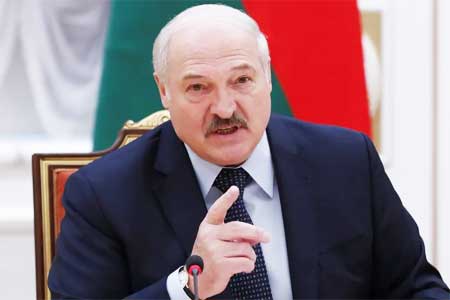 Lukashenko called for Armenia to assume the CIS presidency in 2029
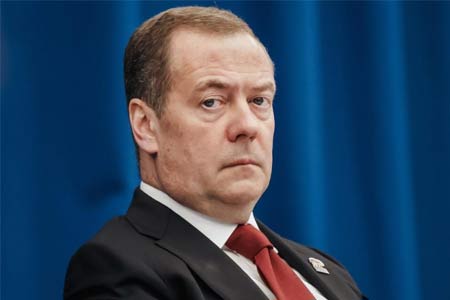 Dmitry Medvedev predicted a Ukrainian-like fate for Armenia amid the country`s shift in foreign policy
 Russian Security Council: In Armenia, they want to force Russian asset owners to dispose of their assets
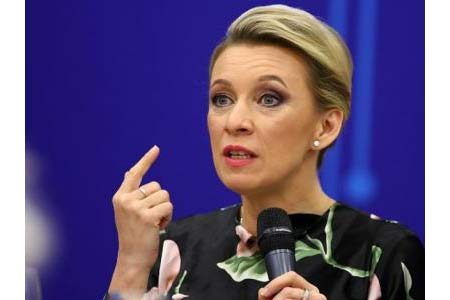 Zakharova: Russia ready to discuss with Armenia the prospects for expanding military cooperation as part of a review of bilateral ties
 Tevanyan: Armenia, like Ukraine and Moldova, is being drawn into the EU’s global war
 Yerevan City Hall is considering introducing a valet parking system in the city
 Expert: The circus surrounding the “Albanization” of Armenian culture in the presence of foreign ambassadors in occupied Artsakh is genocide
 Political scientist: If Russian-Armenian relations are destroyed, Turkey will take Russia`s place
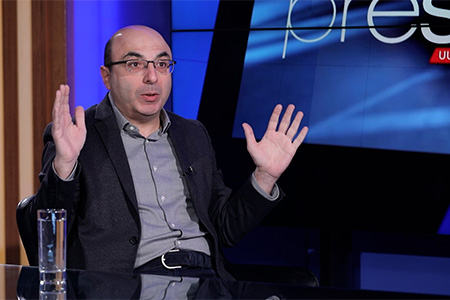 Political scientist: The Armenian public is simply obliged to significantly change the entire content of public discourse and struggle
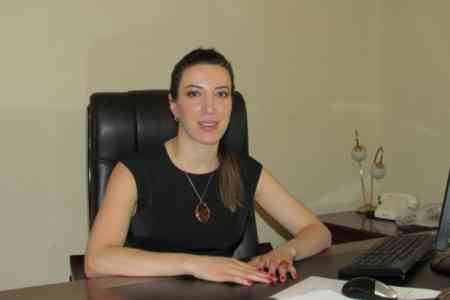 Cross tattoos are being removed from the skin of Christian prisoners in Azerbaijan by fire, according to a human rights activist.
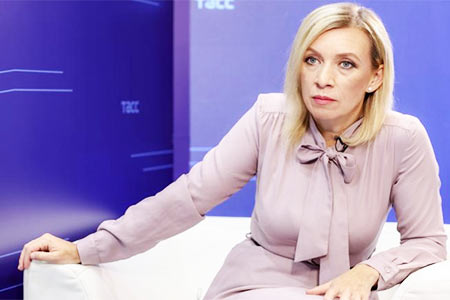 Zakharova: Armenia`s likely introduction of visas with Russia will be a step against Yerevan itself
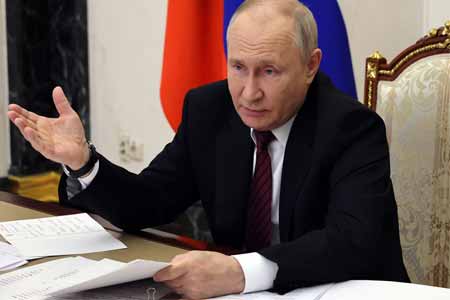 Putin: Armenia`s recognition of Karabakh as part of Azerbaijan in Prague has given Russia`s position on this issue an ambivalent character
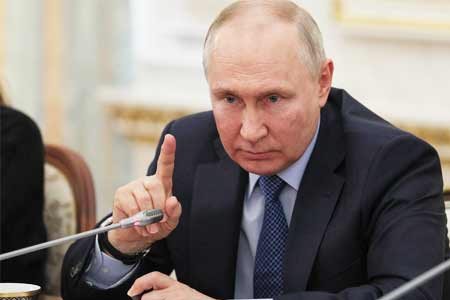 Putin: Armenia`s adoption of the law on EU accession means an announcement of its withdrawal from the Eurasian Economic Union