

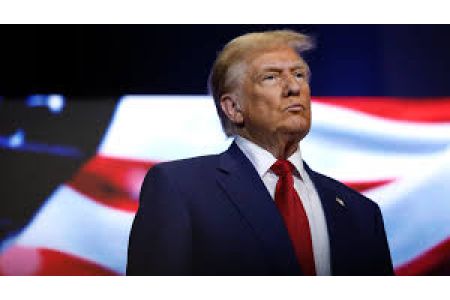
ArmInfo. U.S. President Donald Trump has posted the following message on Truth Social:
"Based on conversations with Prime Minister Shehbaz Sharif and Field Marshal Asim Munir, of Pakistan, and wherein they requested that I hold off the destructive force being sent tonight to Iran, and subject to the Islamic Republic of Iran agreeing to the COMPLETE, IMMEDIATE, and SAFE OPENING of the Strait of Hormuz, I agree to suspend the bombing and attack of Iran for a period of two weeks. This will be a double sided CEASEFIRE! The reason for doing so is that we have already met and exceeded all Military objectives, and are very far along with a definitive Agreement concerning Longterm PEACE with Iran, and PEACE in the Middle East. We received a 10 point proposal from Iran, and believe it is a workable basis on which to negotiate. Almost all of the various points of past contention have been agreed to between the United States and Iran, but a two week period will allow the Agreement to be finalized and consummated. On behalf of the United States of America, as President, and also representing the Countries of the Middle East, it is an Honor to have this Longterm problem close to resolution. Thank you for your attention to this matter! President DONALD J. TRUMP"
According to state media, Iran will only accept the war's conclusion once details are finalised in line with a 10-point peace plan reportedly submitted to the White House via Pakistani intermediaries.
The list of 10 points, published by Iranian state media, include a number of conditions the US has rejected in the past. The plan requires:
The lifting of all primary and secondary sanctions on Iran.
Continued Iranian control over the strait of Hormuz.
US military withdrawal from the Middle East.
An end to attacks on Iran and its allies.
The release of frozen Iranian assets.
A UN security council resolution making any deal binding.
In the version released in Farsi, Iran also included the phrase "acceptance of enrichment" for its nuclear program. But for reasons that remain unclear, that phrase was missing in English versions shared by Iranian diplomats to journalists.
The Iranian foreign minister, Abbas Araghchi, said safe passage through the strait would be allowed under Iranian military management. It wasn't immediately clear whether that meant Iran would completely loosen its hold on the waterway.
The plan allows Iran and Oman to charge a fee of up to $2m a ship on vessels transiting through the strait, according to reports. Iran would then use the money it raises for reconstruction.
If peace talks fail, Tehran may again seek to close the strait.
Since negotiations began between the Trump administration and Iran over the status of Tehran's nuclear programme almost a year ago, their vastly different demands and the limits to what each side would concede have proved a barrier to any lasting agreement.
Iran's demand that it retains control over the strait of Hormuz has been highlighted as of particular concern, as it held no control over the strait before the conflict began.
The Democratic senator Chris Murphy leapt on the comments from Iran, telling CNN "who knows if any of that is true, but if this agreement gives Iran the right to control the strait that is cataclysmic for the world".
Trump himself has not commented directly on Iran's demands, but said the US would "be helping with the traffic buildup in the Strait of Hormuz".
Experts and analysts have suggested that Iran's maximalist demands are unlikely to be agreed to by the US, but will rather form the basis for talks.
Pakistan's prime minister, Shehbaz Sharif, who helped mediate the ceasefire, said in a post on X that he had invited Iranian and US delegations to meet in Islamabad on Friday.
Tehran has said it will participate in the talks. The White House said it is considering in- person talks with Iran but they have not been finalised.

















 International Law Specialist: Azerbaijan intends to initiate legal proceedings against Armenia by sentencing Armenian prisoners
 An Armenian Turkologist spoke out against attempts to deny the value of Artsakh and the liberation of Armenia.
 Russian political scientist: Moscow`s reaction to the TRIPP project will largely depend on the trend in Russian-American relations
 Armenian Political Scientist: The approaches, methods, rmphases and content of today’s struggle in Armenia Cannot Remain the Same
 Russian Security Council: In Armenia, they want to force Russian asset owners to dispose of their assets
 Zakharova: Russia ready to discuss with Armenia the prospects for expanding military cooperation as part of a review of bilateral ties
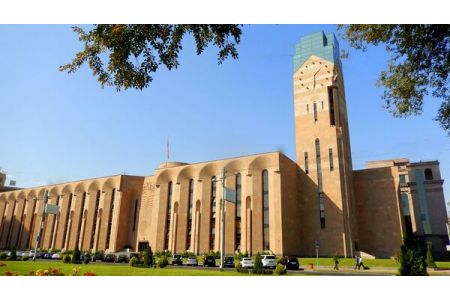 Yerevan City Hall is considering introducing a valet parking system in the city
 Expert: The circus surrounding the “Albanization” of Armenian culture in the presence of foreign ambassadors in occupied Artsakh is genocide
 Political scientist: If Russian-Armenian relations are destroyed, Turkey will take Russia`s place
 Political scientist: The Armenian public is simply obliged to significantly change the entire content of public discourse and struggle
 Cross tattoos are being removed from the skin of Christian prisoners in Azerbaijan by fire, according to a human rights activist.
 Zakharova: Armenia`s likely introduction of visas with Russia will be a step against Yerevan itself
 Putin: Armenia`s recognition of Karabakh as part of Azerbaijan in Prague has given Russia`s position on this issue an ambivalent character
 Putin: Armenia`s adoption of the law on EU accession means an announcement of its withdrawal from the Eurasian Economic Union
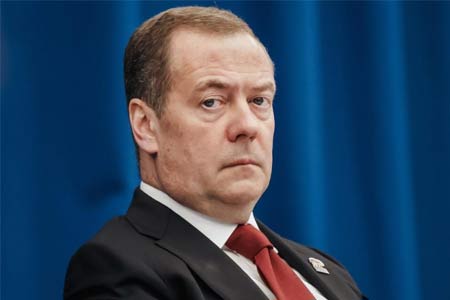 Medvedev: Yerevan will never become an EU member, but it will permanently damage relations with the Eurasian Economic Union, including with Moscow.
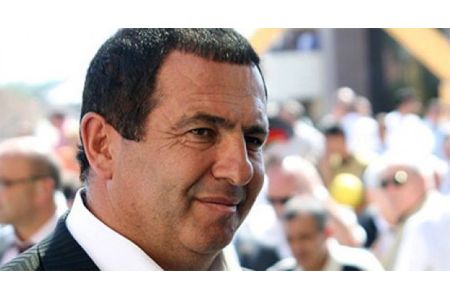 Arrested Armenian oligarch on economy and new jobs
 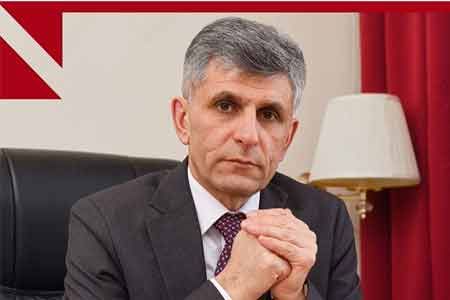 "In Baku, we gave a worthy rebuff to the false claims regarding the past and present of our people" – Former Artsakh Parliament Speaker from Baku captivity
