

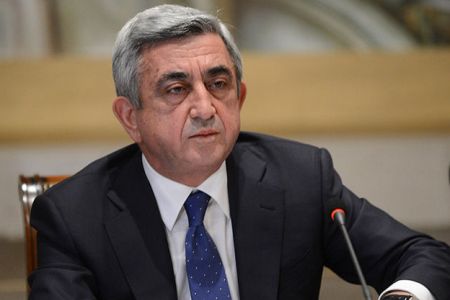
ArmInfo.The decision not to participate in the parliamentary elections does not mean an end to the struggle. This was stated by the leader of the Republican Party of Armenia (RPA), third President of Armenia Serzh Sargsyan, at the 18th Congress, commenting on the party's executive body's earlier decision not to participate in the elections.
He noted that this position was dictated, among other things, by the desire not to further divide the opposition, to give political forces a chance to fulfill their promises, and to counter the narrative that the former authorities, through their behavior, are hindering a change of power in the country.
Sargsyan noted that he is aware that certain members of his team are unhappy with the party's decision, and that, had it worked properly, the RPA would have surpassed the required 4% threshold. "But we need a change of power; we're not interested in the prospect of a few mandates," the former Armenian president noted. He also assured that the RPA will continue to be at the forefront of political processes.
The party leader also noted that detailed sociological research shows that their supporters, almost without exception, are ready to participate in the elections and vote for the opposition. "That is, our electorate's votes will not be wasted, but will be given to the opposition, which will put an end to the reproduction of the current government. Our ego, tempered by life and struggle, has never degenerated and never will degenerate into selfishness. This is unacceptable. I admit that this decision was not easy for us, but at the same time, I have no doubt that we will never be ashamed of it," Sargsyan emphasized.
During his speech, the RPA leader proposed that the opposition take practical steps in the near future to advance their joint struggle. In this regard, he recalled two major events scheduled for May: the European Political Summit and the first Armenia-EU Summit.
The RPA leader noted that recent years have shown that senior European leaders are unwilling to acknowledge the reality in Armenia. In this regard, he cited occupied Artsakh, the problems of ethnically cleansed Artsakh Armenians, the preservation of Artsakh's cultural heritage, the hostages in Baku prisons, political prisoners in Yerevan, the illegal attacks and pressure on the Armenian Apostolic Church, the unprecedented restrictions on freedom of speech, and the law enforcement and judicial systems subservient to the authorities.
"Europeans prefer to ignore all this," Sargsyan said, noting that joint efforts are needed to present this reality of democracy in Armenia to the several dozen delegations arriving in Armenia.
Sargsyan also said that there is currently much discussion about the need to motivate citizens to participate in the upcoming elections to overthrow the current regime. Until June 7 (the day of the parliamentary elections - Ed.), the RPA will focus, among other things, on motivating citizens through various events, information campaigns, and meetings.
Sargsyan also noted that some opposition representatives, despite their statements excluding cooperation with the ruling party, are violating them over time, thereby weakening the opposition. In this vein, he proposed that, in addition to such statements, the first 30 members of the election list sign corresponding memoranda pledging not to cooperate with the capitulatory regime.











 Political scientist: We need to move away from the question of "when" and replace it with more important questions
 International Law Specialist: Azerbaijan intends to initiate legal proceedings against Armenia by sentencing Armenian prisoners
 An Armenian Turkologist spoke out against attempts to deny the value of Artsakh and the liberation of Armenia.
 Russian political scientist: Moscow`s reaction to the TRIPP project will largely depend on the trend in Russian-American relations
 Armenian Political Scientist: The approaches, methods, rmphases and content of today’s struggle in Armenia Cannot Remain the Same
 Russian Security Council: In Armenia, they want to force Russian asset owners to dispose of their assets
 Zakharova: Russia ready to discuss with Armenia the prospects for expanding military cooperation as part of a review of bilateral ties
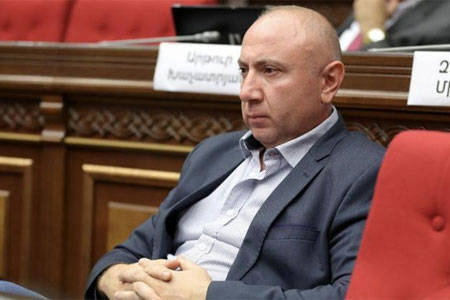 Tevanyan: Armenia, like Ukraine and Moldova, is being drawn into the EU’s global war
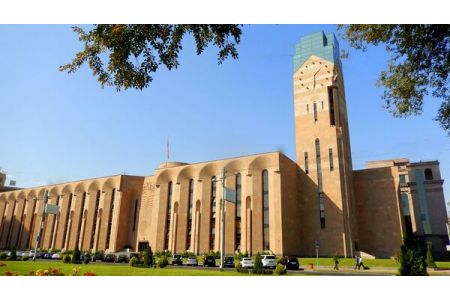 Yerevan City Hall is considering introducing a valet parking system in the city
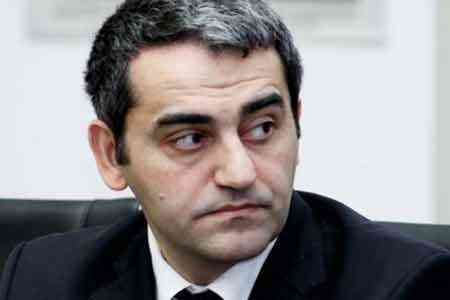 Expert: The circus surrounding the “Albanization” of Armenian culture in the presence of foreign ambassadors in occupied Artsakh is genocide
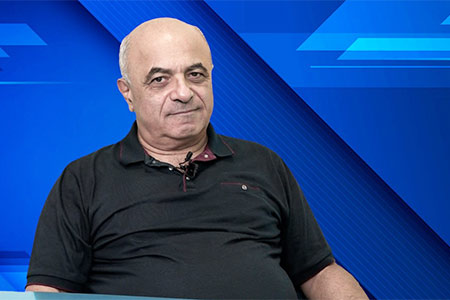 Political scientist: If Russian-Armenian relations are destroyed, Turkey will take Russia`s place
 Political scientist: The Armenian public is simply obliged to significantly change the entire content of public discourse and struggle
 Cross tattoos are being removed from the skin of Christian prisoners in Azerbaijan by fire, according to a human rights activist.
 Zakharova: Armenia`s likely introduction of visas with Russia will be a step against Yerevan itself
 Putin: Armenia`s recognition of Karabakh as part of Azerbaijan in Prague has given Russia`s position on this issue an ambivalent character
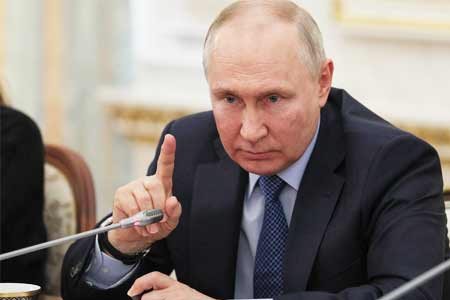 Putin: Armenia`s adoption of the law on EU accession means an announcement of its withdrawal from the Eurasian Economic Union
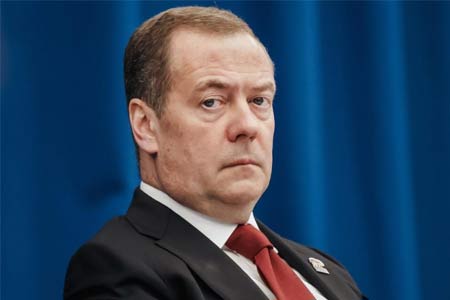 Medvedev: Yerevan will never become an EU member, but it will permanently damage relations with the Eurasian Economic Union, including with Moscow.
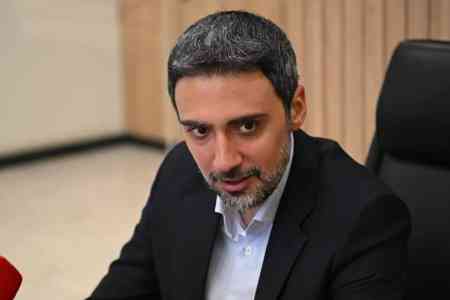 Aram Vardevanyan: Public demands solutions, not apology scandals in Parliament
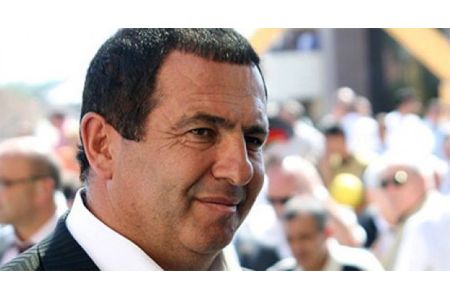 Arrested Armenian oligarch on economy and new jobs
  "In Baku, we gave a worthy rebuff to the false claims regarding the past and present of our people" – Former Artsakh Parliament Speaker from Baku captivity