
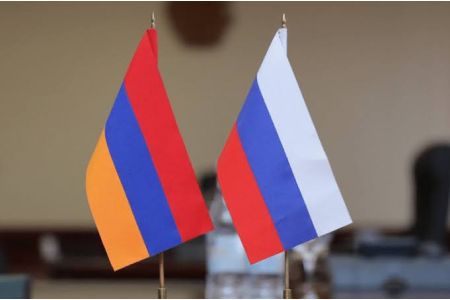
ArmInfo. To date, no specific requests have been received through the Russian Embassy, but the Russian side is ready to share its experience, given the existence of the necessary mechanisms both bilaterally and within the Commonwealth of Independent States (CIS).
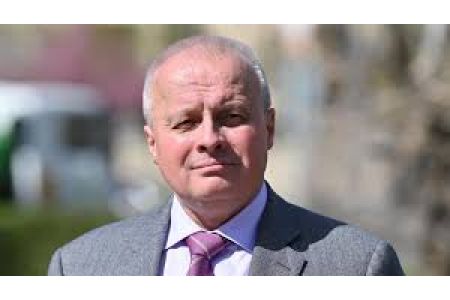
For example, Russian Ambassador to Armenia Sergey Kopyrkin, in an interview with 24News, commented on statements about "possible hybrid threats emanating from Russia" ahead of the parliamentary elections in Armenia scheduled for June 7, 2026. In this regard, he noted that this term has become fashionable today and, if he is not mistaken, the concept of hybrid warfare was developed by Western political scientists. "What exactly is meant by this term is not always easy to define. Hybrid warfare can encompass many aspects. For example, humanitarian ties, youth exchanges, and educational cooperation can also be characterized as hybrid threats. It is necessary to more clearly define what we are talking about," the ambassador noted.
Kopirkin noted that in the context of statements about "possible interference in internal affairs," Russian President Vladimir Putin also conveyed an important message. The diplomat recalled that the Russian president emphasized that the tense situation ahead of the parliamentary elections in Armenia should not affect the prospects for bilateral relations between the countries. "From the Russian side, this is the main issue and interest. Regarding hybrid threats, the West is actively discussing this topic, especially in the context of the elections in Moldova. I wouldn't speculate on hypothetical scenarios regarding Armenia, but we all remember the events in Moldova. I don't have detailed information about that situation, but it's clear there was an imbalance in the number of polling stations between Russia and Europe. It's also worth noting the disqualification of the main opposition force from the elections and the criminal case against the leader of Gagauzia (Eugeniu Gutsul - ed.), who is currently in prison. All of this occurred against the backdrop of European discussions about a Russian hybrid threat," the ambassador recalled.
According to him, Russia has been facing this problem for many years. He emphasized that currently, it's not just hybrid threats within the country, but also a de facto war using terrorist methods, including the recruitment of minors to commit terrorist attacks. "We understand that this is happening on the Ukrainian side, and we know whose support it receives. Russia understands the cost of information leaks and external pressure, including unprecedented sanctions-all of this is related to the same problem," the ambassador noted.
In this context, the ambassador also addressed an interview with Deputy Prime Minister Alexei Overchuk, who mentioned the transformation of the European Union into a military-political bloc with a clearly anti- Russian agenda. He stated that these imperatives play a key role for the European Union and determine specific actions. "In this context, we always emphasize at all levels that we respect Armenia's foreign policy choices. We are completely comfortable and relaxed with the diversification of foreign relations, as our president has also stated. We support Armenia's desire to maximize its relations with all foreign policy partners, third countries, and organizations. However, if someone's agenda is not so much for something as against someone, this raises certain concerns. In this case, we must protect our relations," Kopyrkin concluded.
As a reminder, Radio Liberty previously reported that it had obtained a letter from Armenian Foreign Minister Ararat Mirzoyan to Brussels, in which he "requested that a rapid response team be sent to Yerevan to counter Kremlin disinformation and Russian interference in the parliamentary elections in Armenia." In this regard, it was recalled that the EU sent a similar team of approximately 20 people to Chisinau during last year's parliamentary elections "to help the Moldovan authorities identify and counter disinformation emanating from Russia on social media." It should be added that the EU's top diplomat, Kaja Kallas, had previously announced the allocation of ?15 million to Armenia to "counter Russian propaganda."
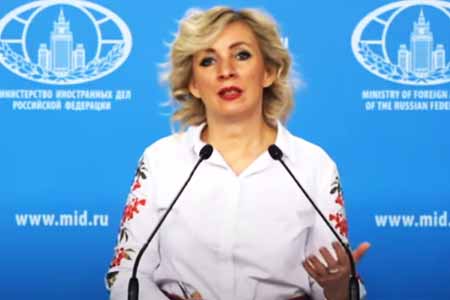
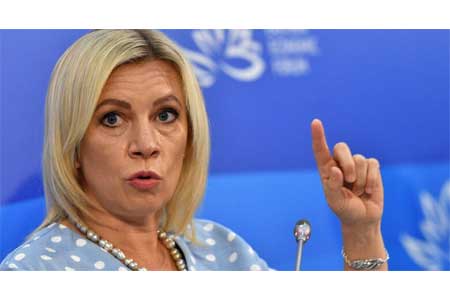
On March 4, Russian Foreign Ministry spokesperson Maria Zakharova expressed her readiness to send a similar European mission to Armenia if Yerevan so desired.














 Political analyst: Pashinyan- Putin phone call confirms deepening strategic rift between Yerevan and Moscow
 Opinion: Resolving conflict between Yerevan and Baku allows Washington to deprive Russia of key levers of influence in South Caucasus
 Narek Karapetyan will give up his parliamentary salary in favor of charitable contributions.
 Armenia and France discuss further development of strategic partnership and EU cooperation
  To overcome risks Armenia must reduce domestic escalation - expert
  Zatulin: Pashinyan was eager to get back to Russia because he actually lost the elections
 Pashinyan removed from INNOPROM guest list
 Zakharova: Armenia`s pro-EU pivot poses economic security risks to EAEU member states
 It`s time for South Caucasus countries to think of South Caucasus as single, unified region - RA premier
  Pashinyan: Armenia and Azerbaijan should leave each other alone
 Moscow sees situation with Armenia as attempt to attack Russia-involving integration associations - Russian presidential aid
 Zakharova: Armenia views relations with Russia as tool for financially securing reorientation toward EU
 The Armenian Minister of Justice and the EU Ambassador discussed visa liberalization issues for Yerevan.
 Azerbaijan`s aggressive plans against Armenia became possible in wake of Pashinyan`s decisions on Artsakh - expert
  Zakharova: Russia sent a note of protest to Armenia over the act of vandalism at the "Mother Armenia" memorial in Gyumri
