
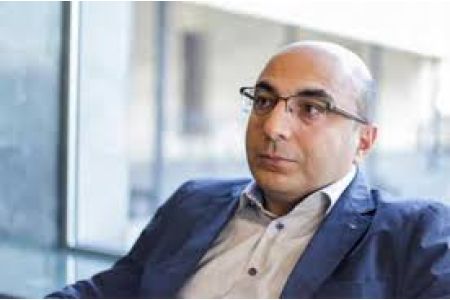
ArmInfo. Today, Armenia is not at peace, but in a "non-warlike" state, and the authorities' threats only confirm the instability of the "peace" they have established. Vahe Hovhannisyan, a member of the Alternative Projects group, writes about this in his article.
According to his post, the country's authorities are threatening that if the opposition wins the elections, there will be war as early as September. "They decided to go into the elections with this threat. Those who shout 'war if the opposition wins' know full well that they are only engaging in dirty speculation based on spilled blood and fear. Our task is to clearly explain this to our society. What is the structure of Nikol's peace treaty in reality? Let's try to distinguish empty words from reality. The peace the authorities speak of is some kind of bilateral written commitments made by the parties. Formally, violating these commitments could become a pretext for one side to launch military action against the other," the political scientist noted.
He added that after the end of the 44-day war, the peace agreement of the RA Prime Minister Pashinyan has the following structure: Artsakh as part of Azerbaijan (with its Armenian heritage systematically destroyed), the occupied territories of Armenia, delimited sections of the Armenian-Azerbaijani border, a closed border with Turkey, the beginning of trade. "The signed documents are well known: declarations between Russia, Armenia, and Azerbaijan, which the parties, at least formally, did not renounce, the Washington Tripartite Declaration, the signed peace agreement between Armenia and Azerbaijan, and protocols on border delimitation and demarcation. There may be other documents, but the public is not informed about them. Meanwhile, Aliyev's public demands for amendments to the Constitution of Armenia, the narrative of "Western Azerbaijan" and the return of three hundred thousand Azerbaijanis to their "historical homeland," the "Zangezur Corridor" speak of something completely different. Pashinyan's public policy aimed at pleasing the Turkic world, including narratives of "opposition revanchism," rejection of the Declaration of Independence, rejection of the mention of Artsakh, constant gratitude to Aliyev, rejection of the image of Mount Ararat, forgetting the topic of the Armenian Genocide, anti-Russian steps, attacks on the church are also a concrete manifestation of the policy "the current authorities," noted Vahe Hovhannisyan.
He added that no sane political force in Armenia today or in the near future will annul any documents signed in the name of the state. This must be clearly communicated to our society. Regarding Aliyev's public demands, the authorities say the Armenian side has no formal obligations to them. Or, it does, but is keeping them secret from the public.
"There is a simple and interesting solution to the government's false and obscene thesis: 'If we are gone, there will be war.' The main opposition political forces are issuing a joint statement reaffirming their commitment to fulfilling all written and public commitments made by Armenia. The joint statement will send a strong signal to the international community, neighbors, and our society, and will significantly increase the collective weight of the opposition systems. If, however, any circumstances prevent them from acting together, the main opposition forces can do so individually. There is no adventurous leader or force in the opposition systems. The task of the future authorities is not to "revise" the negotiation framework, but to find solutions to numerous unresolved issues through peaceful negotiations. With the help of well- thought-out and effective ideas, new options for unblocking communications, increasing Armenia's role and significance in the region, and ensuring a long-term, realistic peace without humiliating shadow conditions that only weaken peace. Today, we do not have peace, but a "non-war" state, and the threats of the authorities only confirm the instability of the world they "They've established it. In the coming years, the new Armenian authorities must be able to skillfully manage this "non-military" state and transform it into a real, guaranteed peace. After Artsakh's capitulation, war is only possible in one case: if Nikol himself provokes it to retain power," the political scientist wrote.
READ ALL COMMENTS













 Analyst: The primary issue with Armenia`s new Parliament Speaker`s speech lies is its one-sided interpretation of the causes of the political crisis
 Expert: Gagik Tsarukyan embodies post-Soviet model of big business-state relations; this model is used in many other post-Soviet countries
 Expert: Azerbaijan promoting aggressive plans against Armenia at state level
 NA Vice Speaker candidate believes his wife`s salary as director of HayPost is the lowest in the company`s history
 RF Permanent Representative: There is no CSTO-Armenia conflict
 Moscow: NATO seeking to "Pull" Armenia away from CSTO Allies
  Political analyst: Russia intends to determine which "Camp" Armenia will choose through a referendum
 Armenia and France discuss further development of strategic partnership and EU cooperation
  To overcome risks Armenia must reduce domestic escalation - expert
 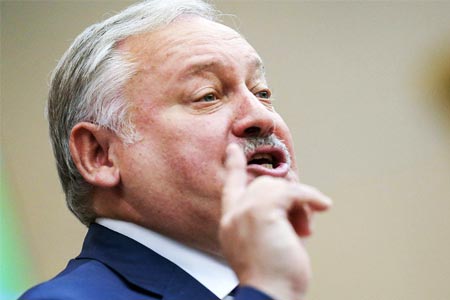 Zatulin: Pashinyan was eager to get back to Russia because he actually lost the elections
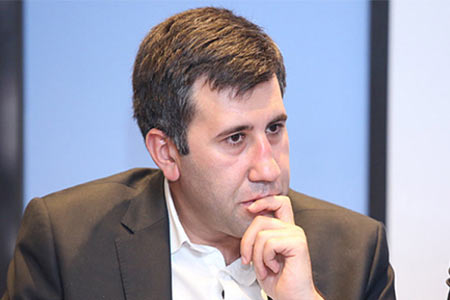 Human rights activist Ruben Melikyan dismissed from YSU
 Zakharova: Armenia`s pro-EU pivot poses economic security risks to EAEU member states
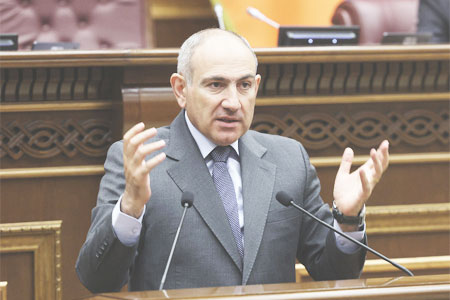 It`s time for South Caucasus countries to think of South Caucasus as single, unified region - RA premier
  Pashinyan: Armenia and Azerbaijan should leave each other alone
