


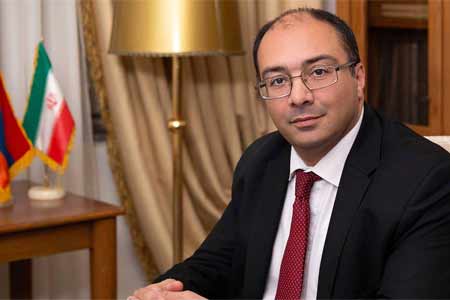
ArmInfo.The relations between Armenia and Turkmenistan today are an example of a sustainable partnership based on mutual respect. While the political dialogue between Yerevan and Ashgabat is at a high level, both sides acknowledge the existence of significant untapped potential across various areas, as stated by Arsen Avagyan, Ambassador Extraordinary and Plenipotentiary of the Republic of Armenia to Turkmenistan, in an interview with News Central Asia.
In an exclusive interview with News Central Asia, the Ambassador Extraordinary and Plenipotentiary of the Republic of Armenia to Turkmenistan, Arsen Avagyan, provides a detailed analysis of the current state of bilateral ties. The Head of the Diplomatic Mission outlines a vision for a "roadmap" of cooperation: moving from traditional industries and transport to strategic projects in the fields of Artificial Intelligence and high-performance computing. Special emphasis is placed on the cultural dimension and historical heritage, which serve as a spiritual foundation for the modern rapprochement of the two nations. At the present stage, relations between the Republic of Armenia and Turkmenistan are characterized by stability, predictability, and mutual respect. They are free from political turbulence and are built upon a solid legal foundation, as well as a shared understanding of key issues on the international agenda. Armenia and Turkmenistan consistently demonstrate respect for the principles of sovereignty, non- interference in internal affairs, and equality of states.
"In the bilateral context, Turkmenistan's internationally recognized status as a permanently neutral state. Turkmen neutrality is not isolation; rather, it represents a distinctive model of participation in international processes, based on balanced interests and peaceful initiatives. In this sense, our approaches to regional stability and peaceful development coincide greatly. Political talk is regularly maintained. Contacts at the level of state leadership, parliamentary institutions, and foreign ministries help foster an atmosphere of trust. In turn, trust serves as the foundation to deepening cooperation in economic and humanitarian fields. Economic interaction does not fully reflect the potential of our countries. However, it is important to emphasize that modest trade figures do not indicate weakness in this relationship; rather, they point to structural constraints related to logistics and geography, as well as the need for more systematic engagement with business communities. The political will to develop economic ties is clearly present, and that is fundamentally important. The humanitarian aspect of our relations also deserves particular attention. Cultural and humanitarian contacts create an atmosphere of goodwill and mutual respect, which carries no less significance than official diplomacy.
More broadly speaking, Armenian-Turkmen relations today exist in a state of stable equilibrium with the potential to move toward a more thorough phase of development. We have a stable political foundation and a greatly positive atmosphere, which creates favorable conditions for expanding cooperation in trade, transport, energy, innovation, and scientific fields. In other words, the current state of our relations can be described as stable, constructive, and oriented towards gradual expansion of cooperation. The next logical step would be to transform political stability into larger-scale economic and technological projects," Arsen Avagyan said.
. He also pointed out the untapped potential in the relations of their countries. "The speculation that there in more potential to be utilized in Armenian-Turkmen relation indeed is not groundless. Despite the presence of stable political talk and mutual trust, the economic and technological aspect of our cooperation have not yet developed to the extent of the objective capacities of the two countries. However, I would view this not as a problem, rather as an opportunity for growth. First and foremost, we must realistically assess the reasons behind this situation. Geographic distance, the absence of direct transportation, and limited awareness among business communities are all objective factors. Yet, systematic work aimed at overcoming these constraints can become the key to unlocking the potential that was spoken of.
I see several interconnected ways of realizing it. First - the institutionalization of economic talk. It is important to ensure the regular functioning of intergovernmental mechanisms, to activate the work of joint commissions, and to establish direct interaction between chambers of commerce and industry, as well as sectoral associations. Businesses require clear signals, predictability, and reliable information. The more structured conversation is, greater the level of confidence among entrepreneurs. Second - moving from declarations to pilot projects. Potential is not unlocked through general statements but through concrete initiatives, even small ones, that can be implemented in practice. One or two successful joint projects can create a multiplier effect and demonstrate the practical value of partnership. These could include joint production initiatives, technological projects, or logistic solutions.
Third - the complementarity of our economies. Armenia and Turkmenistan are not competitors. Turkmenistan possesses a powerful resource and industrial base, a strategic transit position, and significant infrastructure capabilities. Armenia, for its part, has strong human capital, engineering expertise, a dynamic IT sector, and experience in applied technologies. The combination of these factors could become an important point of growth. Fourth - strengthening transport and logistic connectivity. Amid the ongoing transformation of Eurasian trade routes, new opportunities are emerging to align our interests. More active use of multimodal routes through the Caspian region could become an important element in expanding economic ties.
Fifth - the humanitarian and educational dimension. Long-term partnership cannot develop without human connections. Academic exchanges, joint research programs, and cultural initiatives create the foundation for sustainable business and technological cooperation of the future. Strategically speaking, unlocking this potential requires three key conditions: political will, institutional consistency, and the active involvement of the private sector. Political will is already present. The next step is to give our cooperation a more practical and pragmatic side.
I am convinced that Armenian-Turkmen relations have reached a point where qualitative growth can be achieved not through abrupt steps, but through consistent and thoughtful deepening of interaction. The potential is indeed significant; the question is how systematically we approach its realization," the Armenian diplomat enthasized.








 Political analyst: In light of new realities, Yerevan may propose advancing peace process with Baku without constitutional referendum
 Present-day geopolitical competition shifts from territorial control to infrastructure flows
 Expert: Public participation in decision-making essential for sustainable urban development
  Heritage: It`s time for Armenia`s opposition to present people with legitimate alternative to power
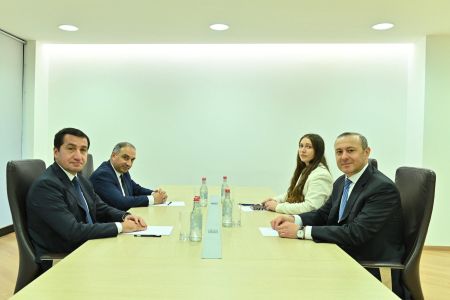 RA Security Council Sec, Assistant to President of Azerbaijan hold negotiations in Dilijan
 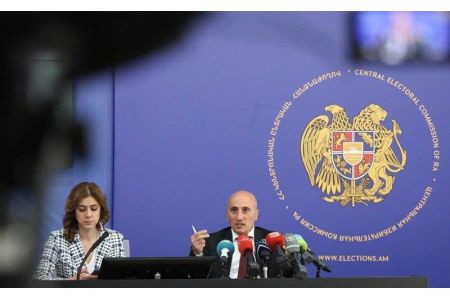 CEC Neutralizes PAP: Three Political Forces to Enter Armenian Parliament Following Election Vote
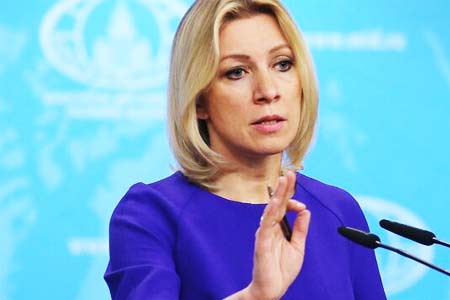 Elections in Armenia were accompanied by unprecedented pressure on opposition, RF MFA spokesperson claims
 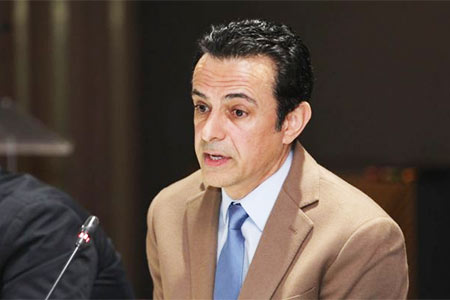 Expert: Even OSCE observers recorded numerous violations during elections in Armenia
 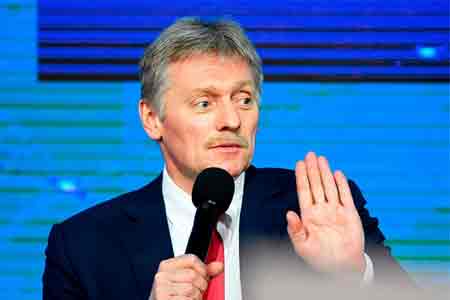 Moscow to await official results of Armenian elections - Peskov
 Antonio Costa: EU to deepen its partnership with Armenia, expanding cooperation in energy, trade, and digitalization
 Israeli MFA congratulates Pashinyan
 Turkish MFA comments on results of Armenian elections
  Zakharova: International observers cannot ignore `flagrant violations` in Armenian elections
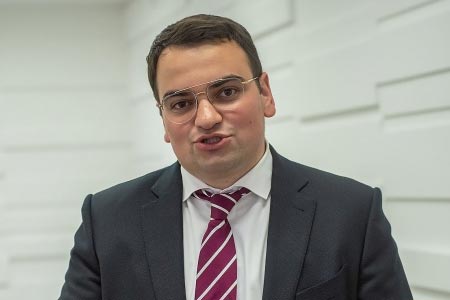 Strong Armenia to issue statement after vote count completed - Narek Karapetyan
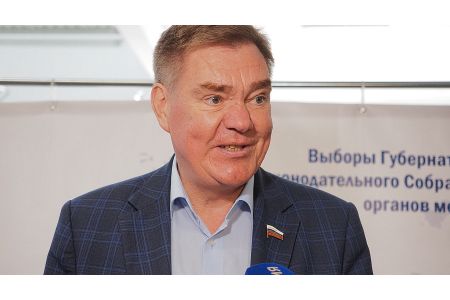 Russian Senator: Opposition complaints regarding election violations by ruling party remain unanswered
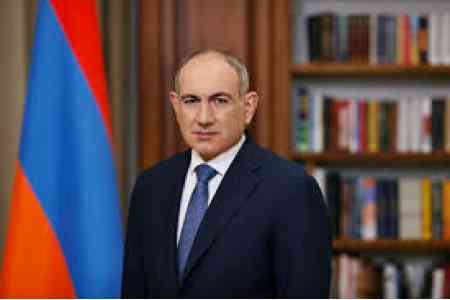 RA premier receiving congratulations on his victory in parliamentary elections
