



ArmInfo.Armenian Prime Minister Nikol Pashinyan touched upon why Armenians don't fly to the moon.
On March 17, speaking at the 3rd Conference on Innovations in the Public Sector, the Armenian Prime Minister noted that the quality of work in the public administration directly impacts the quality of life of the population. And this connection isn't always and everywhere recognized.
"In order to improve the lives of the population, we must improve public sector management, and there is a tool for improving public sector management: additional investments in this sector. In general, our thinking is largely non-systemic and non-state, and we continue to believe that we can avoid investing and still achieve improvements, for example, in terms of enthusiasm, emotions, dedication, etc., and the function of enthusiasm, emotions, and dedication should never be underestimated," he said, noting that without an infrastructure that transforms emotions and enthusiasm and turns them into value, they will have no significant impact.
He noted that no citizen of Armenia has or can have the same influence on their personal well-being as public administration. Therefore, changing public attitudes toward public administration is one of the most important tasks.
Pashinyan reiterated the thesis that there is not a single family or person in Armenia who spends more on their personal well-being than the state budget of Armenia spends on the personal well-being of each individual. "Every drop of tax paid by every citizen of Armenia returns tenfold to that citizen," Nikol Pashinyan emphasized. Therefore, any unresolved issue is a consequence of previously unrealized investments in the public administration sector.
"Today, many professional and competent people work in the public administration sector, but I also want to point out that knowledge taken in isolation cannot yield results, because knowledge must be placed in the right place and in the right system," he said. For example, the prime minister continued, more than 400,000 scientists worked on the American Apollo mission to the moon. This means that if the country had had 250,000 scientists instead of 400,000, this epochal program simply would not have been possible.
"Of course, in our thousand-year history, we have never planned, and unfortunately, we do not plan today, to fly to the moon, and there is only one reason for this: the absence of those 400,000 scientists and specialists.Because if we had these 400,000 scientists and specialists, could anyone explain why we would have abandoned the idea of going to the moon? Forgive the crude example, but there's a fable: "The fox, unable to reach the grapes, declares them unripe. Going to the moon is a dream for us, a true dream, because spring has only just begun, and there's still plenty of time before the grapes ripen," Nikol Pashinyan concluded.





























 Political Scientist: As long as the opposition remains silent, Pashinyan can use Plan B and secure a constitutional majority
 US-Iranian memorandum more beneficial for Iran from political and economic perspective - expert
  Political analyst: While Pashinyan pledges peace with Azerbaijan, Baku continues promoting the "Western Azerbaijan" project
 Political analyst: In light of new realities, Yerevan may propose advancing peace process with Baku without constitutional referendum
 Present-day geopolitical competition shifts from territorial control to infrastructure flows
 Artsakh`s Cultural Heritage Ombudsman called on Moscow to respond to destruction of WWII monuments by Azerbaijan in occupied NKR
 Prosecutor General`s Office petitions Central Electoral Commission for criminal prosecution of Robert Kocharyan
 Dutch Prime Minister expresses his support for Armenia`s democratic reform and economic diversification agenda
 Heritage: It`s time for Armenia`s opposition to present people with legitimate alternative to power
 RA Security Council Sec, Assistant to President of Azerbaijan hold negotiations in Dilijan
 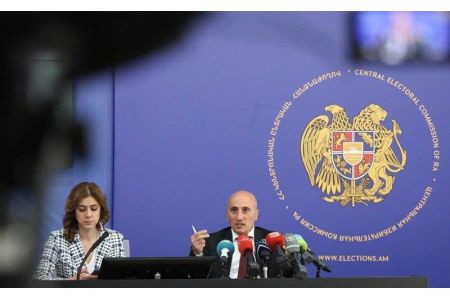 CEC Neutralizes PAP: Three Political Forces to Enter Armenian Parliament Following Election Vote
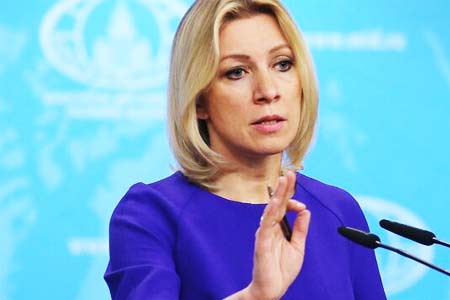 Elections in Armenia were accompanied by unprecedented pressure on opposition, RF MFA spokesperson claims
 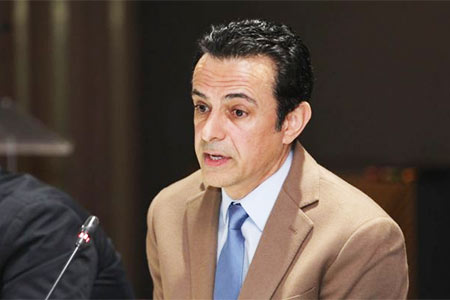 Expert: Even OSCE observers recorded numerous violations during elections in Armenia
  Moscow to await official results of Armenian elections - Peskov
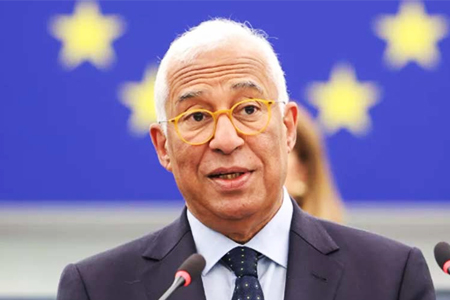 Antonio Costa: EU to deepen its partnership with Armenia, expanding cooperation in energy, trade, and digitalization
 Israeli MFA congratulates Pashinyan
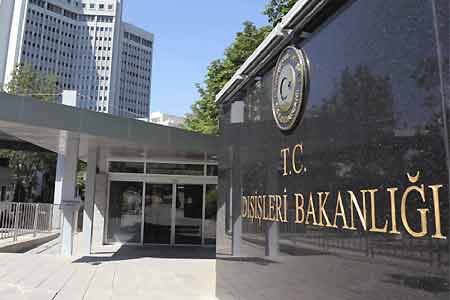 Turkish MFA comments on results of Armenian elections
  Zakharova: International observers cannot ignore `flagrant violations` in Armenian elections