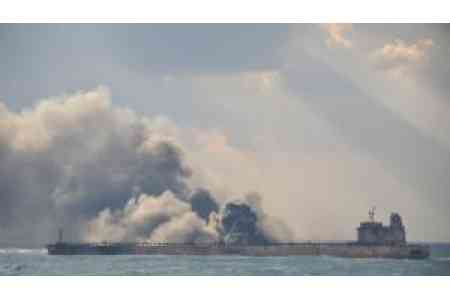
ArmInfo. More and more European countries are issuing statements that they do not intend to participate in securing the Strait of Hormuz, despite calls from U.S. President Donald Trump.
Following Trump’s demands, the German government stated it would not allow Berlin to be dragged into an "endless war." "This is not a NATO war (...). As long as the war continues, there will be no participation on our part," said German government spokesperson Stefan Cornelius.
German Defense Minister Boris Pistorius questioned Trump’s appeal, noting that NATO’s mission is to ensure the security of the alliance’s territory. "What does Donald Trump expect from, say, a few or a couple of European frigates in the Strait of Hormuz? Can such forces truly achieve what the powerful U.S. Navy cannot do there alone? That is the question I am asking myself," the Minister said.
As reported by the Financial Times, France has also refused the U.S. military presence in the Strait of Hormuz. A source told the publication that Paris would only be ready to deploy its ships once all hostilities between the U.S., Iran, and its neighbors have ceased.
Athens also noted that it has no plans to participate in any military operations in the Strait of Hormuz. Greek government spokesperson Pavlos Marinakis pointed out that his country's involvement remains limited to the EU naval mission Aspides, which aims to protect vessels in the Red Sea.
Earlier, British Prime Minister Keir Starmer announced that his country would not participate in the conflict in the Middle East. He emphasized that lifting the de facto blockade of the Strait of Hormuz is not a NATO mission.
Italian Deputy Prime Minister Matteo Salvini stressed that Italy is not engaged in hostilities with anyone and therefore cannot send ships for actions against any party in the Iranian conflict.
Earlier on March 16, Trump stated that NATO faces a grim future if American allies do not provide assistance in ensuring the safety of navigation in the Strait of Hormuz.
On March 14, the American President stated that security in the Strait of Hormuz should be handled by the countries that receive oil through it.
















 Expert: Gagik Tsarukyan embodies post-Soviet model of big business-state relations; this model is used in many other post-Soviet countries
 Expert: Azerbaijan promoting aggressive plans against Armenia at state level
 Iranologist: Baku`s propaganda of might masks the country`s inability to provide water to its own population
 Political analyst: Russia intends to determine which "Camp" Armenia will choose through a referendum
 Narek Karapetyan will give up his parliamentary salary in favor of charitable contributions.
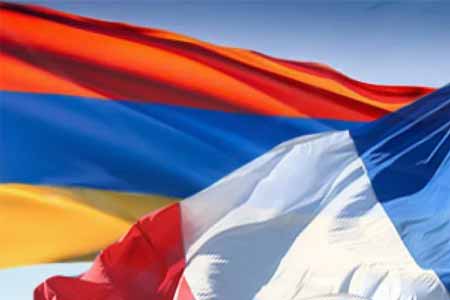 Armenia and France discuss further development of strategic partnership and EU cooperation
  To overcome risks Armenia must reduce domestic escalation - expert
  Zatulin: Pashinyan was eager to get back to Russia because he actually lost the elections
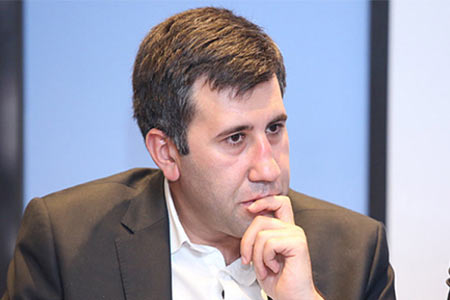 Human rights activist Ruben Melikyan dismissed from YSU
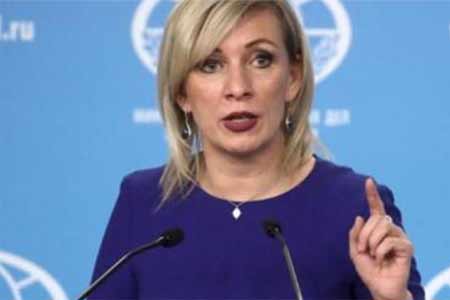 Zakharova: Armenia`s pro-EU pivot poses economic security risks to EAEU member states
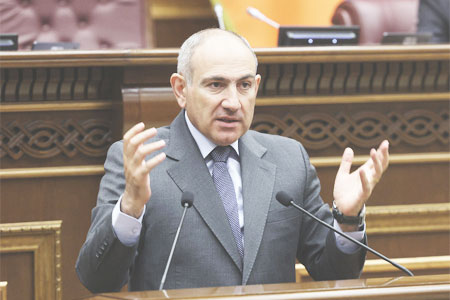 It`s time for South Caucasus countries to think of South Caucasus as single, unified region - RA premier
  Pashinyan: Armenia and Azerbaijan should leave each other alone
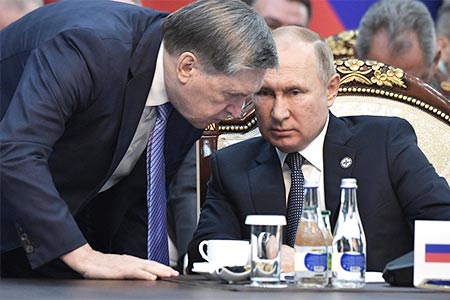 Moscow sees situation with Armenia as attempt to attack Russia-involving integration associations - Russian presidential aid
 Zakharova: Armenia views relations with Russia as tool for financially securing reorientation toward EU