
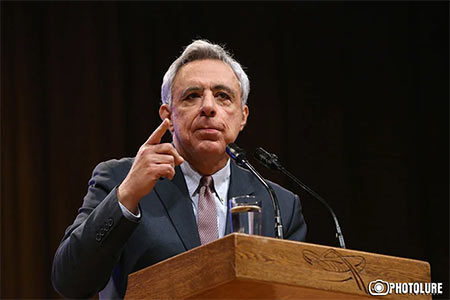
ArmInfo.Former Armenian Foreign Minister Vardan Oskanyan considers Armenian Prime Minister Nikol Pashinyan's speech in the European Parliament a clear indication of the causes of all the troubles facing the Armenian people today.
"To all those who still doubt that war and post-war catastrophes, the de-Armenization of Artsakh, the occupation of Armenia's sovereign territories, and the meek acceptance of all of Azerbaijan's conditions could have been avoided if the person at the helm of state had even a slight understanding of diplomacy, foreign policy, and the value of speech, I simply recommend listening to at least part of Pashinyan's speech yesterday in the European Parliament. This man, from the podium of the European Parliament, is telling everyone that the bishops of the Armenian Apostolic Church have violated some spiritual canons known only to him, are agents of influence, and want to destroy his 'world,'" he noted.
At the same time, he noted that these absurd statements by Pashinyan will, at best, be perceived as ridiculous, and, at worst, will produce a contemptuous attitude among those seated in the European Parliament hall. Oskanyan added that he himself cannot describe in words the impression Pashinyan's speech evoked among those present. "And if you imagine it, it's not hard to understand that since 2018, neither during the Artsakh negotiations, nor before the war, nor during it, nor after it, nor to this day, has this man understood where and what can be said, what can't be said, what is expected of you, what doesn't interest anyone, and what betrays your weakness, ignorance, fear, and outright stupidity. The answer to the question of why Armenia found itself in this situation lies precisely in this simple truth," Oskanyan concluded.
It should be noted that on March 11, the Armenian Prime Minister, speaking from the parliamentary rostrum, declared peace with Azerbaijan, demanded that the people of Artsakh obtain Armenian passports and settle in Armenia, and attempted to justify attacks on the Armenian Apostolic Church by claiming that they had violated church canons and were agents of influence serving the interests of third countries

















 Expert: Real peace unattainable until Armenia-Azerbaijan agreement is signed and ratified
 TRIPP`s proximity to Iranian border could slow its implementation - expert
  Who and why is sacrificing RA National Security Service`s reputation? - expert
  Tehran creating security environment in which sustainable shipping in Strait of Hormuz difficult to imagine without its direct participation - expert
  Arrested Armenian oligarch on economy and new jobs
  NA Vice Speaker candidate believes his wife`s salary as director of HayPost is the lowest in the company`s history
 RF Permanent Representative: There is no CSTO-Armenia conflict
 Moscow: NATO seeking to "Pull" Armenia away from CSTO Allies
  Political analyst: Russia intends to determine which "Camp" Armenia will choose through a referendum
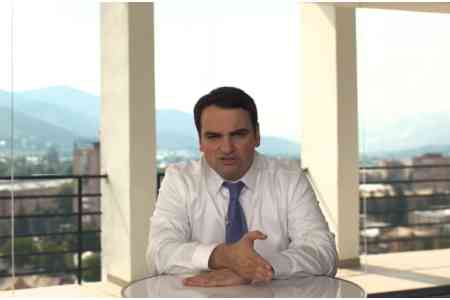 Narek Karapetyan will give up his parliamentary salary in favor of charitable contributions.
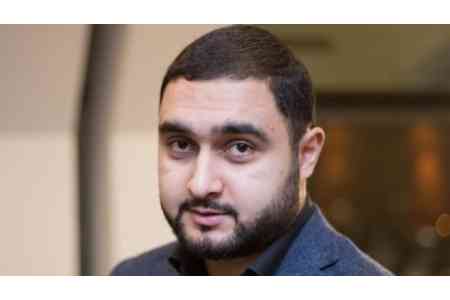 Armenian analyst: Developing relations with Europe and the U.S. must not jeopardize relations with regional powers
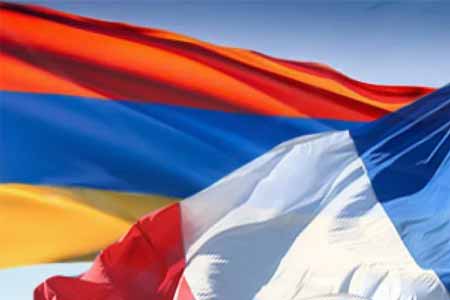 Armenia and France discuss further development of strategic partnership and EU cooperation
 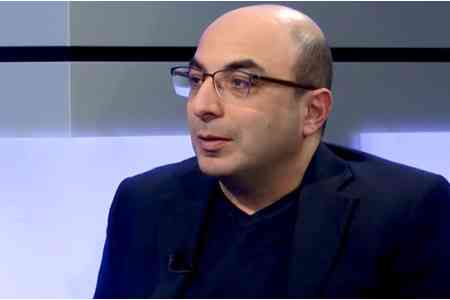 To overcome risks Armenia must reduce domestic escalation - expert
  Zatulin: Pashinyan was eager to get back to Russia because he actually lost the elections
 Human rights activist Ruben Melikyan dismissed from YSU
 Pashinyan removed from INNOPROM guest list
 Zakharova: Armenia`s pro-EU pivot poses economic security risks to EAEU member states
 It`s time for South Caucasus countries to think of South Caucasus as single, unified region - RA premier
  Pashinyan: Armenia and Azerbaijan should leave each other alone