

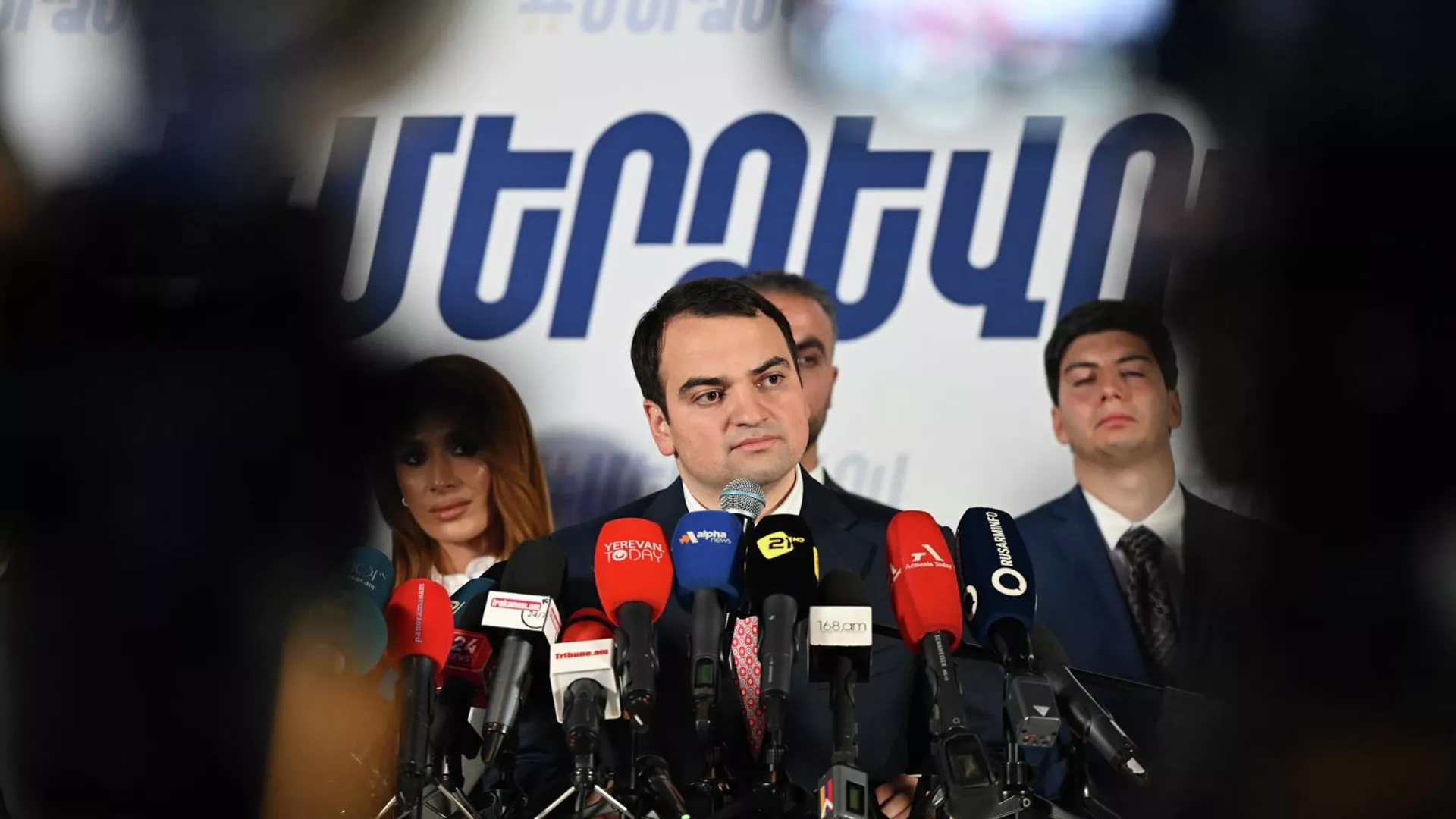
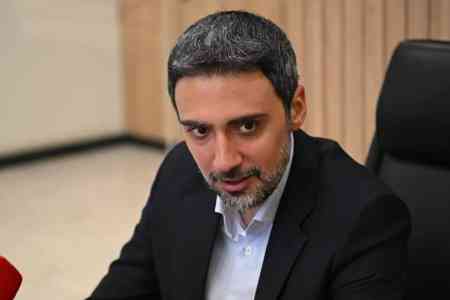
ArmInfo. The creation of 300,000 new jobs in Armenia will increase the country's employment rate by almost 50%. Narek Karapetyan, a member of the Strong Armenia party council, stated this in an interview with CIVILNET.
As a reminder, the party's leader, renowned entrepreneur and philanthropist Samvel Karapetyan, previously presented five steps for Strong Armenia, which include creating 300,000 new jobs, exempting small businesses from taxes, reducing pharmaceutical prices by 20%, guaranteeing the purchase of harvests in rural areas, and co-financing housing programs for young and large families.
According to Narek Karapetyan, the country currently has approximately 3 million people, 800,000 of whom are officially registered, another 500,000 are pensioners, and 400,000 are children and first-year students in higher education institutions. Thus, as Narek Karapetyan noted, it can be said that approximately 1.2-1.3 million people in the republic need permanent employment. Agriculture, which is seasonal and economically inefficient, is also a factor in keeping unemployment low. De facto, the Party Council member continued, virtually all farmers and their farms are registered as employed.
"According to our calculations, there are 1.2-1.3 million people in the country who need permanent employment, but we set ourselves the goal of creating 300,000 new jobs over the next five years. Of the 800,000 officially registered workers in the country, approximately 600,000 are in the private sector. Essentially, 800,000 people work to support 3 million citizens. If we exclude government employees, we'll end up with approximately 600,000 people employed in the private sector, thereby generating an economic impact," emphasized Narek Karapetyan.
He added that achieving this goal will radically change the tax base and demographic situation, and, overall, create a completely new economic situation. One of the most important areas for creating new jobs is the country's reindustrialization. During the Soviet era, when the republic was considered industrially developed, Armenia's per capita GDP was equal to that of Portugal; in 1993, this figure fell to the level of Burkina Faso. It was then that the country fell into stagnation-social and economic-which led to emigration. Reindustrialization will solve the employment problem in the republic's regions.
This is also planned to be addressed through import substitution. For example, in the energy sector, 90% of all costs previously went to importing necessary equipment from abroad. Now, this problem has been 95% resolved. The examples of Electric Networks of Armenia and High-Voltage Electric Networks CJSC are clear evidence of this.
Overall, as Narek Karapetyan noted, most of the 40 most common goods imported to Armenia can be produced locally. He refuted government allegations of shady deals at Electric Networks of Armenia, where purchases were made without tenders.
Purchases were made primarily from local producers through import substitution. To achieve this, an economic cycle was created, which, on the one hand, prevented tariff increases for end consumers and, on the other, provided jobs. However, if the cost of foreign equivalents was lower than domestic ones, purchases were made outside the country. The same import substitution goal, as the politician noted, can be achieved with regard to military products, which require billions of dollars in procurement. During the 44-day war, the Armenian side suffered significant losses only because of problems with arms deliveries, with planes carrying military cargo arriving via Iran.















 Opinion: The development of the Amulsar mine near the resort town of Jermuk is the beginning of an environmental disaster in Armenia
 Expert: The arrest of opposition figures in Armenia for social media posts is a systematic attempt to intimidate the public and suppress dissent.
 Azerbaijani Studies Expert: While Azerbaijan Prepares Its Generation for War, Aliyev’s Aide Calls on Armenia to Prepare Armenian Society for “Peace”
 Turkologist: Azerbaijan will never, under any circumstances, stop pressuring the Armenian people
 Political scientist: We need to move away from the question of "when" and replace it with more important questions
 Lukashenko called for Armenia to assume the CIS presidency in 2029
 Dmitry Medvedev predicted a Ukrainian-like fate for Armenia amid the country`s shift in foreign policy
 Russian Security Council: In Armenia, they want to force Russian asset owners to dispose of their assets
 Zakharova: Russia ready to discuss with Armenia the prospects for expanding military cooperation as part of a review of bilateral ties
 Tevanyan: Armenia, like Ukraine and Moldova, is being drawn into the EU’s global war
 Yerevan City Hall is considering introducing a valet parking system in the city
 Expert: The circus surrounding the “Albanization” of Armenian culture in the presence of foreign ambassadors in occupied Artsakh is genocide
 Political scientist: If Russian-Armenian relations are destroyed, Turkey will take Russia`s place
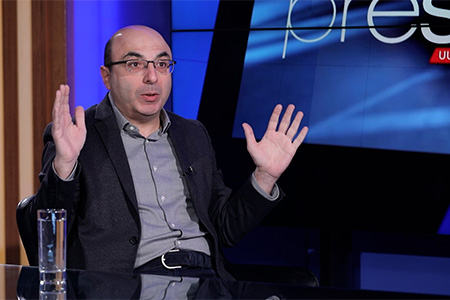 Political scientist: The Armenian public is simply obliged to significantly change the entire content of public discourse and struggle
 Cross tattoos are being removed from the skin of Christian prisoners in Azerbaijan by fire, according to a human rights activist.
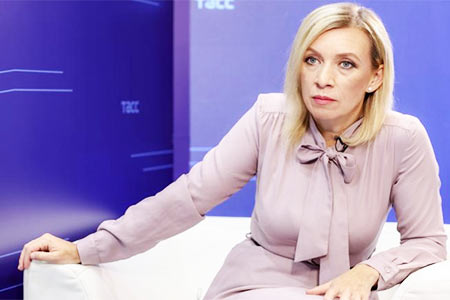 Zakharova: Armenia`s likely introduction of visas with Russia will be a step against Yerevan itself
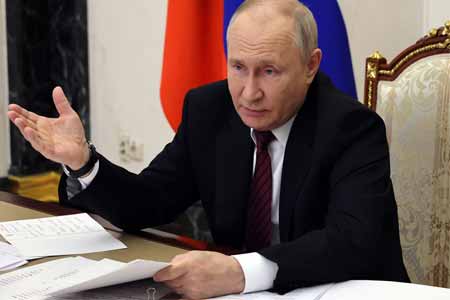 Putin: Armenia`s recognition of Karabakh as part of Azerbaijan in Prague has given Russia`s position on this issue an ambivalent character
 Putin: Armenia`s adoption of the law on EU accession means an announcement of its withdrawal from the Eurasian Economic Union
 Aram Vardevanyan: Public demands solutions, not apology scandals in Parliament
