



ArmInfo.The history of international relations shows that in conflict zones where institutional guarantees are absent, the right to use force ultimately prevails.
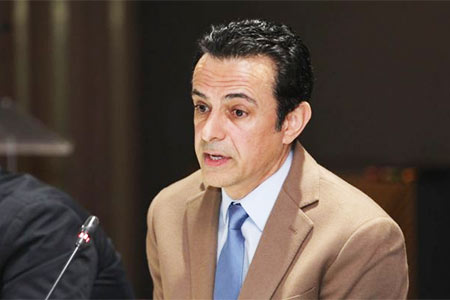
This was stated by former Armenian Foreign Minister and founding member of the Pan-Armenian Council of Diplomats, Ara Ayvazyan, while presenting the "Guaranteed Peace" concept of Prosperous Armenia Party leader Gagik Tsarukyan.
According to a Facebook post by the "Armenia's Proposal" program, Ayvazyan stated that the discussions surrounding this concept have demonstrated the sensitivity and importance of institutional security guarantees for Armenia. Ayvazyan believes that rejecting it based on populist considerations and terminology and subordinating it to partisan and electoral interests is a misunderstanding of the situation in Armenia. "Furthermore, this means failing to see what may be Armenia's only way out of the current tensions. 'Guaranteed peace' is not based on the goodwill of the parties. It stems from the realistic logic of international politics. Sustainable peace is only possible with mechanisms for its enforcement and a system of accountability for its violation," the diplomat noted.
The former Armenian Foreign Minister explained that the issue is about establishing pragmatic relations with those international players interested in restoring regional balance and whose strategic interests align with preserving Armenia's sovereignty and territorial integrity. He also noted that, in response to Tsarukyan's "Guaranteed Peace" concept, Armenian authorities have begun circulating the argument that Armenia's security guarantees already existed, but simply failed at the crucial moment. In this regard, the diplomat noted, there are claims that Armenia itself should become the guarantor of the "guaranteed peace." However, Ayvazyan believes that this argument contains a fundamental logical flaw.
"If existing security mechanisms are insufficient or ineffective, this does not mean they should be abandoned. Rather, they need to be reviewed and institutionalized. Rejecting guarantees not only fails to solve the problem but directly deepens strategic vulnerability. A state experiencing military and demographic imbalances with its neighbors cannot be a guarantor of peace on its own. There are virtually no such precedents in international politics. In the absence of external commitments, accountability mechanisms, and international oversight, any 'peace' becomes merely a temporary pause between crises," the diplomat noted.
Ayvazyan identified a monitoring and guarantee mandate, which can be established both bilaterally and multilaterally, as an important component of this system. However, he emphasized that its effectiveness depends not only on legal formulations but also on the political will of the guarantor states and the alignment of their strategic interests with Armenia's fundamental interests. "This is precisely why the concept implies a rethinking of allied relations from declarative commitments to instruments of measurable, formalized responsibility and practical support. Peace cannot be maintained without an accountability mechanism in the event of a violation. Therefore, a peace treaty must include automatic political and economic consequences, a mandatory procedure for international investigation of violations, and pre- agreed response measures. Without such provisions, any agreement remains vulnerable," the former Armenian Foreign Minister asserted.
He recalled that this aspect is always important in strategic policy, and the lack of institutional security guarantees has already led to serious consequences for Armenia. "The concept of 'Guaranteed Peace' has nothing to do with Armenia's external dependence. Its entire purpose is to restore the country's strategic significance and subjectivity. The history of international relations clearly shows that where institutional guarantees are absent, the right to use force ultimately prevails. If there is no peacekeeping mechanism, a situation of imposed peace is created, where the winner dictates its terms to the loser. The alternative to guaranteed peace is controlled instability. Finally, today Armenia faces a fundamental choice: either institutionalize the country's security through international guarantees and accountability mechanisms, or our state continues to live within the logic of coercive pressure. There is simply no third option in international politics. Otherwise, our state will continue to live within the logic of violent oppression," the former Armenian Foreign Minister concluded.
As a reminder, on February 10, 2026, businessman and Prosperous Armenia Party leader Gagik Tsarukyan announced that he would participate in the parliamentary elections scheduled for June 7, 2026, with his "Armenia's Proposal" program-a non-partisan initiative within the framework of which he intends to lead the country out of the current situation and move toward post-war recovery.





























 Expert: Even OSCE observers recorded numerous violations during elections in Armenia
  Armenia`s ex-minister of justice calls on opposition to honestly answer questions troubling Armenian citizens
 Lawyer: according to preliminary results, Pashinyan`s party lacks 2/3 majority necessary to amend Armenia`s Constitution
 Moscow to await official results of Armenian elections - Peskov
 Antonio Costa: EU to deepen its partnership with Armenia, expanding cooperation in energy, trade, and digitalization
 Israeli MFA congratulates Pashinyan
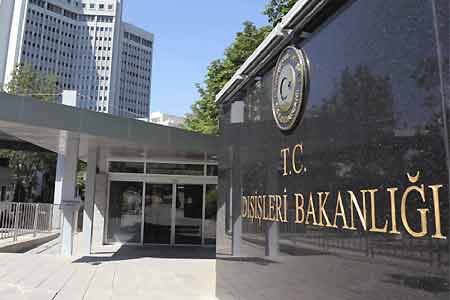 Turkish MFA comments on results of Armenian elections
  Zakharova: International observers cannot ignore `flagrant violations` in Armenian elections
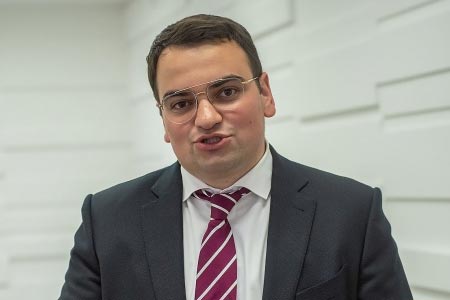 Strong Armenia to issue statement after vote count completed - Narek Karapetyan
 Russian Senator: Opposition complaints regarding election violations by ruling party remain unanswered
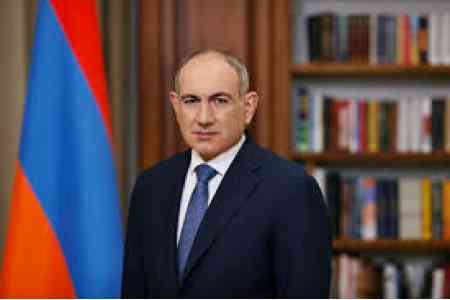 RA premier receiving congratulations on his victory in parliamentary elections
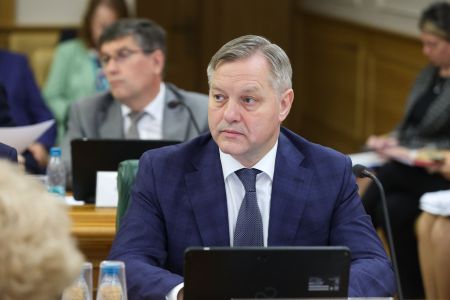 Head of IPA CIS Council Secretariat: Extremely difficult atmosphere during parliamentary elections campaign in Armenia accompanied by mass arrests
 Pashinyan`s party leads with 51.13% based on vote counts from 533 polling stations
 Voting in parliamentary elections in Armenia ends
  Strong Armenia: Administrative Court not providing judicial decisions to citizens wishing to vote in parliamentary elections