
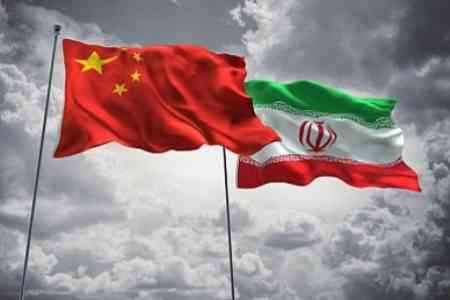
ArmInfo. (aljazeera.net). Some are now wondering why Russia and China aren't intervening in the war on Iran's side, Al Jazeera reports. Meanwhile, Tehran itself is the main opponent of Moscow and Beijing's involvement in the conflict.
Many are concerned about the stance of Iran's allies and other international partners on current events. This is especially true for countries that compete politically and economically with the United States, such as Russia and China.
In this context, Dr. Hassan Ahmadian, Professor of Middle Eastern Studies at Tehran University, noted that Moscow and Beijing have already stated their position both within and outside the UN Security Council, condemning the attacks. He emphasized that these countries continue to adhere to the positions they held during the so-called 12-Day War that erupted last June.
Ahmadian emphasized that it was never intended that Russia or China would engage in direct military confrontation in defense of Iran. According to him, such intervention could pose a serious threat to Tehran, escalating the conflict and turning it into a clash between major powers, the consequences of which would impact Iran itself.
He stated that most Iranian military leaders are convinced of the need to fight this war alone. They are fully aware of all the potential consequences for both Iran itself and its adversaries.
The political scientist noted that allies and partners sometimes become targets of criticism on the international stage. However, despite this, their presence is still felt, albeit indirectly. They provide legal and political support in the Security Council, provide technical assistance, and continue the military cooperation that has already taken place.
The Iranian political scientist explained that some of the assets currently being used against US-Israeli forces were obtained through existing military cooperation between Iran and these countries. <...>
Regime survival is already a victory
Responding to the question of whether the Iranian regime's survival after this war could be considered a victory for Iran and a defeat for the United States and Israel, political scientist Hassan Ahmadian noted that he saw no other possible scenario. He explained this by the Iranian regime's strong institutional foundation, deep historical roots, and strong popular support.
Ahmadian noted that popular support is clearly evident in the widespread mourning that has engulfed the country. He emphasized that the regime will survive even if the aggressors declare victory and eliminate prominent political and military leaders.
The release of aerial photographs published by the Israeli army, showing powerful explosions in several Iranian provinces, has sparked heated debate about Israel's apparent air superiority.
Political scientist Hassan Ahmadian emphasized that technological superiority does exist, and that Iran currently lacks capabilities comparable to the Israeli Air Force. He also emphasized that Tehran is waging what he calls "asymmetric warfare," in which Israeli and American air forces clash with Iranian missile capabilities, which nevertheless provides a certain balance to the standoff.
He explained that the lack of similar images of destruction inside Israel does not necessarily reflect the real situation on the ground, emphasizing that the country has strict restrictions on publishing such images, while Iran has no such censorship.
He cited the example of the 1991 war, when Israel initially claimed that Iraqi Scud missiles had caused no damage, but documents released decades later revealed casualties. He argued that modern Iranian missiles are incomparable in their capabilities and destructive power to those of the 1990s.
Ahmadian noted that the Iranian strikes were effective, and their consequences will become even more tangible over time. The experience of last year's war showed that Iran was not the party seeking a ceasefire. On the contrary, Tehran was only prepared to suspend military action in response to a similar move by its adversary. Israel and the United States, acting through a Qatari intermediary, had previously requested a ceasefire.
Iran's military potential has increased since the war.
Regarding the scale of Iran's military development since the 12-Day War, Ahmadian explained that even before the conflict, Tehran had focused on numerous military production programs and strengthening its defense capabilities.
He described the war, despite its grave consequences, as a harsh but important school of thought, which allowed the Iranian armed forces to learn practical lessons about the operation of their arsenal and ways to improve their methods of employment.
Ahmadian noted that the development of ballistic and hypersonic missiles has reached a level unprecedented in Iran's modern history. Along with significant advances in military planning, strike tactics, and attack synchronization, this has contributed to the country's accumulation of experience and expansion of capabilities.





















 Expert: Economic pressure on Armenia may be virtually painless for other EAEU members, but not for Armenia itself
 Expert on protests in France: Civilizations fade when society loses a vision of the future
 Turkologist: Azerbaijan is not all-powerful—its vulnerabilities should become part of Armenia’s security strategy
 Opinion: The development of the Amulsar mine near the resort town of Jermuk is the beginning of an environmental disaster in Armenia
 Expert: The arrest of opposition figures in Armenia for social media posts is a systematic attempt to intimidate the public and suppress dissent.
 Expert: It`s time for Armenia to move away from uncertainty and choose between West and East
 The Armenian Foreign Minister commented on the country`s return to work within the CSTO.
 The Artsakh Public Council expressed outrage at the UN Secretary-General`s behavior
 Lukashenko called for Armenia to assume the CIS presidency in 2029
 Dmitry Medvedev predicted a Ukrainian-like fate for Armenia amid the country`s shift in foreign policy
 Russian Security Council: In Armenia, they want to force Russian asset owners to dispose of their assets
 Zakharova: Russia ready to discuss with Armenia the prospects for expanding military cooperation as part of a review of bilateral ties
 Tevanyan: Armenia, like Ukraine and Moldova, is being drawn into the EU’s global war
 Yerevan City Hall is considering introducing a valet parking system in the city
 Expert: The circus surrounding the “Albanization” of Armenian culture in the presence of foreign ambassadors in occupied Artsakh is genocide
 Political scientist: If Russian-Armenian relations are destroyed, Turkey will take Russia`s place
 Political scientist: The Armenian public is simply obliged to significantly change the entire content of public discourse and struggle
 Cross tattoos are being removed from the skin of Christian prisoners in Azerbaijan by fire, according to a human rights activist.
 Zakharova: Armenia`s likely introduction of visas with Russia will be a step against Yerevan itself