
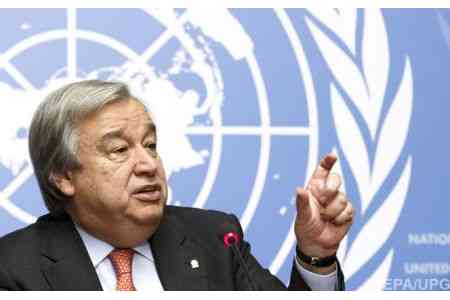
ArmInfo. Speaking at an emergency meeting of the UN Security Council, UN Secretary-General António Guterres once again condemned the massive attacks by the United States and Israel on Iran, as well as the subsequent Iranian strikes, "violating the sovereignty and territorial integrity of Bahrain, Iraq, Jordan, Kuwait, Qatar, Saudi Arabia, and the United Arab Emirates."
He recalled that Article 2 of the UN Charter clearly states: "All Members of the United Nations shall refrain in their international relations from the threat or use of force against the territorial integrity or political independence of any State."
The UN chief stated that what is currently happening in the Middle East constitutes a "grave threat to international peace and security."
"Military action could unleash a chain of events that no one can control in the most unstable region of the world," the Secretary-General said.
According to available reports, strikes hit 20 cities across Iran, including Tehran, Isfahan, Qom, Shahryar, and Tabriz. In Tehran, powerful explosions were recorded in the area where the presidential palace and the Supreme Leader's residence are located.
Several high-ranking officials were killed, including, according to Israeli sources, Iran's Supreme Leader Ayatollah Ali Khamenei. Significant civilian casualties were also reported.
According to Iranian media, an airstrike on a girls' school in Minab, Khormogan Province, killed at least 85 people and wounded many more. A strike on a school in Tehran killed two people.
Iranian airspace has been closed, and the internet has been virtually shut down in the country.
Guterres noted that military actions are rapidly spreading across the region, creating an increasingly unstable and unpredictable situation and increasing the risk of miscalculation.
According to Israeli data, 89 people were injured in Iranian strikes on Israel.
Iran announced that it had struck US military targets in the region in retaliation for attacks by the US and Israel. These attacks also reportedly hit civilian areas and infrastructure in several Gulf states. Most states successfully intercepted the Iranian strikes, but the UAE reported that one civilian was killed by debris from an intercepted missile.
There are reports from Iraq of drone and missile attacks on both sides.
According to some reports, Iran is closing the Strait of Hormuz to international shipping.
The US and Israeli attacks came after the third round of proximity talks between the US and Iran, brokered by Oman, the UN chief recalled. Preparations were underway for technical talks in Vienna next week, which were expected to be followed by a new round.
"I deeply regret that this opportunity for diplomacy was missed," the Secretary-General said.
"I call for de-escalation and an immediate cessation of hostilities," he added.
Guterres warned of the possibility of a wider conflict and stated that all parties must immediately return to negotiations, particularly on Iran's nuclear program.
The US president reportedly held talks with the leaders of Saudi Arabia, Qatar, and the UAE, while the Iranian foreign minister held talks with his counterparts from the Gulf states and Iraq.
The UN chief called on all states to respect international law and act "responsibly and cooperatively."





















 Azerbaijani studies expert : Ruben Vardanyan’s wife threatened with arrest if she visits Baku
 Political scientist: The model of allied relations between Russia and Armenia has collapsed
 Expert: The defeated authorities` position on normalizing relations with the enemy should not affect the rights of Artsakh refugees
 Political scientist: If Russian-Armenian relations are destroyed, Turkey will take Russia`s place
 Political scientist: The Armenian public is simply obliged to significantly change the entire content of public discourse and struggle
 Cross tattoos are being removed from the skin of Christian prisoners in Azerbaijan by fire, according to a human rights activist.
 Zakharova: Armenia`s likely introduction of visas with Russia will be a step against Yerevan itself
 Putin: Armenia`s recognition of Karabakh as part of Azerbaijan in Prague has given Russia`s position on this issue an ambivalent character
 Putin: Armenia`s adoption of the law on EU accession means an announcement of its withdrawal from the Eurasian Economic Union
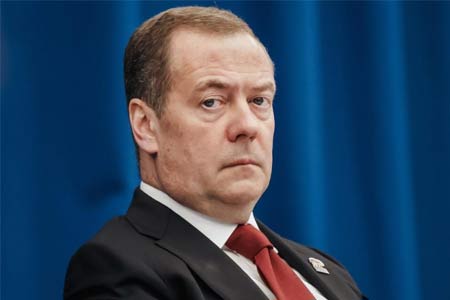 Medvedev: Yerevan will never become an EU member, but it will permanently damage relations with the Eurasian Economic Union, including with Moscow.
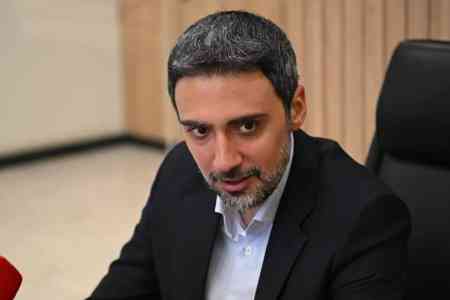 Aram Vardevanyan: Public demands solutions, not apology scandals in Parliament
 Arrested Armenian oligarch on economy and new jobs
 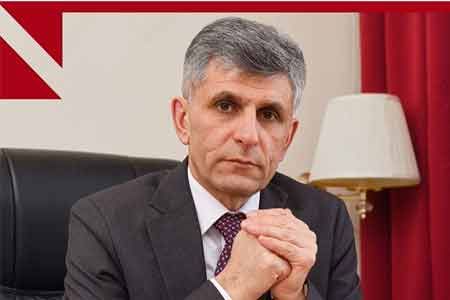 "In Baku, we gave a worthy rebuff to the false claims regarding the past and present of our people" – Former Artsakh Parliament Speaker from Baku captivity
  NA Vice Speaker candidate believes his wife`s salary as director of HayPost is the lowest in the company`s history
 RF Permanent Representative: There is no CSTO-Armenia conflict
 Moscow: NATO seeking to "Pull" Armenia away from CSTO Allies
  Political analyst: Russia intends to determine which "Camp" Armenia will choose through a referendum
 Narek Karapetyan will give up his parliamentary salary in favor of charitable contributions.