
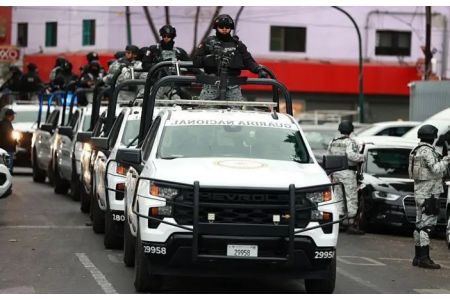
ArmInfo. The leader of one of Mexico's largest drug cartels, Jalisco Nueva Generación, Nemesio Oseguera Cervantes, known as El Mencho, was killed during a government military operation. Unrest and clashes between armed cartel members and security forces erupted in several states.
The Mexican Ministry of Defense announced that the operation was carried out in the western city of Tapalpa. El Mencho, 60, died from wounds sustained in a shootout while being airlifted to the hospital.
According to the Ministry of Defense, four more cartel members were killed, two seriously wounded. Three military personnel were wounded.
The drug syndicate emerged in 2010 in the state of Jalisco but eventually expanded its influence throughout the country.
El Mencho, a former police officer, created a powerful criminal organization responsible for smuggling significant quantities of cocaine, methamphetamine, and fentanyl into the United States. The United States offered a $15 million reward for information leading to his whereabouts.
The Mexican Ministry of Defense noted that the intelligence that facilitated the operation was obtained from the United States. Armored vehicles and weapons, including grenade launchers, were seized during the raid in Tapalpa.
White House Press Secretary Caroline Levitt confirmed that the United States supported Mexico by providing intelligence. She added that the Donald Trump administration "expresses its appreciation and gratitude to the Mexican military for their cooperation and the successful execution of this operation."
The death of the drug cartel leader sparked an immediate wave of violence: Jalisco militants set cars on fire, blocked roads, and attacked security forces in eight states.
Authorities in the state of Jalisco reported an attack by militants on a National Guard military police base. They advised tourists not to leave their hotels and suspended public transportation.
In recent years, Jalisco New Generation has become one of Mexico's most powerful cartels, known for its brutal methods, forced labor, and recruitment.
The syndicate's militants once shot down an army helicopter with a grenade launcher and killed dozens of officials, hanging their bodies from bridges to intimidate rivals.
The cartel was the first to use drones to attack civilians in remote areas of western Mexico as part of its rapid territorial expansion.
US Deputy Secretary of State Christopher Landau, formerly Ambassador to Mexico, said the death of the cartel leader was a "major event" for the United States and Mexico, as well as the rest of Latin America. (BBC)









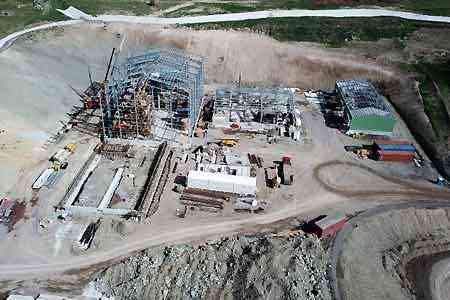


 Opinion: The development of the Amulsar mine near the resort town of Jermuk is the beginning of an environmental disaster in Armenia
 Expert: The arrest of opposition figures in Armenia for social media posts is a systematic attempt to intimidate the public and suppress dissent.
 The Artsakh Public Council expressed outrage at the UN Secretary-General`s behavior
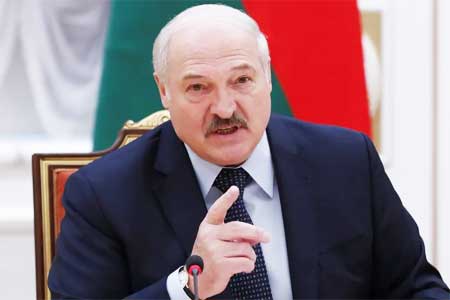 Lukashenko called for Armenia to assume the CIS presidency in 2029
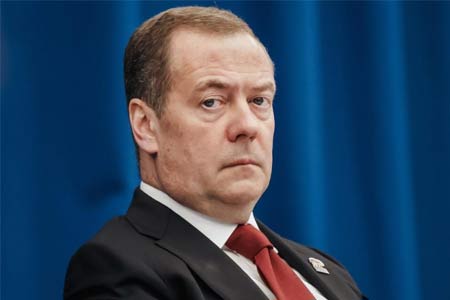 Dmitry Medvedev predicted a Ukrainian-like fate for Armenia amid the country`s shift in foreign policy
 Russian Security Council: In Armenia, they want to force Russian asset owners to dispose of their assets
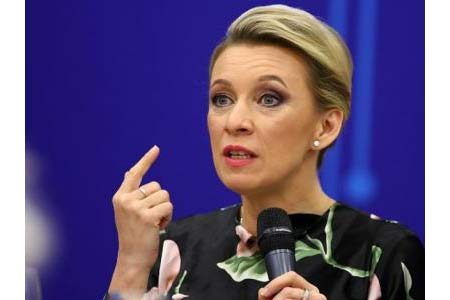 Zakharova: Russia ready to discuss with Armenia the prospects for expanding military cooperation as part of a review of bilateral ties
 Tevanyan: Armenia, like Ukraine and Moldova, is being drawn into the EU’s global war
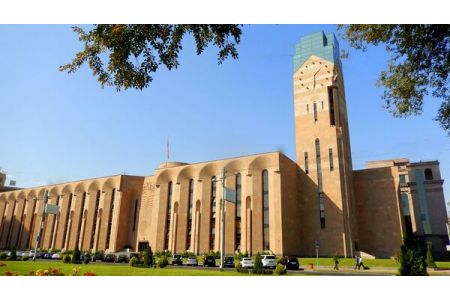 Yerevan City Hall is considering introducing a valet parking system in the city
 Expert: The circus surrounding the “Albanization” of Armenian culture in the presence of foreign ambassadors in occupied Artsakh is genocide
 Political scientist: If Russian-Armenian relations are destroyed, Turkey will take Russia`s place
 Political scientist: The Armenian public is simply obliged to significantly change the entire content of public discourse and struggle
 Cross tattoos are being removed from the skin of Christian prisoners in Azerbaijan by fire, according to a human rights activist.
 Zakharova: Armenia`s likely introduction of visas with Russia will be a step against Yerevan itself
 Putin: Armenia`s recognition of Karabakh as part of Azerbaijan in Prague has given Russia`s position on this issue an ambivalent character
 Putin: Armenia`s adoption of the law on EU accession means an announcement of its withdrawal from the Eurasian Economic Union