


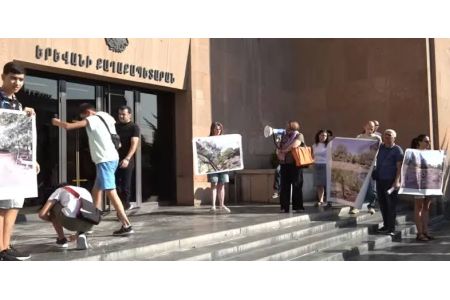
ArmInfo.. Medical workers protested in front of the Armenian parliament and submitted a collective letter to the legislature, demanding parliamentary hearings to discuss the shortcomings and risks of universal health insurance and make the necessary adjustments.
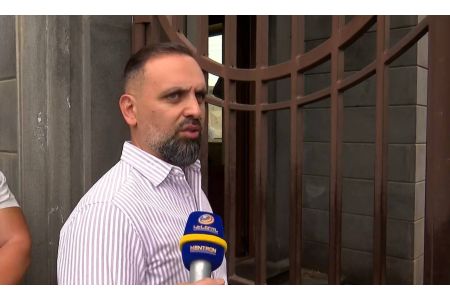
They called for the rights of medical workers to be taken into account and for the numerous problems that have arisen during the implementation of this system to be addressed. Doctor Gevorg Grigoryan, speaking with journalists, emphasized that parliamentary hearings are the only way to air their complaints. He noted that a repressive mechanism currently exists-threats of dismissal and pressure on doctors-that prevents them from raising their concerns.
Anush Poghosyan, chair of the Right to Health public organization, spoke about the difficulties medical workers have faced since the introduction of the health insurance system. She noted that she has received numerous complaints about salaries not only being paid late, but also significantly lower than before. "Hospital staff are receiving 30% less salary, and those in outpatient clinics are receiving two and even three times less. Furthermore, salaries were paid late, only on February 20th. In response, Health Minister Anahit Avanesyan asked for understanding, as this is a new system," Poghosyan said.
She cited the lack of proper awareness of both healthcare workers and citizens about their rights as the biggest shortcoming of the health insurance system. Furthermore, Poghosyan recalled, the system was launched on January 1st without preliminary agreements with hospitals and without the timely establishment of the Health Insurance Fund, which led to serious problems.
"Today, healthcare workers are facing a heavy workload, as doctors are forced to navigate confusing documentation. And outages on the ArmMed website (Armenia's unified e-health information system - ed.) can last for hours, making it difficult to prescribe medications," Poghosyan noted.
As a result of this situation, she said, hospitals have also been burdened, as patients with uncomplicated cases frequently seek care, leading to queues. "Therefore, the entire medical system is under great strain," Poghosyan noted.
"It's also necessary to review tariffs. Because when cases are paid below cost, this leads to 'illegal turnover' and a reluctance on the part of doctors to serve patients with health insurance," the chairwoman of the public organization added.
As a reminder, mandatory health insurance entails a phased implementation over three years. The first phase began on January 1, 2026, and covers children under 18, individuals 65 and older (even if employed), individuals with disabilities aged 18 to 65, members of socially vulnerable families, and individuals earning over 200,000 drams. The base cost of an insurance policy in 2026 will be 129,600 drams (10,800 drams per month). Part of this amount is reimbursed from payments to the Zinapa Military Insurance Fund. These payments, increased in 2021, are now returning to their previous level of 1,000 drams, regardless of salary. The remaining portion will be reimbursed to beneficiaries upon filing their annual personal income tax return. However, in 2026, these amounts will be reimbursed monthly from the state budget. Insurance payments will be made by a tax agent, meaning they will be withheld from wages in the same way as income tax, social security payments, and other benefits. This year, individual entrepreneurs will also benefit from the system and will be responsible for paying their own insurance premiums. Overall, by 2026, health insurance will cover approximately 1.6 million people. A state fund has been created to manage the system. It will operate under temporary management for three months, after which a state selection committee will form its board of directors, which, as stated in the Concept for the Implementation of Compulsory Health Insurance, will be chaired by the Minister of Health. It is worth noting that, according to the ACSES analytical review, the current model of Universal Health Insurance is a serious deviation from the principles of a market economy, creating risks for the long-term investment attractiveness of the sector.
In connection with the above, she noted that their demands are as follows: to hear from the professional community, hold joint discussions in the legislative body, and conduct accurate calculations so that hospitals are motivated to provide high-quality patient care and medical workers receive a decent salary.
Specifically, financial calculations indicate that the system implemented in 2026 will, at best, account for approximately 23% of healthcare expenditures, which is lower than the indicators in the countries examined in the document (the lowest indicator is in Greece at 32%). Furthermore, international experience shows that, given the proposed model, healthcare infrastructure, and low funding levels, patient satisfaction in Armenia will likely be lower than the average for the countries examined, potentially overshadowing the reform. Furthermore, the establishment of actual prices and maximum compensation/compensation prices in certain cases may also lead to an increase in shadow turnover, particularly when the actual price is double the established compensation amount, and the citizen is forced to pay the difference in cash.









 Expert: The arrest of opposition figures in Armenia for social media posts is a systematic attempt to intimidate the public and suppress dissent.
 Azerbaijani Studies Expert: While Azerbaijan Prepares Its Generation for War, Aliyev’s Aide Calls on Armenia to Prepare Armenian Society for “Peace”
 Turkologist: Azerbaijan will never, under any circumstances, stop pressuring the Armenian people
 Political scientist: We need to move away from the question of "when" and replace it with more important questions
 International Law Specialist: Azerbaijan intends to initiate legal proceedings against Armenia by sentencing Armenian prisoners
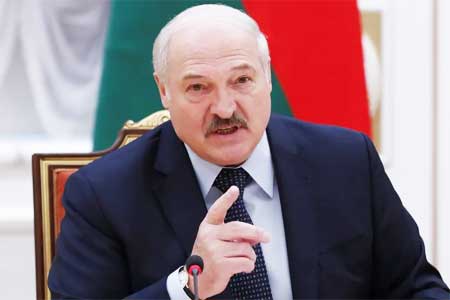 Lukashenko called for Armenia to assume the CIS presidency in 2029
 Dmitry Medvedev predicted a Ukrainian-like fate for Armenia amid the country`s shift in foreign policy
 Russian Security Council: In Armenia, they want to force Russian asset owners to dispose of their assets
 Zakharova: Russia ready to discuss with Armenia the prospects for expanding military cooperation as part of a review of bilateral ties
 Tevanyan: Armenia, like Ukraine and Moldova, is being drawn into the EU’s global war
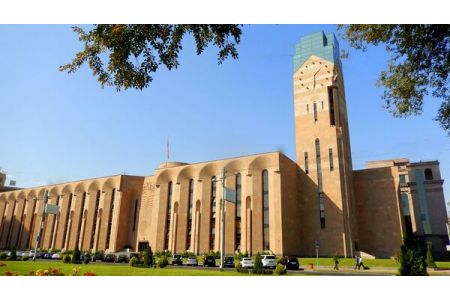 Yerevan City Hall is considering introducing a valet parking system in the city
 Expert: The circus surrounding the “Albanization” of Armenian culture in the presence of foreign ambassadors in occupied Artsakh is genocide
 Political scientist: If Russian-Armenian relations are destroyed, Turkey will take Russia`s place
 Political scientist: The Armenian public is simply obliged to significantly change the entire content of public discourse and struggle
 Cross tattoos are being removed from the skin of Christian prisoners in Azerbaijan by fire, according to a human rights activist.
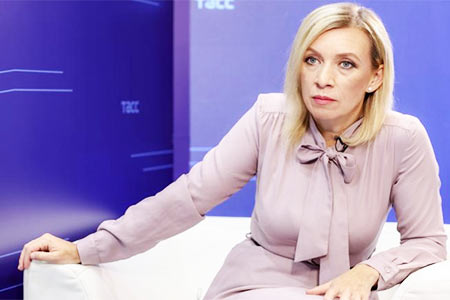 Zakharova: Armenia`s likely introduction of visas with Russia will be a step against Yerevan itself
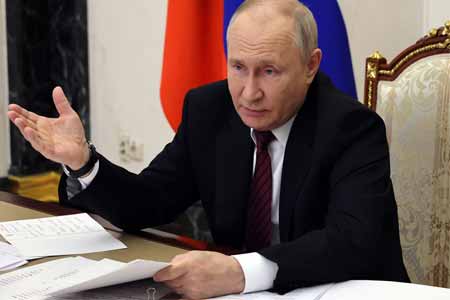 Putin: Armenia`s recognition of Karabakh as part of Azerbaijan in Prague has given Russia`s position on this issue an ambivalent character
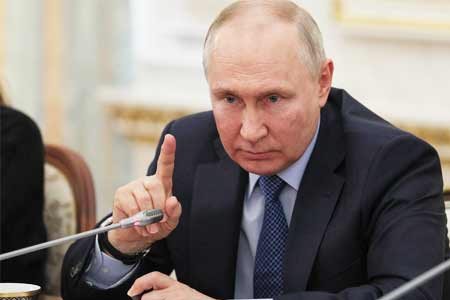 Putin: Armenia`s adoption of the law on EU accession means an announcement of its withdrawal from the Eurasian Economic Union