
ArmInfo. February 20, 1988 is more than just a symbol. This date marks the beginning of a period in history when Armenia, after a two-thousand-year hiatus, became a political factor influencing the course of world events, as noted in a statement issued by the Armenian National Congress.
The statement highlights that on February 20, 1988, the decision of the Regional Council of the Nagorno- Karabakh Autonomous Region and its nationwide support launched a movement destined to play a historic role not only in the fate of the Armenian people.
"The Artsakh, or Armenian, democratic movement was unprecedented in the 70-year history of the Soviet Union in its political nature, scale, duration, endurance, consistency, impeccable methods of action, and international resonance. For approximately six months, standing alone against the Soviet Empire, known for its repressive methods, the Artsakh movement became a center of confidence and courage, giving rise to democratic movements in other republics of the Soviet Union and Eastern Europe. The key issue of Artsakh was not raised as a demand, but as an internationally acceptable one, including in accordance with the USSR Constitution, which included the people's right to self-determination. On the other hand, the matter of Artsakh's self-determination was based on the broadest democratic principles. And this became a guarantee of its invulnerability within the Soviet Empire, as well as its authority and support in the international arena," the statement reads.
It also emphasizes that Artsakh, or the Armenian democratic movement, and its government first resolved the issue of Nagorno-Karabakh's survival during the turbulent years of the USSR's collapse, and then the problem of its complete liberation, creating security guarantees and a reliable foundation for its survival that it had never had before. They achieved Armenia's independence and the construction of statehood on a democratic foundation and played a key role in the safe dissolution of the Soviet empire.









 Armenian Historian: People Like Magdalena Grono Should Be Kept Away from the Thresholds of Armenian Shrines
 Azerbaijani studies expert: Armenia’s Foreign Ministry could use the ICC against Aliyev’s Armenophobic statements
 An Armenian political analyst exposed Hajiyev’s lies and attempts to mislead diplomats accredited in Azerbaijan in occupied Artsakh
 Expert: The circus surrounding the “Albanization” of Armenian culture in the presence of foreign ambassadors in occupied Artsakh is genocide
 Zakharova: Russia ready to discuss with Armenia the prospects for expanding military cooperation as part of a review of bilateral ties
 Tevanyan: Armenia, like Ukraine and Moldova, is being drawn into the EU’s global war
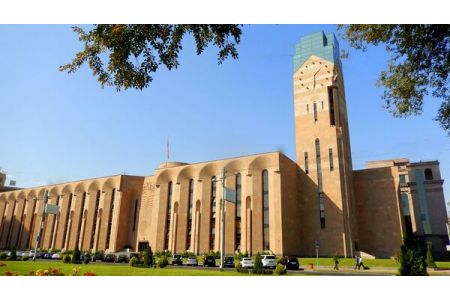 Yerevan City Hall is considering introducing a valet parking system in the city
 Political scientist: If Russian-Armenian relations are destroyed, Turkey will take Russia`s place
 Political scientist: The Armenian public is simply obliged to significantly change the entire content of public discourse and struggle
 Cross tattoos are being removed from the skin of Christian prisoners in Azerbaijan by fire, according to a human rights activist.
 Zakharova: Armenia`s likely introduction of visas with Russia will be a step against Yerevan itself
 Putin: Armenia`s recognition of Karabakh as part of Azerbaijan in Prague has given Russia`s position on this issue an ambivalent character
 Putin: Armenia`s adoption of the law on EU accession means an announcement of its withdrawal from the Eurasian Economic Union
 Medvedev: Yerevan will never become an EU member, but it will permanently damage relations with the Eurasian Economic Union, including with Moscow.
 Aram Vardevanyan: Public demands solutions, not apology scandals in Parliament
 Arrested Armenian oligarch on economy and new jobs
 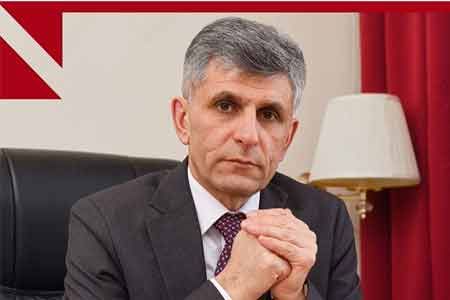 "In Baku, we gave a worthy rebuff to the false claims regarding the past and present of our people" – Former Artsakh Parliament Speaker from Baku captivity