
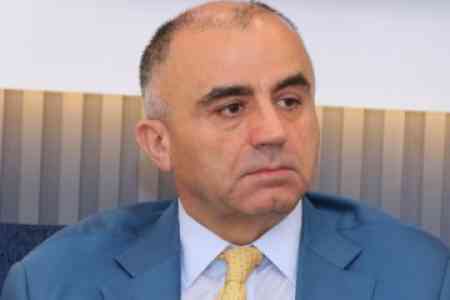
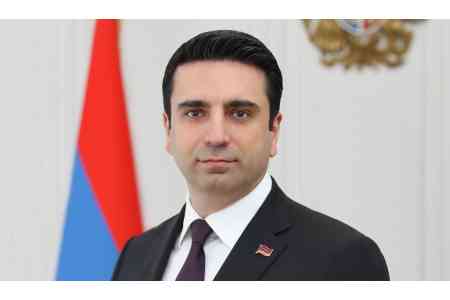
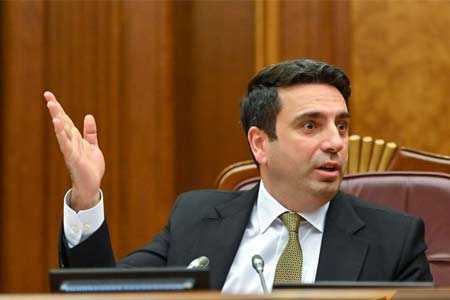
ArmInfo. Yerevan and Moscow are not seeking mutually acceptable strategic solutions, as evidenced by the results of Armenian Parliament Speaker Alen Simonyan's recent visit to Moscow. This is the conclusion reached by Armen Martirosyan, a former member of the Supreme Soviet of Armenia (1990-95), a former member of the National Assembly (1995- 99), and Ambassador Extraordinary and Plenipotentiary of Armenia, in his article "Dialogue Without Trust" for ArmInfo.
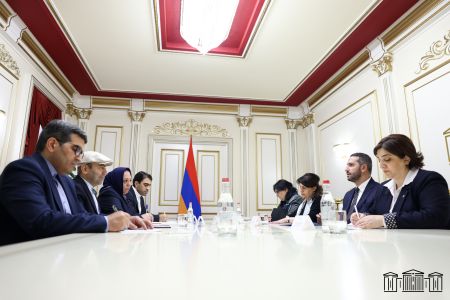
Martirosyan noted that the official visit of the Armenian National Assembly delegation to Moscow (February 4-7, 2026) was initially perceived not as a routine gesture of "parliamentary diplomacy," but as a political mission amid a protracted crisis of trust between Yerevan and Moscow and in the lead-up to the next parliamentary elections in both countries.
In this regard, he recalled that in recent years, public communication between the two capitals has been rife with mutual accusations. "Moscow is pointing out to Yerevan the unacceptability of a cautious drift toward the West, given its commitments within the framework of Eurasian integration. Yerevan is accusing Moscow of a lack of security guarantees and a failure to fulfill what Armenia continues to call 'alliance obligations.' In this atmosphere, the visit has become a political test of de-escalation: will the parties be able to transform the exchange of accusations into a constructive dialogue and establish at least a minimal agenda of mutual commitments, or will they prefer a rhetorical standoff, where demonstrations of (principledness) and mutual accusations are more important than real agreements," the diplomat recalled.
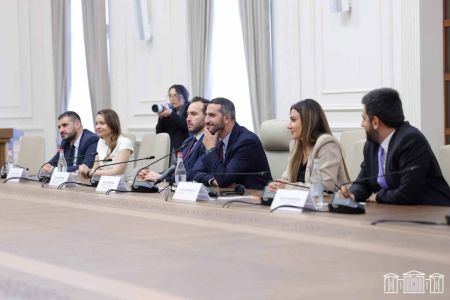
He referred to the monochromatic delegation of the Speaker of the Armenian Parliament, sent to the Russian capital. "The composition of the Armenian delegation stood out: three deputies from the ruling party and a substantial escort. For parliamentary diplomacy, such (non)representation is more of an anomaly than the norm: a visit to an ally usually requires representation from all factions as evidence of a national, rather than purely partisan, mandate. Such 'sterility,' by excluding pluralism of opinions within the Armenian delegation, only exposed the depth of Armenia's social polarization on the eve of the elections," Martirosyan stated. He also noted that Federation Council Speaker Valentina Matviyenko was maintaining a "soft" agenda during the meeting with her Armenian counterpart. Martirosyan emphasized that the discussion with Federation Council Speaker Valentina Matviyenko focused on socioeconomic cooperation and humanitarian ties. This allowed them to avoid conflict-prone topics and discuss certain issues without a public showdown. "In the current logic of Armenian-Russian relations, such tactics are truly justified: when the strategic contours of relations are poisoned by mutual grievances, the parties are forced to rely on a pragmatic agenda-trade, migration, humanitarian and cultural ties-to maintain working channels of communication and prevent a final rupture," the Armenian diplomat believes.
He also recalled that Matviyenko described the conversation as open and sometimes heated, but overall constructive and productive-with an emphasis on "pending work issues" that legislators can "push" toward resolution at the executive level. "The notion of 'urgency' and 'pending' issues indicates serious contradictions that the parliamentary track alone cannot resolve. And assessing the meeting as productive does not signal normalization, but rather the manageability of the recession," Martirosyan asserted.
Meanwhile, he noted that political differences also surfaced in joint press communications, highlighting a new source of tension and suspicion. "The topic of persecution of the Armenian Apostolic Church and prominent clergy was hardly raised by Russian journalists for religious reasons: Moscow is traditionally sensitive to symbolic institutions in post-Soviet societies and tends to interpret such topics as a marker of internal instability or ideological drift. The Speaker's comical denial of the very question not only failed to relieve tension, but also revealed conflicting interpretations: instead of 'there is a problem - let's discuss solutions,' he effectively declared, 'there is no problem - you invented it.' In interstate dialogue, if one side expresses concern and the other cynically dismisses it, only perpetuates the feeling of alienation," the politician noted.
Touching on Simonyan's talks with Russian Foreign Minister Sergey Lavrov, Martirosyan expressed his conviction that the meeting had a different purpose: to publicly outline "red lines" and address mutual grievances. In this vein, the diplomat recalled that during the open part of the meeting, Lavrov presented his guest with a "checklist" to assess the state of allied relations: security and the CSTO.
"Moscow rejected the rhetoric about 'mythical attacks from the north' and the 'existential threat' posed by the CSTO, thereby challenging the Armenian leadership's new narrative, according to which threats to the country emanate from the organization itself," the politician continued. He added that the Russian minister also outlined the incompatibility of institutional rapprochement with the EU and its commitments within the EAEU, urging Yerevan not to disguise its political choice with the formula "both here and there." Martirosyan also noted that Moscow is irritated by the Armenian authorities' efforts to bring up the topic of Russia's notorious interference in Armenian elections in Western forums with the goal of expanding the European presence in Armenia. According to him, from the Russian perspective, this is perceived as legitimization of Yerevan's further political drift away from Russia. Overall, the Russian side has outlined those formulations and actions by Yerevan that it considers as not incompatible with their allied status and is likely to interpret them as signs of a de facto political break.
"Against this backdrop, the responses from the Armenian delegation seem like a series of outdated slogans: 'We are interested in relations,' 'We are not acting against Russia,' 'There should be no logic of 'with us or against us,' 'A solution beneficial to both sides is possible.' In response to Lavrov's reproaches regarding threats allegedly emanating from the CSTO, the Armenian side cited its existing 'unanswered questions' and, by leveling a counter-reproach regarding 'rhetoric from Moscow,' expanded its list of grievances instead of proposing ideas for de-escalation. And it gets worse: in discussions of 'hybrid attacks,' the speaker of the Armenian parliament attempted to disparage the Russian government's responsibility, declaring that 'there are many towers in the Kremlin.' Such a politically charged response hinted at the ineffectiveness of Russian strategic communications," Martirosyan believes.
He also pointed out that the "auto-correction" of the Speaker's rhetoric on the eve of the visit became a hot topic in Armenian and Russian media. This type of audience-focused adaptation only emphasized the situational nature of his responses and comments, ultimately undermining the predictability of interaction and the trusting nature of the relationship. "The public portion of the talks revealed the Armenian side's predisposition to maintain the 'freeze' on military and political cooperation. Official Yerevan's 'reassurance' rhetoric has become the main instrument of diplomatic engagement with Moscow. There are no signs that this is easing anxiety in the Kremlin. Neither side is seeking mutually acceptable strategic solutions. Acting pragmatically, Russia is not escalating the situation, while simultaneously demonstrating an interest in cooperation and concern about current trends. Diplomacy is aimed primarily not at a breakthrough, but at reducing the risk of escalation, minimizing damage, and keeping the situation manageable. The price of such a regime: strategic differences are perpetuated, mistrust is institutionalized, and agreements become ad hoc. In the current circumstances, it is critical to navigate the inevitable emotional peaks and resolve disagreements without destroying the institutional framework of bilateral and multilateral cooperation," Martirosyan concluded.








 Armenian Political Scientist: The approaches, methods, rmphases and content of today’s struggle in Armenia Cannot Remain the Same
 Political scientist: Armenians will live peacefully in their homeland only when they can once again set national goals for themselves, such as Artsakh
 Armenian Historian: People Like Magdalena Grono Should Be Kept Away from the Thresholds of Armenian Shrines
 Azerbaijani studies expert: Armenia’s Foreign Ministry could use the ICC against Aliyev’s Armenophobic statements
 An Armenian political analyst exposed Hajiyev’s lies and attempts to mislead diplomats accredited in Azerbaijan in occupied Artsakh
 Russian Security Council: In Armenia, they want to force Russian asset owners to dispose of their assets
 Zakharova: Russia ready to discuss with Armenia the prospects for expanding military cooperation as part of a review of bilateral ties
 Tevanyan: Armenia, like Ukraine and Moldova, is being drawn into the EU’s global war
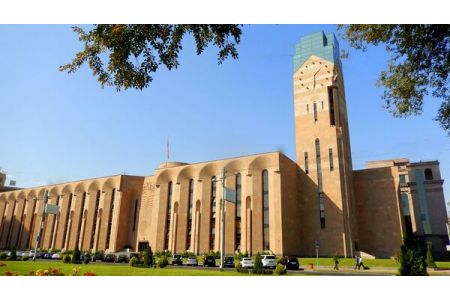 Yerevan City Hall is considering introducing a valet parking system in the city
 Expert: The circus surrounding the “Albanization” of Armenian culture in the presence of foreign ambassadors in occupied Artsakh is genocide
 Political scientist: If Russian-Armenian relations are destroyed, Turkey will take Russia`s place
 Political scientist: The Armenian public is simply obliged to significantly change the entire content of public discourse and struggle
 Cross tattoos are being removed from the skin of Christian prisoners in Azerbaijan by fire, according to a human rights activist.
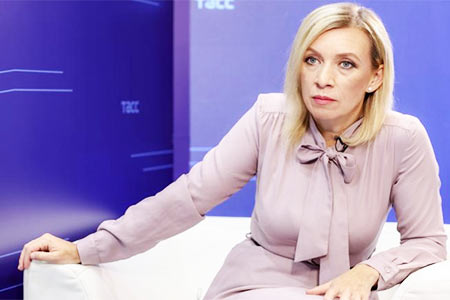 Zakharova: Armenia`s likely introduction of visas with Russia will be a step against Yerevan itself
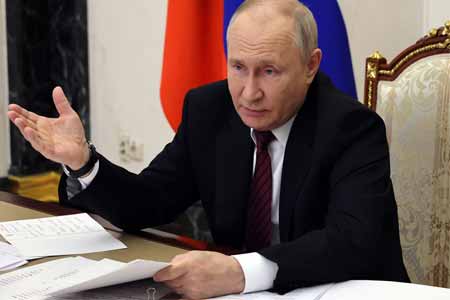 Putin: Armenia`s recognition of Karabakh as part of Azerbaijan in Prague has given Russia`s position on this issue an ambivalent character
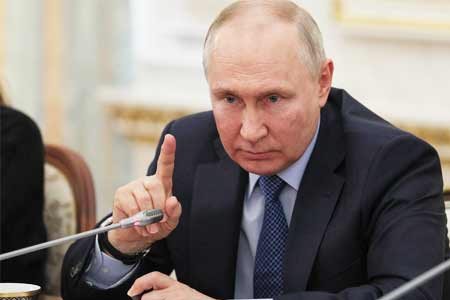 Putin: Armenia`s adoption of the law on EU accession means an announcement of its withdrawal from the Eurasian Economic Union
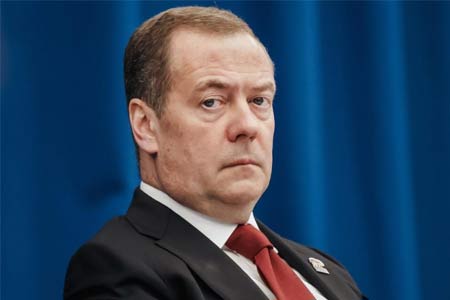 Medvedev: Yerevan will never become an EU member, but it will permanently damage relations with the Eurasian Economic Union, including with Moscow.
 Aram Vardevanyan: Public demands solutions, not apology scandals in Parliament
 Arrested Armenian oligarch on economy and new jobs
  "In Baku, we gave a worthy rebuff to the false claims regarding the past and present of our people" – Former Artsakh Parliament Speaker from Baku captivity